
Agate
No two pieces of Agate tell quite the same visual story. This remarkably varied chalcedony can reveal fine bands, cloudy layers, moss-like inclusions, colourful patterns and sparkling geode centres. Explore Agate across natural specimens, polished stones, slices, spheres, jewellery and decorative pieces, including distinctive varieties such as Botswana, Moss and Blue Lace Agate.
Showing 1–25 of 40 resultsSorted by latest
One Name, an Extraordinary Variety of Agates
Agate is one of those gemstone names that makes much more sense once you stop expecting every piece to look alike.
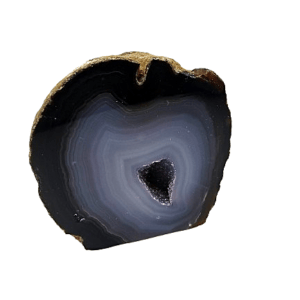
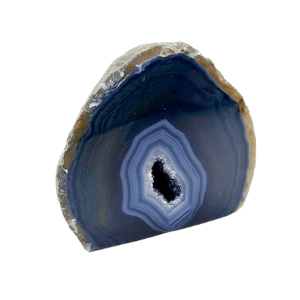
One specimen may contain delicate parallel bands. Another may have cloud-like layers, branching patterns or earthy inclusions. Cut open an Agate geode and a comparatively plain exterior can reveal an unexpectedly intricate interior.
That variety is central to Agate's appeal.
Agate belongs to the chalcedony family, a microcrystalline form of quartz. Different colours, inclusions, growth patterns and geological conditions have produced the enormous range of materials that have acquired their own Agate names over time.
Hello Indigo Halo's Crystal Names collection is the easiest place to continue browsing if you'd like to compare Agate with completely different gemstone and mineral families.
The Bands Tell Part of the Story
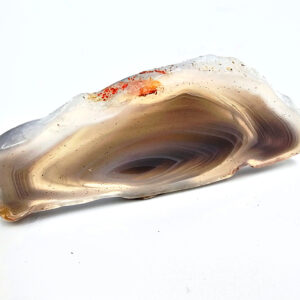
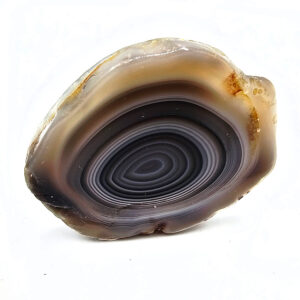
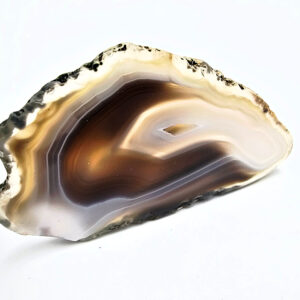
Classic Agate is particularly famous for banding.
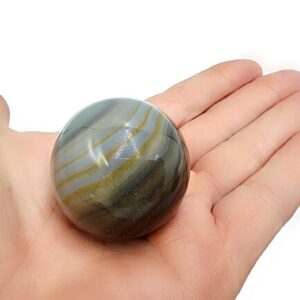
As silica-rich material fills cavities and spaces within rock, successive layers can develop over time. Those layers may differ in colour, translucency and mineral content, creating lines that can be straight, curved, concentric or wonderfully irregular.
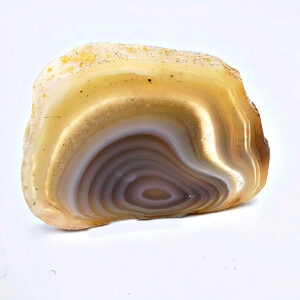
Cutting through the material reveals patterns that weren't necessarily obvious from the outside.
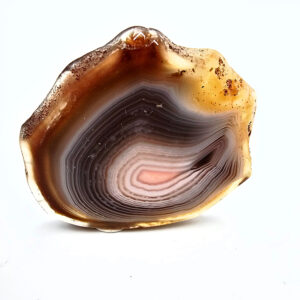
That's why an Agate slice can look so dramatically different from an uncut specimen — you're effectively seeing a cross-section through part of its geological growth story.
Our current collection includes banded spheres, polished slices, geodes and standing pieces that reveal this patterning in very different ways.
Meet Some of the Agate Family
Agate names can describe colour, locality, pattern, appearance or commercial variety, so learning a few of them makes the collection easier to navigate.
Botswana Agate
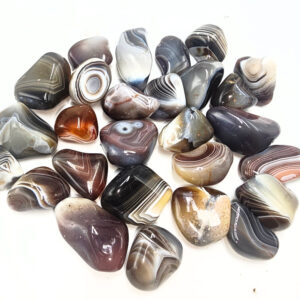
Known for particularly attractive fine banding, Botswana Agate commonly combines greys, browns, creams and subtle pinkish tones.
HIH currently carries individually photographed Botswana Agate slices as well as tumble stones and jewellery, making this one of the more visible varieties within the broader Agate collection.
Blue Lace Agate
Blue Lace Agate is recognised for its pale blue colouring and delicate white or blue banding.
Within crystal traditions, its soft appearance has contributed to associations with calm, gentle communication and peaceful expression.
If this is the variety you're specifically looking for, browse our dedicated Blue Lace Agate collection rather than searching through every Agate product.
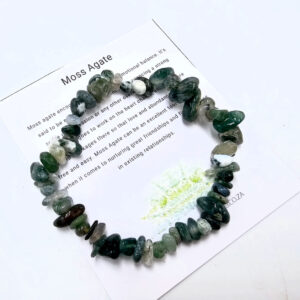
Moss Agate
Despite its name, Moss Agate doesn't contain moss.
Its green branching or moss-like patterns are created by mineral inclusions within chalcedony, producing landscapes and plant-like forms that can look remarkably organic.
Modern crystal traditions often connect Moss Agate with growth, abundance, grounding and a connection with nature.
Tree Agate
Tree Agate can also display green, branching patterns, but it isn't simply another name for Moss Agate.
The two are closely related forms of chalcedony that are often confused commercially. Tree Agate is generally more opaque, while Moss Agate is commonly more translucent.
Fire Agate
Fire Agate takes the family in a completely different visual direction.
Fine mineral layers can create flashes of iridescent colour, giving suitable pieces a fiery appearance that bears little resemblance to pale Blue Lace or green Moss Agate.
The fact that these materials can sit beneath the broad Agate umbrella shows just how diverse this gemstone family really is.
Natural Colour, Dyed Agate & Why It Matters
Agate occurs naturally in an impressive range of colours, but it is also one of the gemstones most commonly dyed or colour-enhanced.
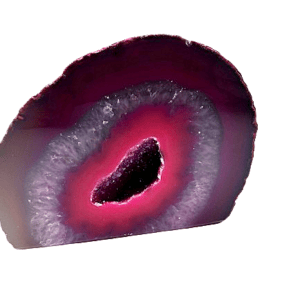
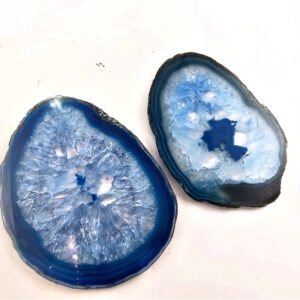
Bright electric blue, vivid purple, hot pink and other intense colours can be created by treating Agate because its structure can accept dyes particularly well.
That doesn't automatically make a dyed Agate unattractive or undesirable.
Colour-enhanced slices and geodes can create spectacular decorative pieces, and some customers deliberately prefer their bold appearance. The important distinction is simply knowing whether you're choosing the natural colouring of the material or a decorative treatment.
HIH's current Agate range includes both natural-looking pieces and vividly coloured Agate products. Where treatment information is known for an individual product, the listing should identify it rather than implying that every colour is naturally occurring.
Why Agate Geodes Are So Interesting
A geode adds another layer to Agate's story.
Geodes form as mineral material develops inside a cavity within rock. Depending on how the cavity fills, the finished piece can contain layers of Agate surrounding an open centre lined with small quartz crystals.
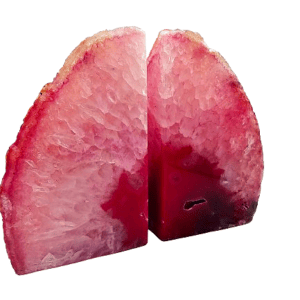
This creates the striking combination often seen in Agate bookends, standing pieces and slices: patterned chalcedony around the outside and a sparkling crystalline centre within.
HIH's collection includes natural Agate geodes, standing freeforms, slices, bookends and even a geode ring box.
If this hidden-crystal structure is what fascinates you most, continue into our Geodes collection to explore other available geode formations.
Agate as Jewellery
Agate's variety makes it especially versatile in jewellery.
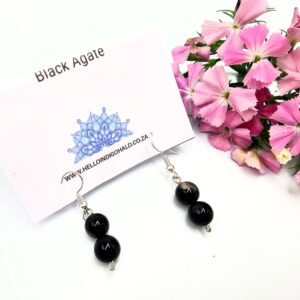
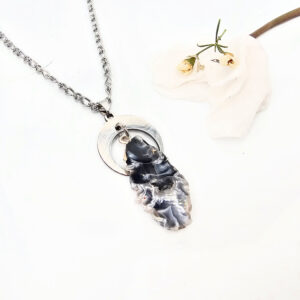
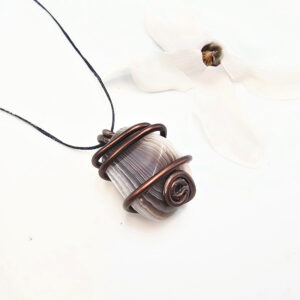
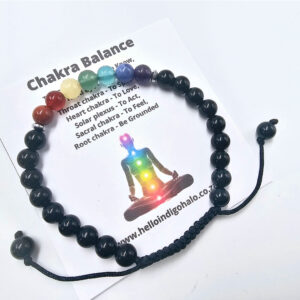
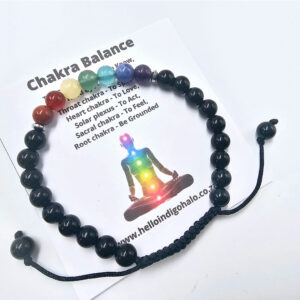
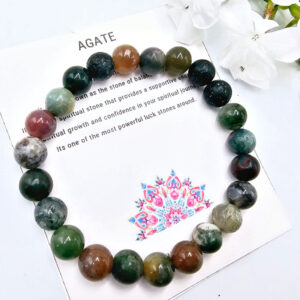
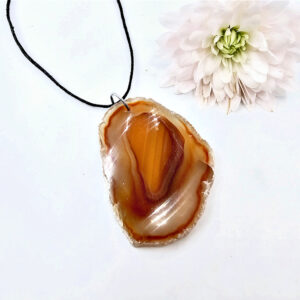
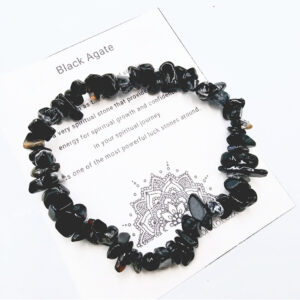
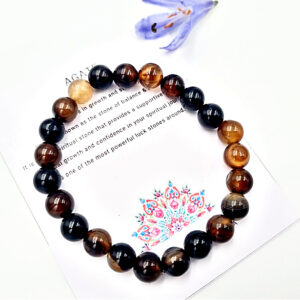
Black Agate creates a completely different mood from a pale Blue Lace piece, while a natural Agate slice pendant preserves more of the stone's irregular outline and pattern.
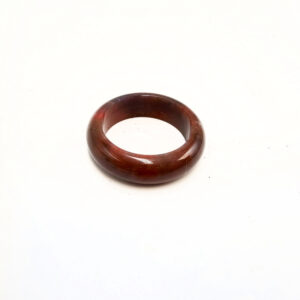
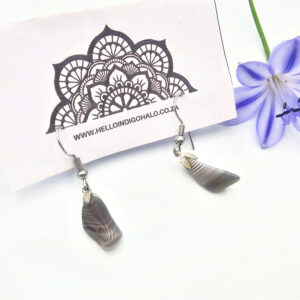
The current HIH assortment includes bangles, earrings, rings, wire-wrapped pieces, slice necklaces, geometric designs and other Agate jewellery.
Some designs emphasise the gemstone itself; others combine it with brass, wire, beads or more elaborate settings.
Our Gem & Crystal Necklaces collection is a useful next step if you're particularly interested in wearing natural stones and want to compare Agate with other gemstone necklace styles.
Agate in Metaphysical Traditions
With so many varieties, Agate has developed a broad metaphysical identity.
It is traditionally associated with balance, stability, grounding, protection and inner strength, while individual Agate varieties have acquired more specific meanings of their own.
Blue Lace Agate is commonly linked with calm communication.
Moss Agate is associated with growth, nature and abundance.
Black Agate is often chosen for grounding and protection.
Botswana Agate is frequently connected with comfort, stability and gentle support through change.
Rather than treating every Agate as energetically identical, many crystal practitioners choose according to the particular variety, colour and symbolism that resonates with them.
Choose the Pattern Before the “Perfect” Stone
Agate rewards looking closely.
If you're buying a larger or individually photographed specimen, consider what actually attracts you to it.
Do you prefer extremely fine bands or broad areas of colour?
Natural earthy tones or something brighter?
A polished surface or exposed crystal centre?
A symmetrical sphere or an irregular slice?
Strong translucency or a more opaque stone?
With Agate, there is rarely one objectively “best” pattern. Much of the enjoyment comes from finding the piece whose combination of colour and formation catches your eye.
For shoppers who enjoy browsing primarily by physical form rather than mineral name, our Crystal Shapes collection lets you compare spheres, geodes, tumbles, rough pieces, hearts, towers and other crystal formats across many different stones.
Caring for Agate
Agate is relatively durable compared with softer decorative minerals, but finished pieces still deserve sensible care.
Avoid hard impacts, particularly with thin slices, jewellery and geodes that may have delicate crystal-lined areas.
Use gentle cleaning methods and avoid exposing dyed pieces to harsh chemicals or prolonged conditions that could affect their colour.
Jewellery care should also take the metal, wire, cord or setting into account rather than considering only the Agate.
Most importantly, treat individually patterned pieces as exactly that — individual. Natural banding, inclusions, small cavities and colour variation are part of what makes Agate interesting rather than signs that every piece should look identical.
Frequently Asked Questions
Is Agate the same as chalcedony?
Agate is a type of chalcedony, but the terms aren't completely interchangeable. Chalcedony is the broader microcrystalline quartz material, while Agate is traditionally associated particularly with patterned or banded varieties.
Is every brightly coloured Agate dyed?
No. Agate naturally occurs in many colours, so colour alone isn't enough to determine whether a piece has been treated. Some extremely vivid commercial Agates are dyed, but treatment should be assessed from the individual material and supplier information rather than assumed from colour alone.
Why are some Agate pieces transparent while others are opaque?
Different microscopic structures, inclusions, mineral impurities and thicknesses can affect how much light passes through a piece. This is one reason different Agate varieties can have noticeably different appearances.
Is an Agate geode still Agate if it has quartz crystals inside?
Yes. A geode can contain bands of chalcedony or Agate around a cavity where larger quartz crystals later developed. The two textures can therefore occur together in the same specimen.
Is Agate suitable for someone starting a crystal collection?
Yes. Its enormous variety makes Agate particularly approachable for new collectors. Small tumbles and slices can be inexpensive entry points, while unusual banded specimens and geodes give collectors plenty to explore as their interest develops.