
Amazonite
Blue-green, softly patterned and unmistakably Amazonite, this colourful feldspar can shift from pale aqua and minty green to deeper turquoise tones. Browse rough crystals, polished stones, spheres and Amazonite jewellery, each with its own natural patterning. Within crystal traditions, Amazonite is commonly associated with communication, harmony, confidence, balance and speaking with greater clarity.
Showing 1–25 of 31 resultsSorted by latest
-

-
-
-
-
-
-
-
-
-
-
-
-
-
-
Amazonite Rough Chunk A (1.54Kg)
Original price was: R399.00.R219.00Current price is: R219.00. Add to basketQuick View -
-
-
-
-
-
-
-


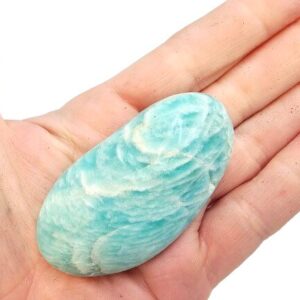
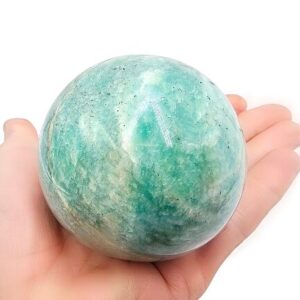
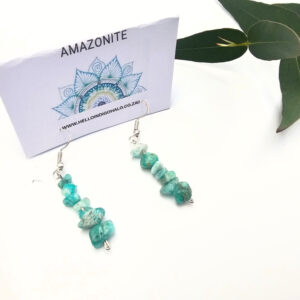
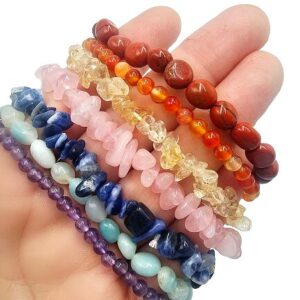
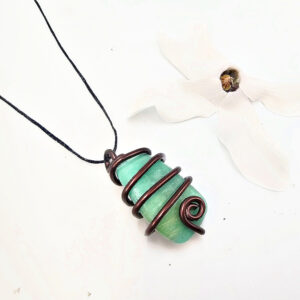
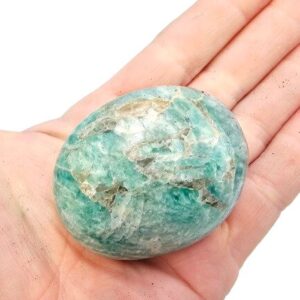
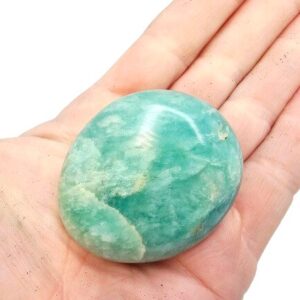
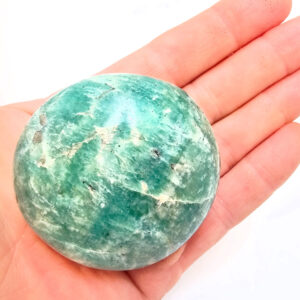

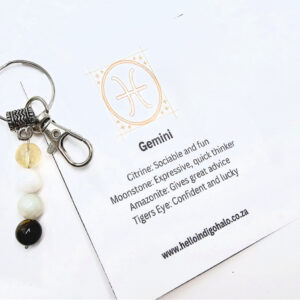
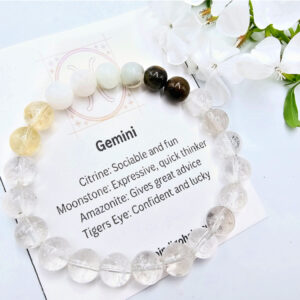
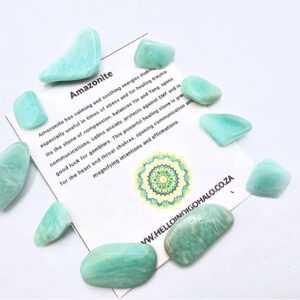
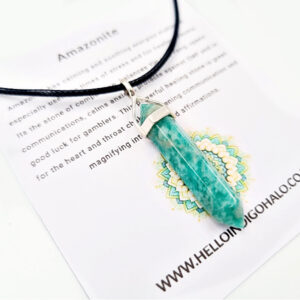
Somewhere Between Blue and Green
Trying to give Amazonite one exact colour is difficult.
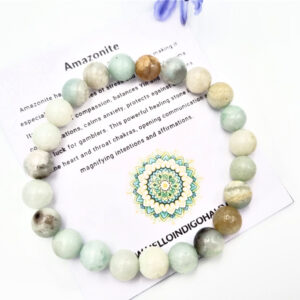
One piece may lean towards pale aqua. Another looks greener, more turquoise or slightly grey. Creamy-white streaks, patches and fine lines can break through the colour, especially once the stone is polished.
That variation is part of Amazonite rather than something that needs to be corrected.
It also means this is a particularly good crystal to choose by photograph when you are buying a larger individual specimen.
What Is Amazonite?
Amazonite is a green to blue-green variety of potassium feldspar, most commonly associated with the mineral microcline.
That places it in a completely different mineral family from blue-green stones such as Turquoise, Aquamarine or Chrysocolla, even though their colours can occasionally overlap.
Amazonite is often opaque to slightly translucent and can show pale streaks or mottled areas through the blue-green material.
The colour itself is one of the mineral's more interesting features. Rather than coming from a simple surface stain, Amazonite's colouring is associated with structural colour centres involving trace components within the feldspar and natural irradiation.
So the aqua-green colour is not merely a coating sitting on top of an otherwise ordinary stone.
Why Does Amazonite Have White Lines and Patches?
Those pale markings can be one of the easiest ways to recognise the character of Amazonite.
Feldspar minerals can occur with internal intergrowths, fractures, cleavage-related patterns and contrasting pale material that interrupt the blue-green colour.
On polished Amazonite, those areas may appear as white streaks, cloudy patches or fine criss-cross patterns.
Some shoppers prefer almost solid blue-green stones.
Others specifically look for pieces with stronger white patterning because it gives the surface more movement.
Neither style automatically makes the stone better.
Natural pattern is part of the choice.
Rough Amazonite Shows a Different Side of the Stone
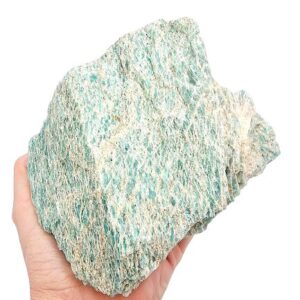
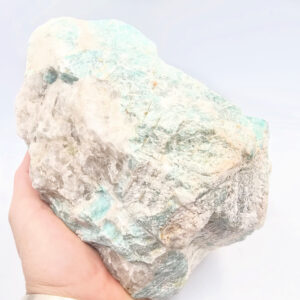
HIH currently carries Amazonite in both smaller rough pieces and much larger rough chunks.
Small rough crystal pieces are useful when you want to see the material without heavy shaping or polishing.
Larger chunks make the colour, natural breaks and feldspar texture much more obvious and work well as display specimens.
A rough surface can look paler or less intensely coloured than a polished piece because it does not reflect light in the same way.
Once Amazonite is polished, its blue-green colour and pattern often appear much clearer.
That is why a rough chunk and a polished sphere made from the same mineral can feel surprisingly different.
Polishing Brings the Pattern Forward
Polished Amazonite works especially well in rounded forms.
The current HIH assortment includes Amazonite palm stones and substantial polished spheres.
A palm stone gives you a wide, smooth area where colour and white patterning are easy to see while keeping the piece comfortable to hold.
If that form appeals to you, browse the wider Palm Stones & Gallets collection.
A sphere does something different again.
Because the surface curves continuously, patterns move around the entire stone rather than presenting one obvious front. Amazonite spheres can therefore show several different-looking faces depending on which way you turn them.
Browse Crystal Spheres, Eggs & Balls if polished display pieces are more your style.
Amazonite in Small Pieces
Not every Amazonite piece needs to be a large display stone.
HIH also carries polished tumble minis.
Tumbling softens the edges of rough material and creates small rounded stones where the blue-green colour becomes easier to appreciate.
These are useful for crystal collections, pockets, small bowls or mixed-stone sets.
If you enjoy that format, the wider Tumbled Stones collection lets you compare Amazonite with many other polished crystals.
Amazonite can also appear in chip jewellery, where irregular pieces create a more textured look than uniform round beads.
When Amazonite Becomes Jewellery
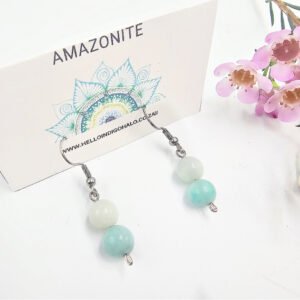
The current HIH catalogue includes Amazonite in several wearable forms, including chip bangles, beaded earrings and tumbled-stone necklaces.
Chip jewellery works particularly well with Amazonite because the irregular pieces break the stone into lots of small flashes of blue, green and white.
The result feels more organic than a perfectly matched strand of identical beads.
For this style, compare Amazonite with the wider Gem Chips Bangles collection.
A larger tumbled pendant does almost the opposite: one stone becomes the focal point, so its individual pattern matters more.
This is worth considering when choosing Amazonite jewellery online.
Do you want many small pieces creating an overall colour, or one particular stone whose markings become the feature?
Amazonite and Communication Traditions
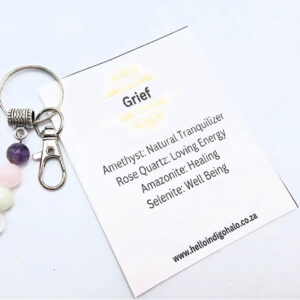
Within crystal traditions, Amazonite is commonly associated with communication, harmony, confidence, emotional balance and honest self-expression.
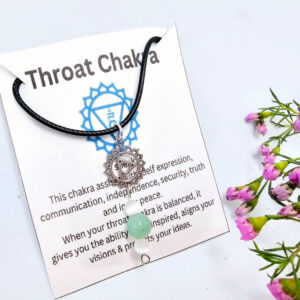
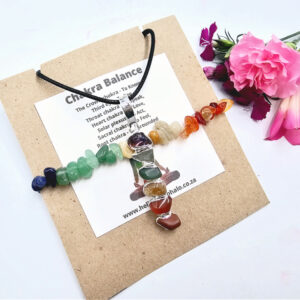
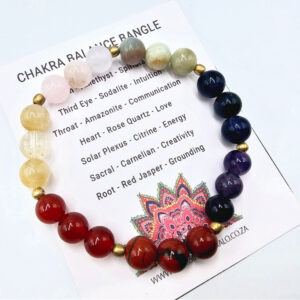
It is frequently connected with the Throat Chakra, while some traditions also associate it with the Heart Chakra.
That is why Amazonite often appears in jewellery or chakra-themed pieces linked to expression and communication.
HIH's catalogue has, for example, carried a Throat Chakra Necklace – Amazonite, and Amazonite also appears among the seven stones in the Chakra Tower Necklace.
Those are metaphysical traditions rather than scientifically measurable effects of feldspar.
Amazonite is still an interesting mineral if you simply like the colour.
Amazonite Is Not Jade
You may occasionally encounter the trade nickname Amazon Jade.
Amazonite is not jade.
True jade refers to jadeite or nephrite, while Amazonite is potassium feldspar.
The nickname comes from appearance and trade usage rather than mineral identity.
For accurate HIH product copy, Amazonite should remain the principal name.
If “Amazon Jade” is retained anywhere, it should be clearly labelled as an old or trade nickname rather than presented as another mineral name.
Did Amazonite Come From the Amazon?
The name suggests that it should have a simple Amazon River origin story.
It does not.
The mineral name Amazonite was introduced in the nineteenth century in connection with material described as coming from an area near the Amazon River, but the historical locality is not securely established.
That makes the name interesting, but it is not sensible to imply that every Amazonite specimen comes from the Amazon region.
Actual Amazonite occurs in numerous geological localities around the world.
The origin of an individual HIH product should only be stated when supplier provenance for that particular stock is known.
Choosing Amazonite Online
Start with the form.
Choose rough Amazonite when natural mineral texture is important.
Choose a palm stone if you want a smooth piece with plenty of visible surface pattern.
Choose a sphere when you want a polished display piece that can be viewed from every direction.
Choose tumbles for smaller portable stones.
Choose chip jewellery when you like irregular texture and lots of small colour variations.
Then look at colour.
Pale aqua, turquoise green, deeper blue-green, strongly patterned or relatively even — there is no single correct Amazonite appearance.
The best piece is the one whose particular combination catches your eye.
Caring for Amazonite
Amazonite is a feldspar rather than quartz, and it has good everyday durability while still deserving sensible handling.
Avoid hard knocks, particularly on polished edges and jewellery beads.
Feldspar has cleavage, so a sufficiently sharp impact can cause a piece to break along structural planes.
For ordinary cleaning, a soft cloth and gentle treatment are usually enough.
Avoid harsh chemicals on jewellery, and remember that elastic, wire and metal settings may need more careful treatment than the stone itself.
Frequently Asked Questions
What type of mineral is Amazonite?
Amazonite is a green to blue-green variety of potassium feldspar, most commonly microcline.
Why is Amazonite blue-green?
Its colour is associated with structural colour centres in potassium feldspar involving trace components including lead, water and the effects of natural irradiation.
Is Amazonite the same as jade?
No. Amazonite is feldspar. Jade refers to jadeite or nephrite. “Amazon Jade” is a trade nickname rather than a correct mineral classification.
Why does Amazonite vary so much in colour?
Natural Amazonite can range through pale aqua, green and deeper blue-green tones, often with white streaks, patches or intergrowth patterns. Variation between pieces is normal.
What is Amazonite traditionally associated with?
Within crystal traditions, Amazonite is commonly associated with communication, harmony, confidence, balance and self-expression, and is frequently linked with the Throat Chakra.