
Angelite
Powder blue, softly clouded and wonderfully distinctive, Angelite is the crystal-trade name for pale blue-grey anhydrite, a calcium sulphate mineral best known as gem material from Peru. Browse Angelite tumble stones, pendulums and jewellery in its characteristic gentle blue tones. Within crystal traditions, Angelite is commonly associated with peace, communication, spiritual awareness and angelic symbolism.
Showing all 4 resultsSorted by latest
A Blue Stone With a Softer Side
Angelite has a colour that is difficult to mistake once you know it.
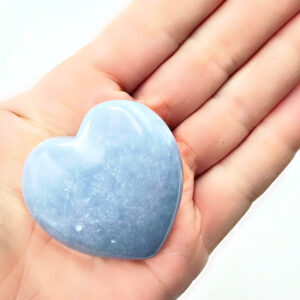
Rather than the glassy blue of some transparent gemstones, it tends towards powder blue, blue-grey and softly clouded shades. Polished pieces can look almost velvety, with pale markings, mottling and natural variation breaking through the blue.
That quiet colour has become a large part of Angelite's identity — but the mineral story behind it is just as interesting.
What Is Angelite?
Angelite is the crystal and lapidary trade name used for a pale blue-grey variety of anhydrite.
Anhydrite is a calcium sulphate mineral with the chemical formula CaSO₄.
That means Angelite is not a separate mineral species sitting alongside Amethyst, Quartz or Fluorite. The mineral itself is anhydrite, while Angelite is the name used for the attractive blue material sold for polishing, carving, jewellery and crystal collections.
For customer-facing purposes, Angelite remains exactly the right category name because that is how the material is recognised and searched for in the crystal trade.
Why Is Angelite Usually Pale Blue?
Classic Angelite is known for its soft blue to blue-grey appearance.
The colour is often relatively gentle rather than intensely saturated, and natural pieces can contain white, cream, greyish or slightly darker areas.
Polishing can make the colour look smoother and richer, while a less polished surface may appear softer and more chalky.
This is worth remembering when shopping online.
One Angelite stone does not need to be exactly the same shade of blue as another to be genuine or attractive.
Natural colour, markings and surface character can vary from piece to piece.
Angelite Comes From the Anhydrite Family
The name anhydrite provides a clue to an interesting part of this mineral's chemistry.
Anhydrite is calcium sulphate without water incorporated into its mineral structure.
It is closely related chemically to gypsum, which is a hydrated calcium sulphate mineral.
That relationship is also why Angelite deserves more careful treatment around water than many harder everyday gemstones.
It may look wonderfully smooth once polished, but it is not a quartz-like stone that should automatically be soaked whenever you want to clean or spiritually cleanse it.
Angelite Tumble Stones
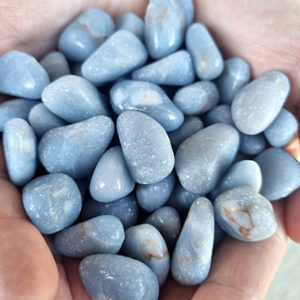
HIH currently carries Angelite Tumble Stones, giving the material a smooth, compact form that shows its powder-blue colouring particularly well.
Tumbling rounds the edges and gives the surface a soft polish while still allowing pale markings and individual colour differences to remain visible.
If you enjoy small polished crystals, compare Angelite with the wider Tumbled Stones collection.
Angelite's softer blue colour makes it especially easy to distinguish from many of the stronger blues in a mixed tumble collection.
Angelite as a Pendulum
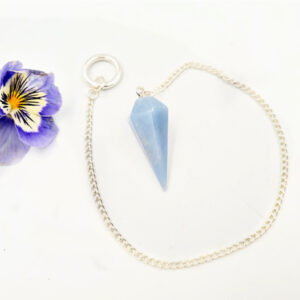
Angelite also appears at HIH as a polished pendulum.
A pendulum turns the material into an esoteric tool rather than simply a collectible stone.
Within spiritual traditions, pendulums are commonly used for reflection, intuitive questioning and energy practices. Angelite's established associations with communication and spiritual awareness naturally make it a popular material for this form.
Browse the wider Pendulums collection if you would like to compare Angelite with other crystal and weighted pendulum materials.
These uses belong to spiritual and metaphysical traditions rather than scientifically demonstrated properties of anhydrite.
Wearing Angelite
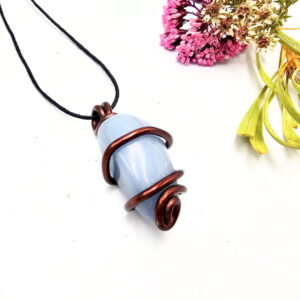
The current HIH range also includes an Angelite Copper Wrap Necklace, pairing a natural Angelite stone with enameled copper wire and an adjustable black cord.
This format allows the blue stone to remain the focal point rather than cutting it into a highly uniform jewellery component.
For more natural-stone pendant styles, browse Gem & Crystal Necklaces.
Angelite jewellery deserves slightly more thoughtful handling than jewellery made from harder stones.
It is a relatively soft material, so protecting it from knocks, scratching, harsh chemicals and unnecessary moisture will help preserve the surface.
Angelite Is Not Celestite
Angelite and Celestite can both appear in pale, heavenly shades of blue and both have acquired strong angelic associations in crystal traditions.
They are not the same mineral.
Angelite is blue anhydrite.
Celestite — also called celestine — is a different mineral with a different chemical composition and crystal structure.
This matters when identifying products.
Colour and metaphysical marketing should never replace the actual mineral name.
If an HIH product is Angelite, it should remain under Angelite, not be cross-categorised as Celestite simply because both are pale blue.
Where Does Angelite Come From?
The name Angelite became established in the lapidary and crystal trade for pale blue-grey anhydrite material from Peru.
Peruvian workshops polished the material into forms such as spheres, eggs, wands and carvings, helping the trade name become widely recognised.
For category-level education, Peru is therefore genuinely relevant to the Angelite story.
For individual HIH products, however, there is still an important distinction:
Known association of Angelite material: Peru.
Verified origin of this particular product: only state Peru when the supplier provenance for that stock supports it.
That keeps general mineral information separate from stock-specific provenance.
Why Angelite Needs Gentle Care
Angelite is not a stone that benefits from aggressive cleaning.
Its relative softness means polished surfaces can scratch more readily than harder quartz-family stones.
Avoid prolonged soaking, harsh chemicals and abrasive cleaners.
A soft dry cloth is a sensible starting point for routine care.
For jewellery, also consider the other materials involved. Wire, cords, clasps and elastic can each have their own care requirements.
If you use crystals in spiritual cleansing practices, choose a dry method for Angelite rather than leaving it sitting in water.
Angels, Communication and the Name Angelite
The name Angelite is a commercial and metaphysical name rather than a formal mineral-species name.
Its pale blue colour and the name itself helped the stone become strongly associated with angelic symbolism in modern crystal traditions.
Angelite is commonly linked with peace, gentle communication, spiritual awareness, intuition and connection with angels or guides.
It is also frequently associated with the Throat, Third Eye and Crown Chakras in contemporary crystal practice.
Those ideas belong to metaphysical tradition.
They should not be presented as scientifically measurable properties of calcium sulphate.
That distinction allows HIH to keep the magical and spiritual character customers enjoy while still being accurate about the mineral itself.
Choosing Angelite
Start with colour.
Some pieces are a clearer powder blue.
Others lean towards blue-grey or contain more pale mottling.
Then choose the form that suits what you actually want.
Choose a tumble stone for a small polished piece that is easy to collect or carry.
Choose a pendulum if you specifically want an esoteric tool.
Choose Angelite jewellery when you want the stone's gentle blue colour in wearable form.
For a wider look at stones organised by their individual mineral and trade names, browse the Crystal Names collection.
There is no requirement for Angelite to be perfectly even blue.
Its softer markings and colour variations are part of the natural material.
Frequently Asked Questions
Is Angelite a mineral?
Angelite is a trade name for pale blue-grey anhydrite. Anhydrite is the actual mineral species, with the chemical formula CaSO₄.
Is Angelite the same as anhydrite?
Angelite is a particular blue-grey gem and lapidary material belonging to anhydrite, so the names are closely related. Not every piece of anhydrite is sold as Angelite.
Can Angelite go in water?
Prolonged soaking is best avoided. Angelite is relatively soft anhydrite and deserves gentler care than harder quartz-based stones. A soft dry cloth is a safer everyday cleaning choice.
Is Angelite the same as Celestite?
No. Both can be pale blue, but Angelite is anhydrite while Celestite is a different mineral.
What is Angelite traditionally associated with?
Within crystal traditions, Angelite is commonly associated with peace, communication, spiritual awareness, intuition and angelic symbolism.