
Black Obsidian
Glossy, dramatic and born from rapidly cooled volcanic lava, Black Obsidian has an unmistakable glass-like appearance. Explore our extensive collection of Black Obsidian in rough and polished pieces, tumble stones, carvings, jewellery and decorative shapes, alongside its traditional associations with grounding, protection, strength and self-reflection.
Showing 1–25 of 39 resultsSorted by latest
-
-

-
-
-
-
-
-
-
-
-
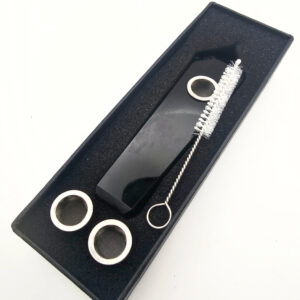
Black Obsidian Smoking Pipe (10cm)
Original price was: R499.00.R329.00Current price is: R329.00. Add to basketQuick View -
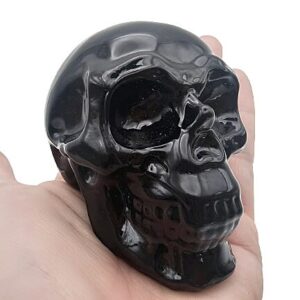
Black Obsidian Skull Large (7cm)
Original price was: R1,499.00.R1,049.00Current price is: R1,049.00. Add to basketQuick View -
-
-
-
-
-
-
-
-
-
-
-
Black Obsidian: Volcanic Glass, Crystals & Jewellery
Deep black, naturally glossy and formed through volcanic activity, Black Obsidian looks unlike many of the minerals you'll find in a crystal collection.
Hello Indigo Halo's extensive Black Obsidian range includes rough pieces, smooth tumble stones, large specimens, carvings, pyramids, jewellery and other decorative forms. This variety makes it easy to explore the material according to shape, size, style or simply the piece that catches your attention.
If you'd like to compare Black Obsidian with other stones, browse our Crystal Names collection to explore the wider HIH crystal range by gemstone and mineral.
What Is Black Obsidian?
Black Obsidian is a naturally occurring volcanic glass.
It forms when silica-rich lava cools so rapidly that there isn't enough time for a conventional crystalline structure to develop. This is why Obsidian can have such a smooth, glassy appearance.
Geologically, that means Black Obsidian isn't technically a crystal in the same structural sense as Quartz or Tourmaline, even though it is commonly grouped with crystals and gemstones in shops, collections and modern crystal practices.
Its volcanic origin is one of the things that makes it so interesting.
What Does Black Obsidian Look Like?
Classic Black Obsidian is typically deep black and may appear highly glossy when polished.
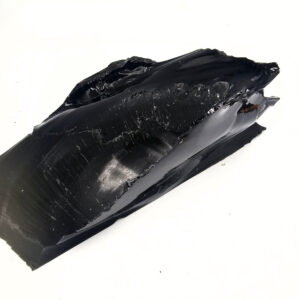
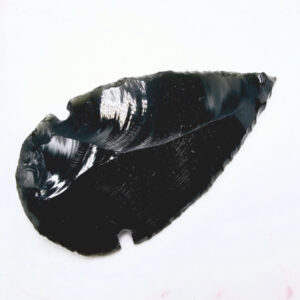
Its appearance can change considerably according to how it has been cut or finished. A rough piece may have irregular edges and natural fracture surfaces, while polished tumble stones and carvings can develop an almost mirror-like shine.
Because Obsidian is glassy, rough or broken pieces can also have very sharp edges. Handle unpolished specimens carefully rather than assuming every piece will feel smooth.
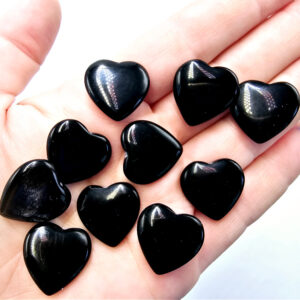
Black Obsidian Tumbled Stones
Black Obsidian works particularly well as a tumble stone because polishing emphasises its rich black colour and glossy surface.
Smaller polished pieces are easy to collect, display, carry or combine with other gemstones, while their simple colouring creates a striking contrast beside brighter minerals.
Browse our Tumbled Stones collection if you'd like to compare Black Obsidian with a much wider selection of polished gemstones.
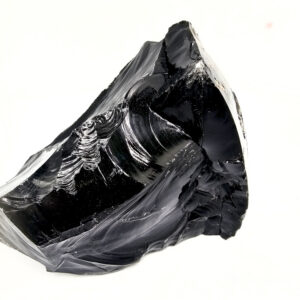
Rough Black Obsidian
Rough Black Obsidian shows a very different side of the material.
Instead of the uniform shine of a polished piece, rough specimens can reveal irregular surfaces, fracture patterns and the natural character of volcanic glass.
HIH's collection can include both small rough pieces and substantially larger display specimens, making it worth checking the individual product dimensions and weight rather than judging scale from photography alone.
Rough edges can be sharp, so larger or unpolished pieces should be handled and positioned carefully.
Black Obsidian Carvings & Shapes
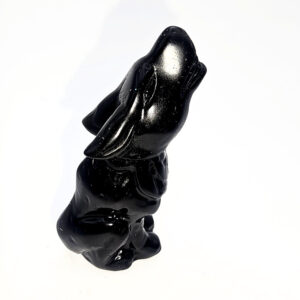
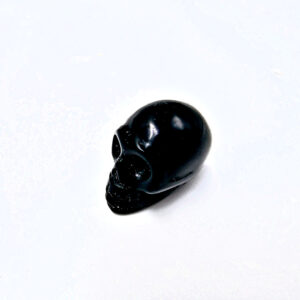
The dark, glossy surface of Black Obsidian creates particularly dramatic carved pieces.
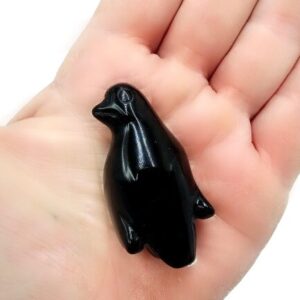
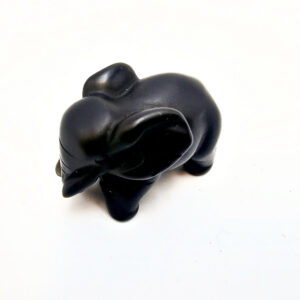
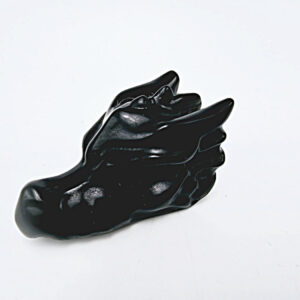
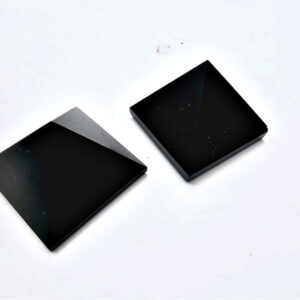
Our changing collection can include animals, skulls, pyramids, arrowheads and other polished or carved forms. A carving combines the visual character of the material with the symbolism or personality of the chosen shape.
If the form of a crystal is as important to you as the stone itself, our Crystal Shapes collection lets you explore hearts, spheres, wands, towers, carvings, rough pieces and many other forms across different gemstones.
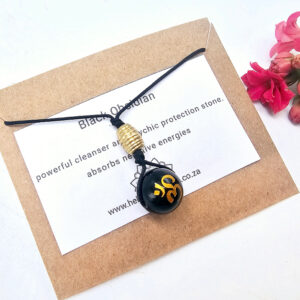
Black Obsidian Jewellery
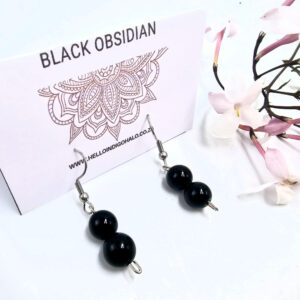
Black Obsidian's neutral colouring makes it remarkably versatile in jewellery.
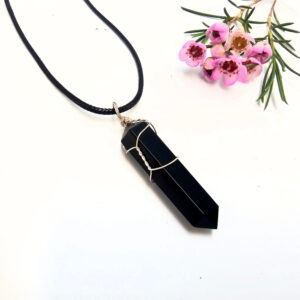
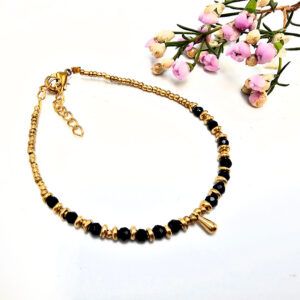
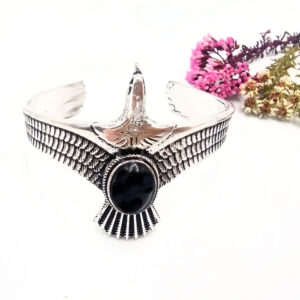
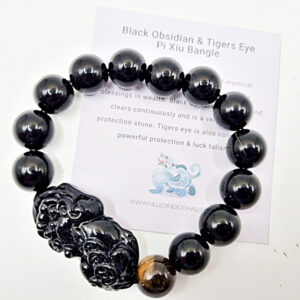
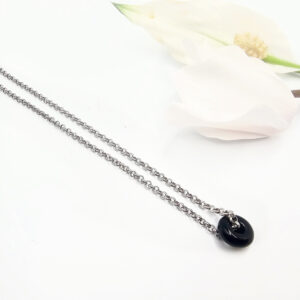
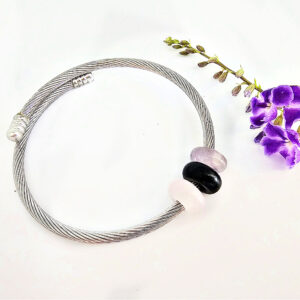
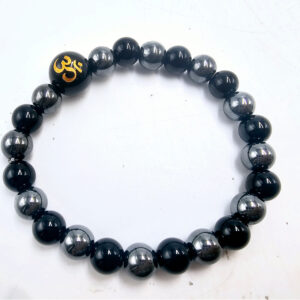
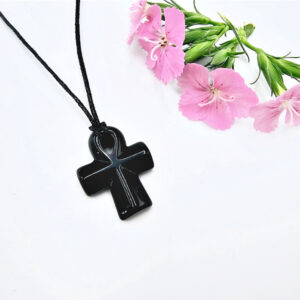
Its polished black surface can work with warm brass, silver-toned metals, beads, cord and more elaborate symbolic designs. HIH's current Black Obsidian range includes bangles, necklaces, ankle jewellery and other changing designs.
Some pieces combine Black Obsidian with symbolic elements such as eagles, Pi Xiu or chakra designs, while others allow the gemstone itself to remain the focus.
For a broader selection of wearable natural stones, browse our Gem & Crystal Necklaces collection to explore Black Obsidian alongside many other gemstone necklace styles.
Black Obsidian Meaning & Traditional Associations
Within modern crystal and metaphysical traditions, Black Obsidian is commonly associated with grounding, protection, strength, truth and self-reflection.
Some practices use it symbolically when exploring difficult emotions, personal boundaries or patterns someone wants to understand more clearly.
Black Obsidian is also frequently associated with the root chakra within contemporary chakra practices.
These are traditional and metaphysical associations rather than scientifically established effects of volcanic glass. Black Obsidian can be appreciated just as readily for its geology, appearance and long history of human use.
Black Obsidian & Protection
Protection is probably one of the meanings customers encounter most often when reading about Black Obsidian.
Within crystal traditions, the stone is often described as protective or grounding and may be incorporated into meditation, personal rituals, jewellery or symbolic spaces for this reason.
This should be understood as a spiritual or symbolic tradition, rather than evidence that Black Obsidian physically absorbs negative energy or creates a scientifically measurable protective field.
If protective symbolism is particularly important to you, our Black Tourmaline collection offers another dark mineral traditionally associated with grounding and protection, while being geologically very different from Obsidian.
Black Obsidian vs Black Tourmaline
Black Obsidian and Black Tourmaline can look superficially similar because both are usually dark, but they are completely different materials.
Black Obsidian is volcanic glass, created when lava cools rapidly.
Black Tourmaline is a crystalline mineral, commonly referring to the black Tourmaline variety Schorl.
Their natural textures can also differ considerably. Obsidian often has a glassy appearance and conchoidal fracture, while rough Black Tourmaline commonly displays more obvious crystalline or striated texture.
If you're choosing between them, appearance and mineral interest are just as valid a reason as their different traditional metaphysical associations.
Choosing Black Obsidian
Start by deciding what you actually want from the piece.
Choose a tumble stone if you want something small, smooth and easy to collect or carry.
Choose a rough specimen if you're interested in the natural texture and volcanic character of the material.
Choose a carving or polished shape when the design itself is part of the appeal.
Choose Black Obsidian jewellery when you'd rather wear the stone as part of your everyday style.
For larger or individually photographed specimens, look closely at the dimensions, weight and product information before ordering.
Natural Variation in Black Obsidian
Although Black Obsidian may initially appear relatively uniform, individual pieces can still differ.
Shape, surface texture, translucency at thin edges, natural markings, fractures and the quality of the polished finish can vary.
Rough pieces can differ particularly dramatically because they retain more of their irregular natural fracture surfaces.
These variations are normal characteristics of natural material rather than something that needs to be perfectly identical from one piece to another.
Caring for Black Obsidian
Black Obsidian's glass-like structure means it deserves sensible handling.
Protect polished pieces from hard knocks and abrasive surfaces that could scratch or chip them. Rough or damaged edges can become sharp, so inspect pieces before handling them extensively or giving them to children.
For routine cleaning, begin with a soft cloth and follow any additional instructions supplied with the particular product.
Jewellery should also be cared for according to the metal, cord, setting and other materials used in the design.
Frequently Asked Questions About Black Obsidian
What is Black Obsidian?
Black Obsidian is a naturally occurring volcanic glass formed when suitable lava cools so rapidly that a conventional crystalline structure doesn't have time to develop.
Is Black Obsidian a crystal?
Geologically, Black Obsidian is volcanic glass rather than a crystalline mineral. It is nevertheless commonly grouped with crystals and gemstones in jewellery, collecting and metaphysical traditions.
What is Black Obsidian traditionally associated with?
Within modern crystal traditions, Black Obsidian is commonly associated with grounding, protection, strength, truth and self-reflection. These are traditional metaphysical associations rather than scientifically established effects.
What is the difference between Black Obsidian and Black Tourmaline?
Black Obsidian is volcanic glass, while Black Tourmaline is a crystalline mineral. They can both appear black and share some traditional metaphysical associations, but their geology, structure and natural appearance are different.
Can rough Black Obsidian be sharp?
Yes. Obsidian can fracture to produce extremely sharp edges, so rough pieces should be handled carefully.