
Bloodstone
Dark green with distinctive red markings, Bloodstone is a variety of chalcedony with an intriguing history stretching back centuries. Explore polished points, rough pieces, tumble stones and Bloodstone jewellery, including striking Swazi specimens. Within crystal traditions, Bloodstone is strongly associated with courage, vitality, resilience and grounding.
Showing all 9 resultsSorted by latest
Why Is It Called Bloodstone?
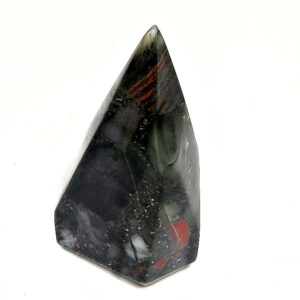
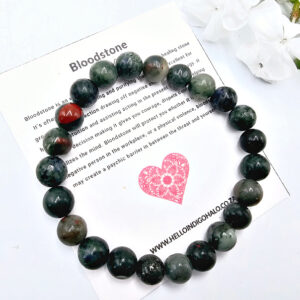
Bloodstone is usually recognised by its dark green body colour scattered with red spots, flecks or markings.
Those red markings inspired the name, but they're not blood trapped inside the stone. Bloodstone is a form of chalcedony, while the characteristic red colouring is commonly associated with iron-bearing mineral inclusions.
Bloodstone is also known by the older name Heliotrope, a name with roots stretching back to the ancient world.
If you're exploring stones by mineral name rather than shape, our Crystal Names collection is the best place to compare Bloodstone with the wider HIH crystal range.
Bloodstone Has a Remarkable History
Bloodstone has attracted stories for a very long time.
The name Heliotrope comes from Greek words connected with the sun and turning, and ancient writers recorded beliefs surrounding the stone and sunlight.
Centuries later, Bloodstone also became associated with Christian folklore. A well-known medieval tradition held that drops of Christ's blood fell onto green stone at the Crucifixion, creating its red markings.
That's a legend rather than an explanation of how the mineral actually formed, but it shows just how strongly Bloodstone's unusual colouring has influenced the stories people have attached to it.
It has also been carved historically into seals, signet pieces, amulets and religious objects.
From Small Tumbles to Swazi Bloodstone Points
The current HIH collection is small, but the formats are surprisingly varied.
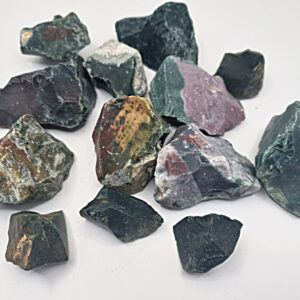
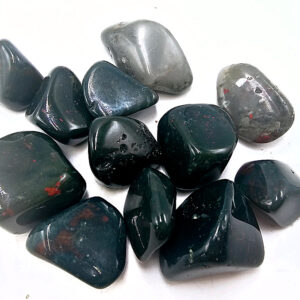
There are inexpensive Bloodstone tumble stones and natural rough pieces for customers who simply want to add the stone to a collection.
At the other end of the scale are substantial Swazi Bloodstone polished points, including individual pieces weighing several hundred grams. Some of these specimens also contain visible Pyrite, adding metallic detail against the darker stone.
A polished point shows Bloodstone very differently from a tumble. Larger surfaces make it easier to appreciate changes in colour, pattern and mineral inclusions across the specimen.
If polished statement crystals are what catch your eye, browse our Selected Crystals – Polished collection for individually selected pieces across other minerals too.
Bloodstone Meaning: Courage, Strength & Resilience
Bloodstone has developed a particularly strong metaphysical identity.
Within crystal traditions it is associated with courage, vitality, strength, grounding, protection, resilience and determination.
It is often chosen when someone wants a symbolic reminder to stand firm, keep going or face something difficult with greater confidence.
Its long history as a talisman adds another layer to those modern associations. Bloodstone wasn't invented as a “healing crystal” by the contemporary crystal world — people have attributed symbolic and protective significance to it for centuries.
That makes it an interesting stone for anyone who enjoys both the metaphysical meanings of crystals and the stories humans have attached to minerals throughout history.
Wearing Bloodstone
Bloodstone's deep green colouring makes it easy to wear without being overly bright.
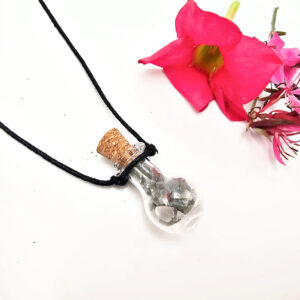
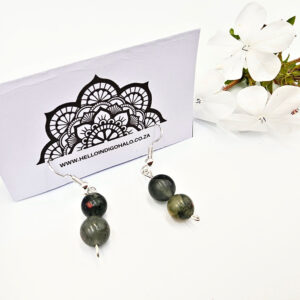
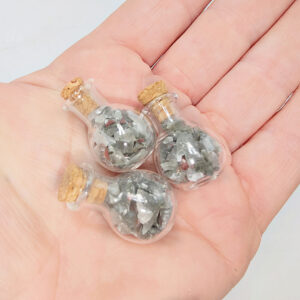
The current HIH range includes a Bloodstone bangle, beaded earrings and a mini bottle necklace, giving customers a few very different ways to wear the stone.
The red markings aren't necessarily equally visible in every bead or chip. Natural material can range from obviously spotted pieces to stones where the contrast is much subtler.
If bracelets are your preferred way to wear crystals, our Bangles & Bracelets collection brings together gemstone beads and chips alongside brass, copper, macramé and other designs.
Choosing Bloodstone
Don't judge Bloodstone only by how many red spots you can see.
One piece may have obvious red flecks. Another may be dominated by deep green, with lighter areas, darker markings or other mineral features.
Rough Bloodstone preserves more of the stone's natural texture, while tumbling creates a smooth pocket-sized piece. A larger polished point gives you far more surface area to appreciate the pattern, and jewellery makes the stone easy to carry or wear.
For smaller polished stones across many different minerals, our Tumbled Stones collection is another useful place to browse.
Frequently Asked Questions
Is Bloodstone always green and red?
Green with red markings is the classic appearance, but individual pieces vary. The amount and distribution of red can differ considerably, and other colours or mineral inclusions may also be visible.
Is Bloodstone the same as Heliotrope?
Heliotrope is a traditional name for Bloodstone. You'll encounter both names in mineral, gemstone and historical references.
Is Bloodstone a birthstone?
Bloodstone is one of the traditional alternative birthstones associated with March, alongside the better-known modern March birthstone, Aquamarine.
What is Swazi Bloodstone?
“Swazi Bloodstone” refers to Bloodstone associated with Eswatini, historically known as Swaziland. The HIH collection currently includes several substantial polished specimens sold under this name.