
Blue Sandstone
Like a tiny night sky filled with stars, Blue Sandstone is deep midnight blue with thousands of shimmering metallic flecks. Also known as Blue Goldstone, this beautiful man-made aventurine glass is loved for its extraordinary sparkle and associations with ambition, confidence and motivation. Explore polished stones and jewellery that really come alive in the light.
Showing all 5 resultsSorted by latest
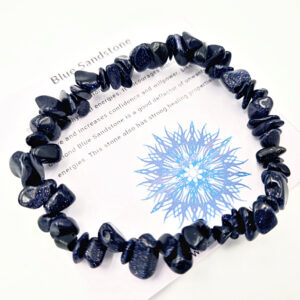
Blue Sandstone: The Starry Glass Also Known as Blue Goldstone
Hold Blue Sandstone beneath the light and its name almost stops mattering.
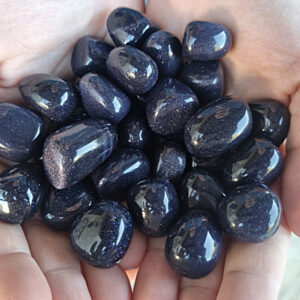
The deep midnight-blue background is filled with countless tiny metallic flashes, creating an effect that looks remarkably like stars scattered across a night sky.
But despite the name, Blue Sandstone isn't geological sandstone.
It is a man-made aventurine glass, more accurately known as Blue Goldstone. The material is deliberately created to produce its distinctive combination of rich blue colour and suspended sparkle.
That makes Blue Sandstone different from most of the naturally formed minerals in our Crystal Names A–Z — but no less fascinating to look at.
Why Does Blue Sandstone Sparkle?
The glitter isn't painted onto the surface.
Blue Goldstone belongs to a family of decorative materials known as aventurine glass, in which tiny reflective crystals are formed within the glass itself under carefully controlled manufacturing conditions.
The blue glass is coloured using compounds such as cobalt, while reflective metallic crystals suspended throughout the material create its famous aventurescent sparkle.
That's why polishing doesn't remove the stars.
Cut through a piece and the sparkling material continues beneath the surface.
The effect becomes especially dramatic as a polished stone or bead moves through direct light, with different flecks appearing and disappearing as the angle changes.
Blue Sandstone, Blue Goldstone or Aventurine Glass?
All three names can appear around this material, but they don't mean three different stones.
Blue Goldstone is the more accurate and widely recognised trade name.
Aventurine glass describes the broader family of manufactured sparkling glass to which Goldstone belongs.
Blue Sandstone is another popular commercial name for the blue variety.
There is no natural sandstone involved.
And despite the name Goldstone, there isn't gold scattered through it either.
Understanding that doesn't take anything away from the material. It simply gives the sparkle a much more interesting explanation.
A Glassmaking Story With a Little Mystery
Goldstone has a fascinating history of its own.
Sparkling aventurine glass became particularly associated with Venetian glassmaking, and documented production is linked with Venice from around the 17th century.
There is also a much-loved story that Goldstone was discovered accidentally when monks spilled copper filings into molten glass.
It's a brilliant story — but it should be treated as legend rather than established history.
Historical examples suggest artisans knew how to create sparkling glass even earlier, while Venetian glassmakers later became particularly famous for producing it.
What we do know is that making aventurine glass requires considerable control.
The metallic crystals need the right conditions to develop inside the molten glass as it cools.
Something that looks accidental is actually quite technically clever.
Blue Sandstone Meaning: The Stone of Ambition
Within modern crystal traditions, Blue Sandstone is strongly associated with ambition, confidence, motivation and determination.
It is sometimes called a Stone of Ambition, with practitioners choosing it symbolically when working towards a goal, starting something new or trying to regain momentum.
There's something wonderfully appropriate about that association.
Blue Sandstone is itself a created material: ordinary glassmaking ingredients transformed through skill, heat and patience into something that sparkles.
For some people, that makes it a fitting symbol for potential, perseverance and creating something more from what you already have.
These are metaphysical and symbolic associations rather than scientifically established effects, but they are an important part of Blue Sandstone's popularity within contemporary crystal culture.
A Night-Sky Stone
It's difficult to look at polished Blue Sandstone without seeing a night sky.
That visual resemblance has helped it develop additional associations with possibility, dreams, inspiration and reaching beyond perceived limitations.
Some people use it during meditation or keep a tumble stone nearby while working towards personal or professional goals.
Others simply love the galaxy-like appearance.
Both are perfectly good reasons to choose it.
Unlike a natural crystal whose pattern may change dramatically from specimen to specimen, Blue Sandstone often has an unusually consistent field of sparkle, making even small tumble stones and beads visually striking.
Blue Sandstone and the Throat Chakra
Its deep blue colour has also given Blue Sandstone a place within modern Throat Chakra traditions.
Blue is traditionally associated with communication and self-expression, so some practitioners combine Blue Sandstone's ambition symbolism with themes of confidence, speaking up and expressing ideas.
It may therefore be chosen symbolically when someone wants not only to have an idea or goal, but to communicate it with greater confidence.
For crystals and spiritual tools selected around the chakra system, browse our Chakra Balance collection.
Blue Sandstone in Jewellery
This material was practically made for movement.
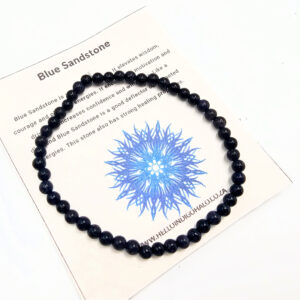
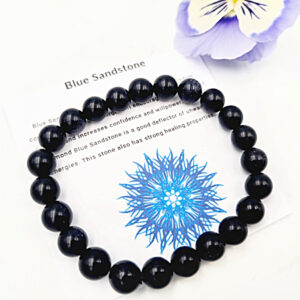
Tiny reflective flecks continually catch and release the light as beads move on the wrist, which makes Blue Sandstone particularly effective in bangles and other jewellery.
The dark blue background also makes the sparkle noticeable without requiring a large stone.
Our current collection includes polished tumble stones as well as Blue Sandstone bangles, giving you the choice between something to hold or display and something you can wear.
Browse more gemstone and crystal bracelets in Bangles & Bracelets.
Blue Sandstone Isn't Blue Aventurine
The names can cause confusion because both involve the word aventurine somewhere in their story.
Blue Sandstone or Blue Goldstone is manufactured aventurine glass.
Natural Aventurine is a quartz-rich material whose sparkling appearance can be produced by reflective mineral inclusions.
The resemblance between sparkling glass and natural aventurescent stones eventually connected their terminology, but they're not the same material.
One is deliberately made by people.
The other forms through geological processes.
Choosing Blue Sandstone
With Blue Sandstone, look at the stars.
Turn a polished piece through the light and notice how densely the metallic flecks are distributed and how strongly they contrast against the blue glass.
Some pieces may appear almost black-blue until direct light reaches them, while others show their sparkle immediately.
In jewellery, look at the overall effect created by several beads or chips together.
And if you're choosing it for its metaphysical symbolism, ambition and motivation are the associations most strongly connected with the material.
Caring for Blue Sandstone
Blue Sandstone is glass, so treat it accordingly.
Avoid dropping it onto hard surfaces or knocking polished pieces against harder materials, as glass can chip or fracture.
For jewellery, remove it before swimming, showering or using household cleaning products.
A soft cloth is generally enough to keep polished Blue Sandstone looking bright and glossy.
Frequently Asked Questions
Is Blue Sandstone natural?
No. Blue Sandstone is a man-made aventurine glass rather than naturally occurring sandstone or a mined mineral. Its sparkling appearance is deliberately created during glassmaking.
Is Blue Sandstone the same as Blue Goldstone?
Yes. Blue Goldstone is another name for the material commonly sold as Blue Sandstone. Blue Goldstone is the more descriptive name mineral and glass references tend to use for this sparkling manufactured glass.
What gives Blue Sandstone its starry sparkle?
Tiny reflective metallic crystals formed within the glass create its aventurescent effect. Because the sparkle occurs throughout the material rather than simply sitting on its surface, polished pieces can look like miniature star fields.
Why is Blue Sandstone called the Stone of Ambition?
Within modern crystal traditions, Blue Sandstone is associated with ambition, confidence, motivation and perseverance. Some people use it symbolically when working towards goals or beginning something new.
Does Blue Sandstone contain real gold?
No. Despite the alternative name Goldstone, the sparkle isn't gold. The name refers to the glittering appearance of the material rather than the presence of precious gold.