
Chlorite Quartz
Green mineral inclusions give Chlorite Quartz its fascinating layered, mossy and sometimes phantom-like appearance. Rather than being a separate Quartz species, it is Quartz containing minerals from the Chlorite Group, with every specimen revealing its inclusions differently. Within crystal traditions, Chlorite Quartz is commonly associated with grounding, renewal, connection with nature and reflective spiritual work.
Showing the single result
-
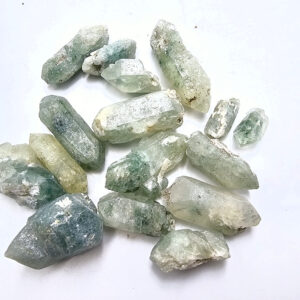
Chlorite Quartz Rough Mini Pieces (50g Pack)
Original price was: R79.00.R35.00Current price is: R35.00. Add to basketQuick View
A Landscape Trapped Inside Quartz
Chlorite Quartz can look as though something green began growing inside a clear crystal and was suddenly frozen in place.
Fine green flakes, cloudy areas, darker patches or phantom-like layers can sit inside the Quartz rather than simply colouring the whole stone.
That makes the inclusions the main attraction.
Turn a specimen and an internal feature that looked flat from one angle can suddenly reveal depth, layering and structure.
What Is Chlorite Quartz?
Chlorite Quartz is Quartz containing minerals from the Chlorite Group.
The Quartz itself has the familiar chemical formula:
SiO₂
The green material is not simply “green Quartz pigment”.
It consists of mineral inclusions associated with the Chlorite Group.
This also means Chlorite Quartz is not a separate mineral species with one unique chemical formula.
The specimen is principally Quartz plus included or associated Chlorite Group minerals.
Chlorite Is a Mineral Group
This is an important detail that often disappears from crystal descriptions.
“Chlorite” does not refer to one single mineral with exactly the same composition in every Chlorite Quartz specimen.
The Chlorite Group contains a number of related minerals.
Unless the individual inclusion has actually been identified, it is therefore more accurate to write:
Chlorite Group inclusions
or:
Quartz with Chlorite inclusions
rather than assigning one specific Chlorite mineral species without evidence.
Why Do the Inclusions Look So Different?
Chlorite can become incorporated into or associated with Quartz during different stages of mineral growth.
Depending on the specimen, it may appear as fine particles, flakes, cloudy green areas, coatings or more organised internal layers.
Sometimes inclusions become concentrated along earlier stages of crystal growth.
When later Quartz continues growing around that earlier shape, the result can resemble the outline of a crystal suspended inside another crystal.
This is the type of feature collectors commonly call a phantom.
Not every Chlorite Quartz is a phantom, though.
Use that name only when the specimen actually displays the appropriate internal growth structure.
Chlorite Quartz Versus Garden Quartz
These categories can overlap, but they should not automatically be treated as synonyms.
Garden Quartz, often sold under the trade name Lodolite, is used for included Quartz whose internal mineral patterns create scenic, mossy or landscape-like effects.
Those inclusions can include Chlorite, but Garden Quartz may contain other minerals too.
HIH's existing Garden Quartz product, for example, describes Garden Quartz as Clear Quartz containing inclusions such as Feldspar, Hematite and Chlorite.
So the useful taxonomy distinction is:
Chlorite Quartz — Chlorite is the defining inclusion.
Garden Quartz — the broader scenic included-Quartz appearance is the defining commercial identity.
One specimen could potentially satisfy both descriptions, but cross-categorisation should follow the actual material rather than being automatic.
Choosing Chlorite Quartz
With included Quartz, clarity is not always the goal.
A highly transparent area can make internal Chlorite easy to see, but a specimen filled with dense green inclusions can be equally interesting.
Look at:
Inclusion pattern — scattered, layered, cloudy or phantom-like.
Colour — Chlorite-associated material can vary from pale green to much darker tones.
Quartz clarity — clear, translucent or clouded areas create different effects.
Crystal form — points, clusters and polished pieces reveal inclusions differently.
Individual character — two specimens from the same batch may have completely different internal landscapes.
Natural variation is one of the reasons included Quartz is so enjoyable to collect.
For a broader way to browse stones according to their mineral and trade names, visit the Crystal Names collection.
Chlorite Quartz in Crystal Traditions
Within crystal traditions, Chlorite Quartz is commonly associated with grounding, renewal, nature connection, personal growth and reflective spiritual work.
Its green inclusions are also frequently connected symbolically with the Heart Chakra and earth-related practices.
These are metaphysical traditions rather than scientifically demonstrated properties of Quartz or Chlorite minerals.
From a mineral collector's perspective, the specimen is already fascinating because its inclusions can preserve visible evidence of different stages and conditions during crystal growth.
Caring for Chlorite Quartz
Because the main host mineral is Quartz, Chlorite Quartz generally has the familiar durability associated with Quartz.
However, specimen shape matters.
Natural crystal points, clusters, exposed inclusions and delicate edges can still chip or break if knocked.
Use a soft cloth or gentle brush where appropriate and avoid harsh household chemicals or abrasive cleaning.
For natural clusters, pay particular attention to fragile terminations and attached mineral material rather than treating the specimen as though it were a solid polished tumble.
Frequently Asked Questions
What is Chlorite Quartz?
Chlorite Quartz is Quartz containing or associated with minerals from the Chlorite Group, often creating green internal inclusions, coatings or phantom-like patterns.
Is Chlorite Quartz naturally green?
The Quartz itself may remain clear or translucent. Its green appearance commonly comes from Chlorite Group mineral inclusions or associated material.
Is all Chlorite Quartz Phantom Quartz?
No. Chlorite can occur in many inclusion patterns. The term Phantom Quartz is most appropriate when visible internal growth outlines form a phantom-like crystal shape.
Is Chlorite Quartz the same as Garden Quartz?
Not necessarily. Garden Quartz is a broader commercial term for scenic included Quartz and may contain Chlorite along with other mineral inclusions.
What is Chlorite Quartz traditionally associated with?
Within crystal traditions, Chlorite Quartz is commonly associated with grounding, renewal, nature connection, personal growth and reflective spiritual practice.