
Kunzite
Soft pink to lilac Kunzite is the best-known gem variety of Spodumene, loved for its delicate colour and beautiful natural crystals. Traditionally associated with love, emotional openness and the Heart Chakra, Kunzite also has a fascinating gemological character — including colour that can appear different with direction and fade with prolonged bright light.
Showing all 3 resultsSorted by latest
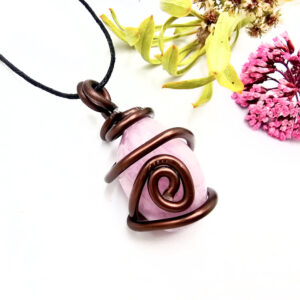
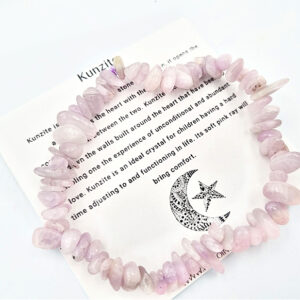
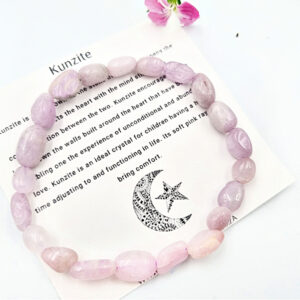
Kunzite: The Delicate Pink Gemstone With a Surprising Story
From the palest blush pink to lilac and violet-purple, Kunzite has a softness to its colour that makes it immediately recognisable.
Yet this beautiful stone isn't simply another pink crystal.
Kunzite is the pink to violet variety of Spodumene, and its colour, crystal structure and unusual sensitivity to light give it a fascinating character of its own.
It is also a relative newcomer to the gemstone world.
What Is Kunzite?
Kunzite is the pink to violetish-purple gem variety of Spodumene, a lithium aluminium silicate mineral.
Its chemical formula is LiAlSi₂O₆, and its characteristic pink-to-purple colour is associated with trace amounts of manganese.
Spodumene can occur in several colours.
Pink and violet material is known as Kunzite, while green gem Spodumene can be known as Hiddenite and colourless-to-yellow material is sometimes called Triphane.
Kunzite crystals often develop as striking elongated or blade-like crystals and can sometimes reach surprisingly large sizes.
Browse more individual minerals and gemstones through our Crystal Names A–Z.
Kunzite Is a Surprisingly Young Gemstone
Compared with gemstones known for thousands of years, Kunzite arrived remarkably recently.
Pink Spodumene crystals discovered in San Diego County, California, were sent to pioneering gemologist George Frederick Kunz in 1902.
Kunz recognised the material as Spodumene but identified its pink colour as a previously unrecognised gem variety.
In 1903, chemist Charles Baskerville named the variety Kunzite in honour of George Kunz.
That means Kunzite has carried its modern gemstone name for only a little over a century.
Why Does Kunzite Look Different When You Turn It?
Kunzite is pleochroic.
This means its colour can appear different when the crystal is viewed from different crystallographic directions.
In good material, turning the stone can reveal variations in the strength and character of its pink, violet or other subtle tones.
This property matters particularly when Kunzite is faceted.
Gem cutters need to understand the orientation of the rough crystal because the strongest and most desirable colour is visible in particular directions.
A beautiful finished Kunzite therefore isn't simply about cutting a pretty shape — the cutter has to work with the internal optical structure of the crystal.
Can Kunzite Fade in Sunlight?
Yes, and this is one of the most important practical things to know about Kunzite.
Kunzite can fade with prolonged exposure to bright light and heat.
This isn't limited only to artificially coloured stones. Both natural Kunzite colour and colour enhanced through irradiation and heat treatment can be susceptible to fading.
For that reason, Kunzite is sometimes referred to as an “evening stone” — a lovely nickname for a gem whose colour is better protected from prolonged strong sunlight.
That doesn't mean Kunzite has to live permanently in darkness.
It simply means we wouldn't choose a sunny windowsill as its long-term display spot or leave Kunzite jewellery sitting in strong direct sunlight unnecessarily.
Kunzite Meaning
Within modern crystal traditions, Kunzite is strongly associated with love, emotional openness, compassion and gentleness.
Unlike some pink stones whose symbolism focuses primarily on romantic love, Kunzite is often chosen more broadly for themes of an open heart, emotional honesty and giving or receiving love freely.
Its delicate pink-violet colour naturally reinforces those associations.
There is also something rather fitting about a crystal whose beauty responds so noticeably to its environment.
Kunzite can be a symbolic reminder that sensitivity doesn't have to mean weakness — something delicate can still be beautiful, valuable and worthy of thoughtful care.
These are traditional and metaphysical associations rather than scientifically established effects.
Kunzite & the Heart Chakra
Kunzite is most commonly connected with the Heart Chakra in contemporary crystal practice.
The Heart Chakra is traditionally associated with love, compassion, emotional connection and our relationships with ourselves and others.
Kunzite's pink colouring makes this association particularly natural, while violet tones are sometimes also connected with higher spiritual awareness.
Explore more stones and spiritual tools associated with chakra traditions in our Chakra Balance collection.
Choosing Kunzite
Colour can vary considerably between individual pieces.
Some Kunzite is an extremely delicate pastel pink, while other material displays stronger lilac, violet-pink or purple tones.
Because Kunzite is pleochroic, orientation and lighting can also affect the colour you see.
Natural crystals may show growth features, cleavage, colour zoning and variations in transparency. These aren't reasons to expect every piece to look identical; they're part of the character of natural Spodumene.
When choosing Kunzite, look for the individual colour, crystal form and character that appeals to you.
Caring for Kunzite
Kunzite measures approximately 6.5–7 on the Mohs hardness scale, but hardness alone can give a misleading impression of durability.
Spodumene has two directions of perfect cleavage, meaning Kunzite can split if struck sharply in an unfortunate direction.
It therefore deserves more careful handling than its hardness number might suggest.
The safest everyday approach is simple: protect it from knocks, sudden temperature changes, harsh cleaning and prolonged exposure to strong light.
For Kunzite jewellery, warm soapy water and gentle cleaning are preferable to aggressive methods.
And if you own a particularly beautiful pink Kunzite specimen, don't make a sunny windowsill its permanent home.
Frequently Asked Questions About Kunzite
Is Kunzite a type of Spodumene?
Yes. Kunzite is the pink to violetish-purple gem variety of the mineral Spodumene.
What gives Kunzite its pink colour?
Kunzite's characteristic pink-to-purple colour is associated with trace amounts of manganese within the Spodumene.
Does Kunzite really fade in sunlight?
Kunzite can fade after prolonged exposure to strong light and heat. For this reason, specimens and jewellery are best protected from unnecessary extended exposure to intense sunlight.
Why can Kunzite look different colours from different angles?
Kunzite is pleochroic, so it absorbs and transmits light differently depending on the direction through the crystal from which it is viewed.
Why is Kunzite named Kunzite?
The gemstone was named in 1903 in honour of pioneering gemologist George Frederick Kunz, who had identified the pink material as a previously unrecognised variety of Spodumene.