
Larimar
Ocean blue, turquoise and white patterns make Larimar one of the most distinctive gemstones of the Caribbean. Found in the Dominican Republic, this rare blue variety of Pectolite is traditionally associated with tranquillity, communication and the Throat Chakra. Each piece reveals its own natural mix of colour, pattern and character.
Showing all 8 resultsSorted by latest
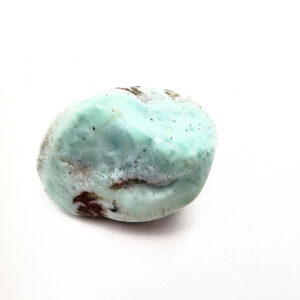
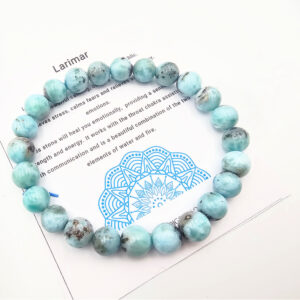
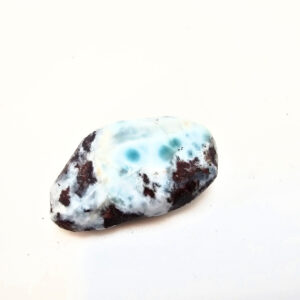
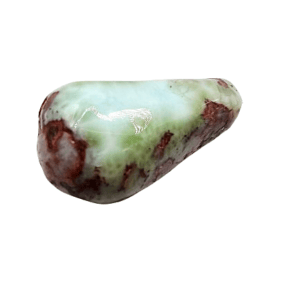
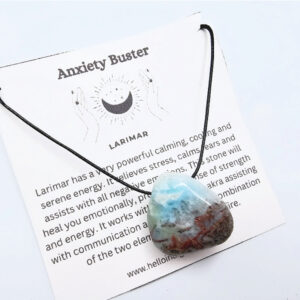

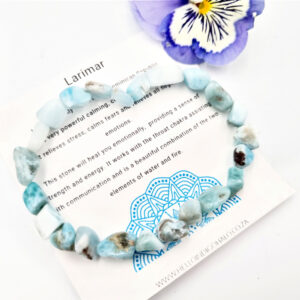
Larimar: The Blue Gemstone of the Dominican Republic
With colours reminiscent of shallow Caribbean water, Larimar can combine sky blue, turquoise, white and soft blue-green in beautifully irregular patterns.
Its appearance is distinctive enough.
Its origin makes it even more remarkable.
Larimar is the trade name for a rare blue variety of Pectolite, and the gem material is famously associated with one small region of the Dominican Republic.
What Is Larimar?
Mineralogically, Larimar is blue Pectolite.
Pectolite is a sodium-calcium silicate mineral with the formula NaCa₂Si₃O₈(OH).
Most Pectolite around the world isn't the Caribbean-blue material known as Larimar. The name Larimar is specifically associated with the blue massive Pectolite from the Dominican Republic that became prized as an ornamental and jewellery stone.
Its colour can range from pale blue and bluish-white through stronger sky and turquoise blues, often mixed with white, grey or greenish areas.
Those variations are part of Larimar's natural character rather than something that needs to look identical from piece to piece.
Browse more individual gemstones and minerals through our Crystal Names A–Z.
Why Is Larimar Blue?
One of the most interesting things about Larimar is the origin of its colour.
Gemological research has linked its characteristic blue colouring to small amounts of copper within the material.
That gives Larimar an interesting connection between chemistry and appearance: tiny differences in a mineral's composition can completely transform the colour we see.
Natural Larimar isn't always an intense Caribbean blue.
Some pieces are pale and cloudy, while others display stronger blues, white patterning or contrasting areas. Colour, pattern and translucency can all vary.
Where Does Larimar Come From?
Genuine Larimar is famous for its remarkably restricted geographical origin.
It comes from the Sierra de Baoruco in Barahona Province in the Dominican Republic, where blue Pectolite occurs within volcanic rocks.
Research into the deposit describes Larimar occurring in cavities and veins associated with altered basalt.
That geological setting is part of what makes the stone so fascinating.
Pectolite itself isn't unique to the Dominican Republic.
Larimar is.
It is the combination of this particular mineral, its unusual blue colour and its Dominican geological setting that created the gemstone recognised around the world by that name.
How Did Larimar Get Its Name?
The name Larimar has a wonderfully personal origin.
It is generally credited to Dominican Miguel Méndez, who combined part of his daughter Larissa's name with mar, the Spanish word for sea.
Lari + mar = Larimar.
The reference to the sea couldn't be more appropriate.
Polished Larimar can contain pale lines and patches running through blue areas in patterns that resemble sunlight, foam or clouds moving across tropical water.
It's one of those rare gemstone names where the story behind the name genuinely matches the appearance of the stone.
Is Larimar the Same as Turquoise?
No.
Their colours can sometimes overlap, but Larimar and Turquoise are completely different mineral materials.
Larimar is blue Pectolite.
Turquoise is a hydrated copper aluminium phosphate mineral.
Larimar also frequently has a flowing, cloudy or marbled blue-and-white appearance rather than the characteristic matrix patterns seen in many Turquoise specimens.
Colour alone is never enough to determine that two gemstones are related.
Larimar Meaning
Within modern crystal traditions, Larimar is associated with tranquillity, communication, emotional expression and a calm approach to difficult situations.
Its ocean-like appearance has strongly influenced its modern symbolism.
Larimar is often chosen as a reminder to communicate clearly without losing gentleness — particularly when emotions are involved.
Its connection with water imagery also lends itself naturally to themes of flow, adaptability and allowing tension to soften rather than forcing an outcome.
These are traditional and metaphysical associations rather than scientifically established effects.
Larimar & the Throat Chakra
Larimar is most commonly associated with the Throat Chakra in contemporary crystal practice.
The Throat Chakra is traditionally connected with communication, expression, honesty and finding the confidence to speak clearly.
Larimar's blue colour makes that association visually natural, while its broader symbolism adds an emphasis on calm and thoughtful communication rather than simply speaking more.
Explore more stones and spiritual tools associated with chakra traditions in our Chakra Balance collection.
Choosing Larimar
Larimar can vary enormously from one piece to another.
Some pieces are predominantly pale blue and white. Others contain deeper sky or turquoise-blue areas, intricate white patterning, greenish tones or sections of natural matrix.
Rather than expecting one uniform shade of blue, look at the balance of colour, pattern and individual character.
Polishing can make Larimar's flowing patterns especially striking, revealing the contrast between different areas within the material.
For jewellery, those natural variations also mean two pieces made from Larimar don't have to look exactly alike to belong to the same beautiful material.
Caring for Larimar
Larimar has a Mohs hardness of around 5, so it is considerably softer than Quartz and deserves thoughtful handling.
Protect it from hard knocks and from harder gemstones that could scratch its surface during storage.
Avoid harsh chemicals and high heat.
Gentle cleaning with lukewarm water, mild soap and a soft cloth is a sensible approach for most polished Larimar pieces. Jewellery settings and other materials should also be considered when choosing a cleaning method.
Frequently Asked Questions About Larimar
Is Larimar found anywhere else in the world?
Pectolite occurs in many places, but the distinctive blue gem material known as Larimar is associated with the Dominican Republic, particularly the Sierra de Baoruco area of Barahona Province.
What gives Larimar its blue colour?
Research indicates that Larimar's blue colour is associated with small amounts of copper within the Pectolite.
Is Larimar a type of Turquoise?
No. Their colours can sometimes look similar, but Larimar is Pectolite while Turquoise is a completely different mineral.
Why does every Larimar piece look different?
Natural variation in colour, mineral distribution and pattern means Larimar can range from pale blue and white to stronger turquoise and sky-blue combinations. Cutting and polishing also expose different parts of the original material.
What does the name Larimar mean?
Larimar combines part of the name Larissa, the daughter of Miguel Méndez, with mar, the Spanish word for sea — a fitting reference to the gemstone's Caribbean-blue appearance.