
Lava Stone
Dark, porous and wonderfully tactile, Lava Stone brings the raw character of volcanic rock into wearable jewellery. Its tiny holes and textured surface reflect the vesicular structure created as gases escaped from molten rock during cooling. Within crystal traditions, Lava Stone is commonly associated with grounding, strength, courage, stability and connection with the Earth.
Showing all 4 resultsSorted by latest
From Molten Rock to Porous Stone
Lava Stone looks very different from polished crystals such as Quartz, Jasper or Agate.
Instead of glassy clarity or colourful banding, its character comes from a dark colour, rough texture and countless tiny holes.
Those holes tell part of its volcanic story.
As molten rock reaches or approaches the surface and begins cooling, gases can form bubbles within it. When the rock solidifies around those bubbles, cavities known as vesicles remain behind.
The result is the naturally porous appearance strongly associated with Lava Stone jewellery.
What Is Lava Stone?
“Lava Stone” or “Lava Rock” is a broad commercial name rather than the name of one individual mineral species.
The dark porous material commonly used for Lava Stone beads is generally associated with vesicular volcanic rock, often basaltic or scoriaceous in character.
That distinction matters because Lava Stone is a rock, not a single crystal with one universal chemical formula.
A volcanic rock can contain several minerals and components.
For HIH, Lava Stone remains the most useful customer-facing name because it matches both the established jewellery trade term and the way shoppers recognise the material.
Why Does Lava Stone Have Holes?
The holes are called vesicles.
They form when gases expand within molten lava. As the material cools and solidifies, some of those gas-bubble spaces remain preserved in the rock.
That is why Lava Stone beads can look pitted, rough and almost sponge-like when viewed closely.
The texture is not automatically a defect.
It is one of the features that gives volcanic stone jewellery its distinctive character.
Lava Stone Is Not the Same as Pumice
Both materials can be volcanic and full of holes, but they should not automatically be treated as identical.
Pumice is generally extremely lightweight and highly vesicular, with some material even able to float.
Scoria and related dark vesicular volcanic rocks are generally heavier and darker.
The black or dark grey porous beads commonly sold as Lava Stone jewellery therefore should not simply be described as “pumice beads” unless that material identification is actually known.
Why Lava Stone Works So Well in Jewellery
Lava Stone has a completely different personality from highly polished gemstone beads.
Its matte, porous surface creates texture and contrast, particularly when paired with smoother stones, metal beads or symbolic elements.
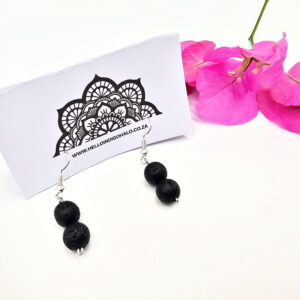
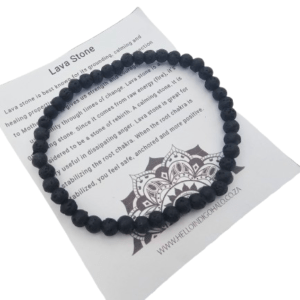
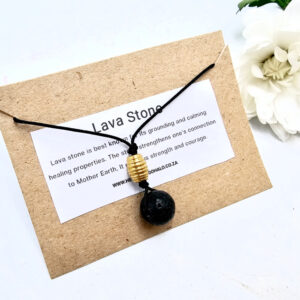
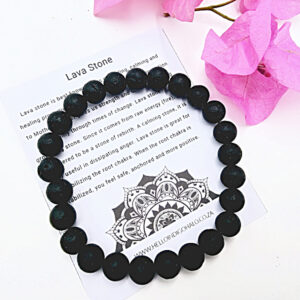
HIH's range has included Lava Stone in bracelets, necklaces and earrings, allowing the material to work as either the main feature or as a darker textural element within a design.
Browse the Bangles & Bracelets collection for more wrist jewellery, or visit Necklaces and Earrings for other jewellery styles.
Choosing Lava Stone Jewellery
Look beyond colour when comparing pieces.
Consider:
Texture — some beads may appear more porous and heavily pitted than others.
Bead size — finer beads create a subtler look while larger beads make the volcanic texture more noticeable.
Finish — matte and smoother-finished surfaces can create very different effects.
Design — Lava Stone can be worn alone or combined with other stones, metals and symbolic elements.
Construction — elastic, cord, wire, clasps and earring findings are part of the finished jewellery and should be considered when choosing and caring for a piece.
Natural variation in pore size and surface texture helps give individual beads their character.
For more stones and mineral materials organised by name, browse the Crystal Names collection.
Lava Stone in Crystal Traditions
Within crystal traditions, Lava Stone is commonly associated with grounding, strength, courage, stability and connection with the Earth.
Its volcanic origin has also inspired symbolic associations with transformation, endurance and new beginnings.
These are spiritual and metaphysical traditions rather than scientifically demonstrated effects of volcanic rock.
Lava Stone can equally be appreciated simply for its geological story, dark colour and unusual tactile surface.
Caring for Lava Stone Jewellery
The porous texture deserves slightly different care from a smooth polished gemstone.
Avoid soaking Lava Stone jewellery in perfumes, household cleaners or strongly coloured liquids, as porous surfaces can retain substances more readily than a highly polished surface.
Use a soft cloth or gentle brush where appropriate.
For bracelets and necklaces, avoid pulling or overstretching elastic and cord.
Earrings and pieces containing metal components should also be kept reasonably dry and stored carefully to protect the complete piece rather than only the Lava Stone beads.
Frequently Asked Questions
What is Lava Stone?
Lava Stone is a commercial name commonly used for dark porous volcanic rock, particularly material used for beads and jewellery. It is a rock rather than one individual mineral species.
Why does Lava Stone have holes?
The holes are vesicles created when gas bubbles formed in molten volcanic material and spaces remained as the rock cooled and solidified.
Is Lava Stone the same as pumice?
Not necessarily. Both can be highly porous volcanic rocks, but pumice is typically much lighter, while the dark material commonly associated with Lava Stone jewellery is often more basaltic or scoriaceous.
Is Lava Stone a crystal?
Geologically, it is better described as volcanic rock rather than a single crystal or mineral species.
What is Lava Stone traditionally associated with?
Within crystal traditions, Lava Stone is commonly associated with grounding, strength, courage, stability, transformation and connection with the Earth.