
Leopard Skin Jasper
Spots, rings and orb-like markings give Leopard Skin Jasper its wonderfully wild appearance, with every piece creating a different natural pattern. Despite its familiar trade name, the material commonly sold as Leopard Skin Jasper is more accurately associated with patterned rhyolitic rock. Within crystal traditions, it is often associated with grounding, resilience, adaptability and connection with nature.
Showing all 5 resultsSorted by latest
-
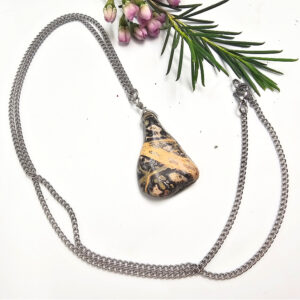
Leopard Skin Jasper Necklace
Original price was: R199.00.R109.00Current price is: R109.00. Add to basketQuick View -
-

-
-
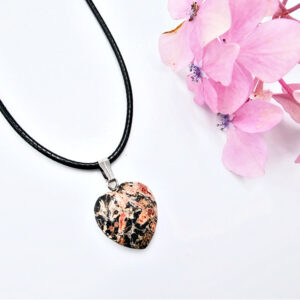
A Stone That Earned Its Name From Its Pattern
Leopard Skin Jasper is immediately recognisable for its wonderfully busy markings.
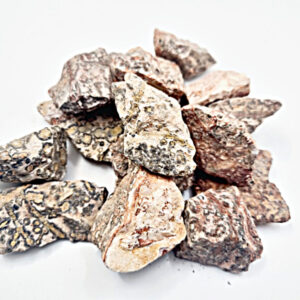
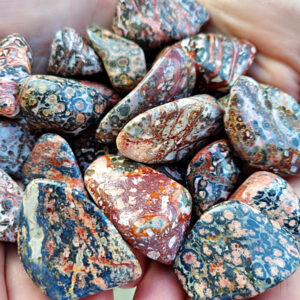
Spots, circles, rings and irregular patches can appear against cream, brown, reddish, pinkish, grey or earthy backgrounds, creating a pattern loosely reminiscent of an animal's coat.
No two pieces need to look alike.
In fact, the unpredictable pattern is one of the main reasons this material is so enjoyable to collect.
What Is Leopard Skin Jasper?
Leopard Skin Jasper, also written as Leopardskin Jasper, is an established commercial and lapidary name for a patterned ornamental rock.
The interesting part is that the familiar material is not necessarily conventional Jasper in the strict geological sense.
Material commonly sold under this name, particularly the well-known Mexican material, is more accurately associated with orbicular or spherulitic rhyolite.
Rhyolite is a fine-grained volcanic rock.
That makes Leopard Skin Jasper a great example of the difference between a familiar gemstone trade name and a formal geological description.
There is no need to abandon the name customers recognise. It simply deserves a little explanation.
Where Do the Leopard-Like Spots Come From?
Those spots are more than decoration.
Rhyolitic material can develop rounded structures known as spherulites as components of the volcanic material crystallise and change.
When the rock is cut and polished, these structures can appear as circles, eyes, spots and rings.
Different mineral concentrations and alteration can add further colours and patterns.
The result is the characteristic orbicular appearance associated with Leopard Skin Jasper.
Is Leopard Skin Jasper Really Jasper?
Commercially, yes—that is the established name shoppers know.
Geologically, the answer is more complicated.
“Jasper” is used quite broadly within the lapidary trade for attractive, hard, patterned stones that take a good polish.
The familiar Leopard Skin Jasper material is often described more specifically as patterned rhyolite rather than conventional jasper.
For HIH, the sensible approach is:
Keep Leopard Skin Jasper as the shopping and SEO name.
Then explain its rhyolitic identity in the educational content.
That gives customers the terminology they search for without turning a trade name into an inaccurate mineral classification.
Natural Pattern Is the Main Attraction
Leopard Skin Jasper should not be expected to have one standard appearance.
When comparing pieces, look at:
Orbicular patterning — small spots, larger rings or complex overlapping markings.
Contrast — some pieces have bold dark markings while others appear softer and more blended.
Background colour — cream, tan, brown, reddish and other earthy tones may occur.
Pattern density — markings may be widely scattered or closely packed.
Polish and shape — polishing can reveal patterns that are much less obvious on an unworked surface.
A quieter piece is not automatically inferior to one covered in dramatic spots. They simply show different sections and characteristics of the patterned material.
Leopard Skin Jasper Versus Picture Jasper
Both names contain “Jasper”, but they describe very different visual identities.
Picture Jasper is best known for earthy markings that can resemble landscapes, desert scenes and natural horizons.
Leopard Skin Jasper is recognised for its spotted, circular and orbicular patterning.
They therefore deserve separate categories and separate SEO intent rather than being combined into one general Jasper page.
Leopard Skin Jasper in Crystal Traditions
Within crystal traditions, Leopard Skin Jasper is commonly associated with grounding, resilience, adaptability, strength and connection with nature.
Its animal-like pattern has also encouraged symbolic associations with instinct, confidence and finding balance between movement and stability.
These are metaphysical traditions rather than scientifically demonstrated effects of the stone.
Leopard Skin Jasper can equally be appreciated simply as an unusual patterned lapidary material with a fascinating volcanic story.
Caring for Leopard Skin Jasper
Polished Leopard Skin Jasper is best treated with straightforward, gentle care.
Use a soft cloth for ordinary cleaning and avoid harsh household chemicals or abrasive cleaners.
Keep polished pieces away from repeated hard knocks and abrasive surfaces that could dull their finish.
For jewellery, also consider the complete construction. Elastic, cord, wire, adhesives and metal components may require more cautious cleaning than the stone itself.
Frequently Asked Questions
What is Leopard Skin Jasper?
Leopard Skin Jasper is a commercial name for a distinctive spotted ornamental rock. The familiar material is commonly associated more specifically with orbicular or spherulitic rhyolite.
Why does Leopard Skin Jasper have spots?
Its distinctive circles and spots are associated with structures formed within the rhyolitic material, including rounded spherulitic features that become especially visible when the stone is cut and polished.
Is Leopard Skin Jasper really Jasper?
The name is firmly established in the gemstone and lapidary trade, but the familiar material is often described geologically as patterned rhyolite rather than conventional Jasper.
Does every piece look the same?
No. Colour, spot size, circular patterns and the density of markings can vary considerably between individual pieces.
What is Leopard Skin Jasper traditionally associated with?
Within crystal traditions, Leopard Skin Jasper is commonly associated with grounding, resilience, adaptability, strength and connection with nature.