
Moldavite
Born from the extraordinary aftermath of a meteorite impact, Moldavite is a rare green tektite found primarily in the Czech Republic. Its otherworldly origin, naturally sculpted surfaces and powerful metaphysical reputation have made it sought after by collectors and crystal enthusiasts around the world.
Showing all 6 resultsSorted by latest
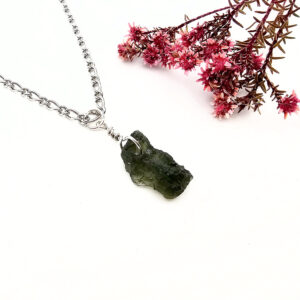
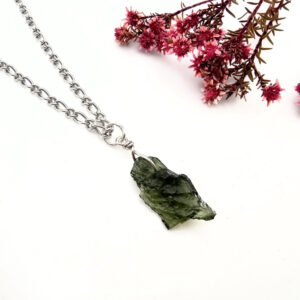
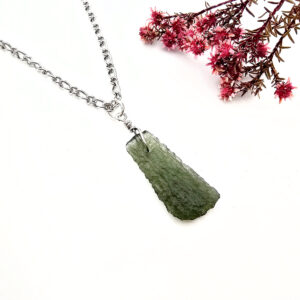
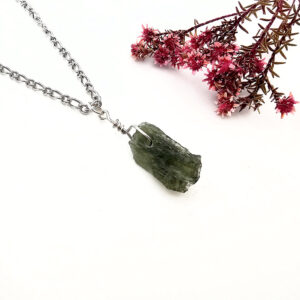
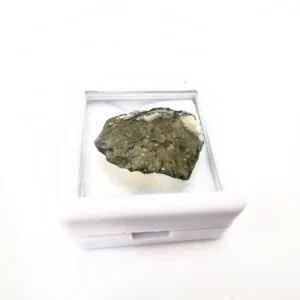
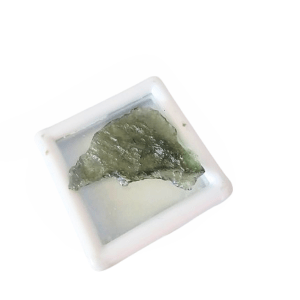
A Stone Born from an Impact
Few materials in a crystal collection have an origin story quite like Moldavite.
Around 15 million years ago, a huge meteorite struck what is now southern Germany, forming the Ries impact crater. Material thrown into the atmosphere during that extraordinary event melted and cooled before falling back to Earth.
Among the resulting natural glasses were the green tektites we now call Moldavite.
Although Moldavite is commonly grouped with crystals and gemstones, it isn't a conventional crystal. It belongs to the fascinating family of natural impact glasses known as tektites.
Explore our Tektites collection if you'd like to see Moldavite alongside other materials formed through ancient impact events.
Why Is Moldavite Green?
Colour is one of the characteristics that immediately separates Moldavite from many other tektites.
Pieces can range through olive, moss, bottle and brownish greens, with some appearing relatively dark until held against light.
The colour comes from the composition of the terrestrial material that was melted during the impact event rather than from the meteorite simply turning into a green stone.
That distinction is worth understanding: Moldavite is associated with a meteorite impact, but it is not itself a piece of meteorite.
Its story is a meeting between a cosmic event and material from Earth.
Those Strange Surfaces Are Part of the Appeal
Natural Moldavite can have remarkable surface texture.
Depending on the specimen and locality, pieces may show grooves, pits, wrinkles, ridges and deeply sculpted areas. Collectors often refer to this natural surface character as sculptation.
Some pieces are smoother, while others can look almost as though they've been carved or etched by hand.
These textures developed through natural geological processes after the material formed and are one of the reasons rough Moldavite specimens are so fascinating to examine closely.
Polishing changes that experience considerably. A polished or jewellery-set piece may reveal colour and translucency more clearly, while a natural unpolished specimen preserves more of its original surface.
Why the Czech Republic Matters
Genuine Moldavite is geographically restricted.
The most famous deposits occur in the Czech Republic, particularly in southern Bohemia and Moravia, within the Central European tektite strewn field associated with the Ries impact.
Different collecting areas can produce Moldavite with variations in colour, shape and surface character.
For collectors, locality can therefore become part of the interest of an individual specimen rather than Moldavite simply being treated as another green stone.
Where specific origin information is available for an HIH piece, refer to the individual product listing rather than assuming every specimen comes from exactly the same locality.
Moldavite & the Question of Authenticity
Moldavite's popularity and relatively limited natural supply have unfortunately created a market for imitations.
Manufactured green glass can be shaped or textured to resemble natural Moldavite, particularly in online marketplaces where customers cannot examine the material in person.
There isn't one simple visual trick that can authenticate every specimen. Colour, bubbles, internal features, surface texture, provenance and expert examination may all play a role.
Extremely uniform colour, repetitive manufactured-looking textures or large quantities of suspiciously identical pieces deserve caution, but appearance alone shouldn't be treated as absolute proof either.
For a material as collectible as Moldavite, buying from a source you trust matters.
Moldavite in Jewellery
Setting Moldavite into jewellery creates a very different experience from keeping an untouched specimen.
The stone's green colouring works particularly well with warm metals such as brass and copper as well as silver-toned settings. Pendants and necklaces also allow Moldavite to be worn while reducing some of the handling a loose specimen might receive.
If you're choosing jewellery, look at the entire design rather than focusing only on the stone: setting, metal, construction, size and how securely the Moldavite is held all matter.
Browse our Gem & Crystal Necklaces collection if you'd like to explore wearable stones beyond Moldavite.
Why Does Moldavite Have Such an Intense Metaphysical Reputation?
Within modern crystal communities, Moldavite has developed a reputation as a particularly powerful stone of transformation, spiritual growth, change and accelerated personal development.
Some people describe feeling warmth, tingling, emotional intensity or a sudden rush when first holding Moldavite — an experience commonly referred to within crystal communities as the “Moldavite flush.”
Others feel nothing unusual at all.
Within metaphysical practice, Moldavite may be used during meditation, intention setting or periods of significant personal change, and some people prefer introducing it into their practice gradually because of its intense reputation.
These experiences and energetic associations belong to spiritual and metaphysical traditions rather than scientifically established effects of tektite glass.
There is no requirement to experience a physical sensation for a Moldavite piece to be genuine.
Small Doesn't Mean Insignificant
Moldavite is one material where customers shouldn't judge a piece purely by size.
Natural supply is limited, and small specimens can still display excellent colour, translucency or surface sculptation. A larger piece isn't automatically more interesting, just as a smaller piece isn't automatically inferior.
For a collector, an unusual natural formation or particularly attractive surface can matter more than sheer weight.
For someone choosing Moldavite metaphysically, personal preference may matter more than either.
This makes individual photographs and measurements particularly valuable when comparing available pieces.
Treat Moldavite Like a Collectible Glass
Moldavite is natural glass, so sensible handling matters.
Avoid dropping specimens onto hard surfaces or allowing delicate natural edges to knock against other stones. Loose pieces are best stored where their surface isn't constantly rubbing against harder minerals.
Jewellery requires attention to both the Moldavite and its setting.
If you own a particularly textured natural specimen, avoid aggressive scrubbing that could damage delicate surface features.
A little care preserves precisely the unusual character that makes Moldavite collectible in the first place.
Frequently Asked Questions
Is Moldavite from outer space?
Not exactly. Moldavite formed because of a meteorite impact, but the glass itself was produced primarily from terrestrial material melted and ejected during that impact. Its origin therefore involves an extraterrestrial event without Moldavite simply being a meteorite fragment.
Why is Moldavite more expensive than many other stones?
Natural Moldavite comes from a geographically restricted impact event, supply is finite, collecting localities are limited and international demand is high. Individual specimen quality, weight, colour, translucency, texture and provenance can also influence value.
Does Moldavite have bubbles inside it?
Natural Moldavite can contain bubbles and internal features created during its rapid formation, but bubbles alone do not prove authenticity because manufactured glass can contain them too.
Does genuine Moldavite have to give me the “Moldavite flush”?
No. The Moldavite flush is a subjective experience reported within crystal communities, not an authenticity test. Feeling nothing unusual does not mean your Moldavite is fake.
Can Moldavite be completely smooth?
Yes. Moldavite's appearance varies according to its history, locality, natural weathering and whether it has been polished or incorporated into jewellery. A dramatic deeply sculpted surface is not mandatory for every genuine piece.