
Ocean Jasper
Colourful circles, flowing patterns and unexpected natural details make Ocean Jasper wonderfully individual. This orbicular stone from Madagascar can reveal greens, creams, pinks, yellows, browns and even crystal-lined cavities. Traditionally associated with joy, patience, gratitude and going with the flow, every piece offers something different to discover.
Showing all 5 resultsSorted by latest
-
-
-
-
-
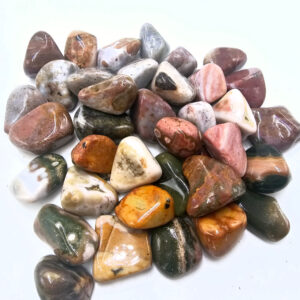
Ocean Jasper Tumble Stones
Original price was: R59.00.R45.00Current price is: R45.00. Add to basketQuick View
Ocean Jasper: Madagascar's Extraordinary Orbicular Stone
Few stones vary quite as dramatically as Ocean Jasper.
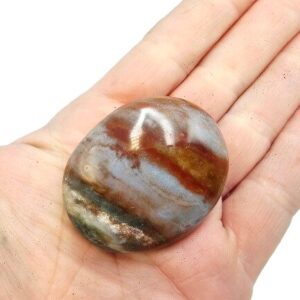
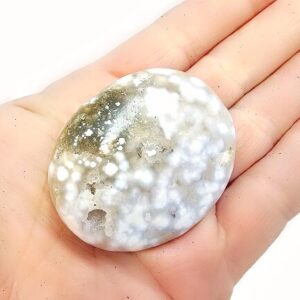
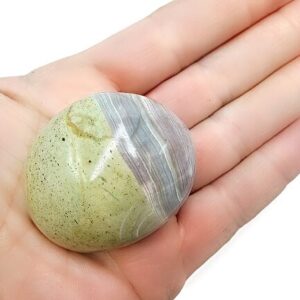
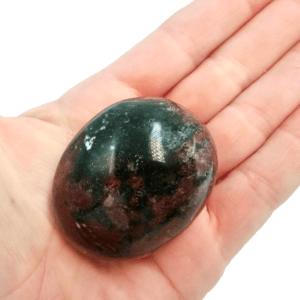
One piece may be filled with neat circular “eyes”, while another has sweeping bands, tiny spots, patches of green, cream, pink or yellow, or even natural cavities lined with crystals.
That extraordinary variation is part of the appeal.
Ocean Jasper isn't a stone where every piece is expected to match. It's a stone people can enjoy collecting precisely because one specimen can look completely different from the next.
What Is Ocean Jasper?
Ocean Jasper is a trade name associated with distinctive orbicular and spherulitic silica-rich material from northwestern Madagascar.
It is commonly described as orbicular Jasper, although its mineralogy can include areas better described as Chalcedony, Quartz and jasper-like material within a silicified volcanic rock.
That makes “Ocean Jasper” a useful trade identity rather than the name of one individual mineral species.
Its most recognisable feature is the presence of rounded structures — circles, rings, spots and “eyes” that become especially striking when the material is cut and polished.
Browse more individual stones and minerals through our Crystal Names A–Z.
How Do the Circles in Ocean Jasper Form?
Those circles aren't simply flat markings on the surface.
Many are cross-sections through three-dimensional spherulitic structures that developed within the original material.
During formation, mineral growth spread radially outwards from individual centres. As these structures grew, they created rounded forms within the rock.
Cut through one and you can expose a circle.
Cut through another at a different angle and the pattern may look completely different.
Some structures also grew into one another, creating more complicated shapes where neighbouring orbs met.
It's one of the reasons polished Ocean Jasper can look almost designed — despite the patterns being completely natural.
Why Is It Called Ocean Jasper?
The name has a wonderful connection with the location where the material became famous.
Ocean Jasper is associated particularly with Marovato and Kabamby in northwestern Madagascar.
The famous Marovato occurrence was discovered near the coast after pieces of the material were found in the surf. The deposit was then traced back towards the shoreline and surrounding rock.
That coastal discovery helped inspire the name Ocean Jasper.
So despite its watery colours and wave-like patterns, the stone isn't called Ocean Jasper simply because it looks like the sea.
There is an actual ocean in its modern discovery story.
Marovato & Kabamby Ocean Jasper
Not all Ocean Jasper looks the same, partly because material has come from different deposits and veins.
Marovato is associated with the famous coastal occurrence and a remarkable variety of multicoloured material.
Kabamby lies farther inland within the broader northwestern Madagascar source region and is particularly associated with green and yellow material, sometimes accompanied by cream, red and other colours.
Different veins and areas can produce dramatically different orb sizes, colours, patterns, translucency and natural cavities.
Unless reliable provenance accompanies an individual piece, however, we wouldn't assign it to a particular vein or deposit based only on appearance.
Did You Know? Kabamby Is Not Kambaba Jasper
The names are confusingly similar, but Kabamby and Kambaba aren't interchangeable.
Kabamby is a locality associated with Ocean Jasper in northwestern Madagascar.
Kambaba Jasper, sometimes called Crocodile Jasper, is the commercial name for a different green-and-black patterned material.
So a piece described as Kabamby Ocean Jasper isn't simply another spelling of Kambaba Jasper.
If you love unusual orbicular patterns, you can compare it with our Kambaba Jasper collection.
Ocean Jasper Can Contain Natural Vugs
Not every Ocean Jasper piece is perfectly solid and smooth inside.
Some contain vugs — natural cavities that can sometimes be lined with tiny crystals.
When a stone containing one of these pockets is cut and polished, the cavity may remain visible within the finished piece.
Rather than automatically being a flaw, a well-positioned crystalised vug can become one of the most interesting features of an individual specimen.
You can see this beautifully in some Ocean Jasper palm stones, where a smooth polished surface suddenly gives way to a little pocket of natural crystal growth.
Why Does Ocean Jasper Come in So Many Colours?
Ocean Jasper has an unusually broad natural palette.
Depending on the material, you may encounter combinations of green, cream, white, yellow, pink, red, brown, grey and earthy tones.
Different mineral components and trace elements contribute to those colours, while the distribution of orbs, bands, patches and cavities creates even more variation.
There isn't one “correct” Ocean Jasper colour.
For collectors, that's half the fun.
A piece can be chosen for beautifully defined circles, an unusual colour combination, a crystalised cavity or simply because its pattern reminds you of something.
Browse more tactile polished pieces in our Palm Stones & Gallets.
Ocean Jasper Meaning
Within modern crystal traditions, Ocean Jasper is associated with joy, gratitude, patience, optimism and emotional balance.
Its name and flowing patterns have also encouraged associations with cycles, adaptability and going with the flow.
There is a natural symbolism in that.
Ocean Jasper doesn't follow one rigid visual pattern. Circles meet, colours change, bands move through one another and unexpected cavities can interrupt otherwise smooth areas.
For people who enjoy crystals symbolically, it can represent accepting change without expecting everything to unfold exactly as planned.
These are traditional and metaphysical associations rather than scientifically established effects.
Ocean Jasper & the Heart Chakra
Ocean Jasper is commonly connected with the Heart Chakra in contemporary crystal traditions, particularly through its associations with gratitude, joy, compassion and emotional balance.
Green and pink areas within the stone can reinforce that symbolism visually.
Some traditions also connect different Ocean Jasper colours with other chakras, but there is no need to assign every coloured marking a separate meaning.
Explore more stones and spiritual tools through our Chakra Balance collection.
Choosing Ocean Jasper
With Ocean Jasper, don't choose by name alone.
Look at the actual piece.
One palm stone may have large obvious orbs. Another might have intricate spotting, flowing colour, a natural vug or a completely different palette.
Tumble stones can also vary considerably, making them particularly enjoyable if you like natural stones that don't look mass-produced or uniform.
There isn't necessarily one “best” pattern.
The best piece is often simply the one you keep turning over because there's something new to notice.
Caring for Ocean Jasper
Ocean Jasper is predominantly silica-rich material and is suitable for normal handling, but polished pieces should still be protected from hard impacts and abrasive contact.
Use a soft cloth for ordinary cleaning.
Take extra care with pieces containing natural vugs or crystal-lined cavities. Avoid picking at delicate crystal growth or aggressively scrubbing inside small pockets.
If dust settles inside a vug, a very soft dry brush can usually reach it more safely.
Frequently Asked Questions About Ocean Jasper
Does Ocean Jasper really come from the ocean?
The stone formed geologically within rock rather than forming from seawater, but the famous Marovato deposit is associated with the Madagascar coastline and material was discovered in the surf. That coastal story helped inspire its name.
Are the circles in Ocean Jasper natural?
Yes. The characteristic circles and “eyes” are natural structures created during mineral growth. Many represent cross-sections through three-dimensional spherulitic formations.
Is every Ocean Jasper piece covered in circles?
No. Patterning varies enormously. Some pieces have obvious orbs, while others are dominated by bands, patches, spots, colour variation or natural cavities.
What is a vug in Ocean Jasper?
A vug is a natural cavity within rock. Some Ocean Jasper vugs contain visible crystal growth, creating sparkling pockets amongst otherwise polished material.
Is Kabamby Ocean Jasper the same as Kambaba Jasper?
No. Kabamby is a locality associated with Ocean Jasper in northwestern Madagascar. Kambaba Jasper is a different green-and-black patterned material.