
Peach Moonstone
Warm peach, cream and soft orange tones give Peach Moonstone its gentle glow. A genuine colour variety of Moonstone, this feldspar can display the floating sheen known as adularescence. Within modern crystal traditions, Peach Moonstone is associated with intuition, emotional warmth, new beginnings and gentle self-confidence.
Showing the single result
-
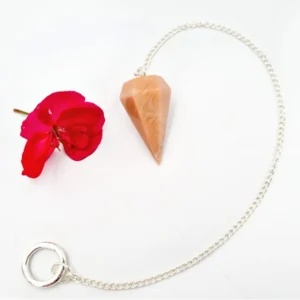
Peach Moonstone Pendulum
Original price was: R299.00.R219.00Current price is: R219.00. Add to basketQuick View
Peach Moonstone: Warm Colour With a Moonlit Glow
Peach Moonstone brings warm peach, cream, apricot and soft orange tones to one of the world's best-known feldspar gemstones.
While pale or colourless Moonstone may be more familiar, Moonstone naturally occurs in several body colours — including peach.
What makes the stone especially interesting isn't colour alone.
Look at the right piece from different angles and you may see a soft light appear to float beneath its surface.
That phenomenon is called adularescence.
What Is Peach Moonstone?
Moonstone belongs to the feldspar family, one of the most abundant mineral groups in Earth's crust.
Traditional Moonstone is associated particularly with intergrown feldspars such as Orthoclase and Albite.
As the material forms, extremely fine internal layers develop. When light interacts with these microscopic structures, it scatters and creates Moonstone's characteristic floating sheen.
Peach Moonstone combines this phenomenon with a naturally warm peach to orange-yellow body colour.
Browse the wider Moonstone collection to see other expressions of this fascinating feldspar gemstone.
What Is Adularescence?
Adularescence is the optical effect responsible for Moonstone's almost luminous appearance.
Rather than sitting on the surface like glitter, the light seems to hover or move inside the stone as you change the viewing angle.
The effect is created when light scatters through extremely fine layers within the feldspar.
Interestingly, these internal structures can be on a scale comparable with wavelengths of visible light.
That's why a polished Moonstone can appear fairly ordinary from one direction and suddenly reveal a beautiful travelling sheen when tilted.
Not every Peach Moonstone displays the same strength of adularescence.
Some pieces have an obvious glow, while others are loved more for their warm body colour, natural markings and softer sheen.
Is Peach Moonstone Really Moonstone?
Yes.
Peach is a recognised natural body colour of Moonstone.
Moonstone can occur in colourless, white, grey, green, peach and brown shades, amongst others.
The peach category generally covers warm orange to yellow-orange and peach-toned Moonstone.
This is worth clarifying because the crystal trade contains plenty of colour names that are informal or inconsistent.
In this case, however, peach-coloured Moonstone is genuinely part of the Moonstone family.
Peach Moonstone vs Rainbow Moonstone
Despite its familiar trade name, Rainbow Moonstone is generally transparent Labradorite rather than traditional Moonstone.
Peach Moonstone is different.
It belongs to the Moonstone feldspar tradition and is recognised for its warm body colour and possible adularescent sheen.
Both materials belong to the much larger feldspar family, which explains why they can share some visual similarities.
So “Moonstone” in a shop doesn't always mean that every colour variety has exactly the same mineralogical identity.
That's one reason accurate product naming matters.
Did You Know? Moonstone's Glow Has a Lunar Name
The word adularescence has a wonderful connection to Moonstone history.
It derives from adularia, a historical name associated with Moonstone-type feldspar and ultimately with the Adula Mountains in Switzerland.
Over time, adularescence became the gemological term for that distinctive billowing light seen in Moonstone.
The effect is so strongly associated with moonlight that cultures around the world developed lunar stories around the gemstone long before anyone understood its microscopic optical structure.
Moonstone, Moonbeams & Ancient Folklore
Moonstone's connection with the Moon isn't merely a modern crystal-shop invention.
In Hindu mythology, Moonstone has been described as being made from solidified moonbeams, while ancient Greek and Roman traditions also connected the gemstone with lunar deities.
These are legends rather than geological explanations, but they reveal something important about the stone's history.
People were fascinated by its strange moving light long before mineralogy could explain what caused it.
That combination of real optical phenomenon and lunar folklore is part of why Moonstone has remained so captivating.
Browse more individual stones and minerals through our Crystal Names A–Z.
Peach Moonstone Meaning
Within contemporary crystal traditions, Peach Moonstone is associated with intuition, emotional warmth, new beginnings, creativity and gentle confidence.
It retains Moonstone's broader symbolic relationship with cycles, change and intuition, while its warm peach colouring has encouraged slightly different associations from white or blue-sheen Moonstone.
Peach Moonstone is often chosen when the intention isn't simply to become calmer, but to move into something new with warmth, openness and trust in yourself.
These are metaphysical and symbolic traditions rather than scientifically established effects.
Peach Moonstone & the Chakras
Peach Moonstone is commonly associated with the Sacral Chakra, where its warm colouring connects naturally with creativity, emotion and enjoyment.
Some modern crystal traditions also connect it with the Heart Chakra, particularly around emotional openness, compassion and self-acceptance.
Moonstone more broadly is frequently linked with intuition and lunar cycles, so Peach Moonstone can comfortably sit across several symbolic traditions rather than needing one rigid chakra assignment.
Explore more stones and spiritual tools in our Chakra Balance collection.
Peach Moonstone Is a June Birthstone
Moonstone is one of the traditional June birthstones, alongside Pearl and Alexandrite.
That association applies to the wider Moonstone gemstone family rather than being limited only to colourless or white Moonstone.
Peach Moonstone therefore offers a warmer, more unusual way to choose Moonstone as a June birthstone.
Choosing Peach Moonstone
Natural Peach Moonstone can vary considerably.
Look for differences in peach, cream, apricot and orange tones, along with natural markings, translucency and the strength of any visible sheen.
Polished palm stones can make the colour and internal patterns easier to appreciate across a larger surface.
Beaded jewellery gives a different effect, bringing several naturally varied pieces together.
A pendulum combines the stone with a traditional divination form.
There isn't one appearance every Peach Moonstone piece needs to match.
Caring for Peach Moonstone
Moonstone has a Mohs hardness of approximately 6 to 6.5.
It also has cleavage, so a hard impact can cause chipping or breakage even though the stone isn't extremely soft.
Store Peach Moonstone away from harder gemstones that could scratch it and avoid knocking jewellery against hard surfaces.
Gentle cleaning with mild soap, lukewarm water and a soft cloth is usually suitable. Avoid harsh chemicals, high heat and aggressive cleaning methods.
Frequently Asked Questions About Peach Moonstone
Is Peach Moonstone naturally peach coloured?
Yes. Moonstone naturally occurs in several body colours, and peach to orange-yellow is an established colour range within the gemstone.
Does every Peach Moonstone have a strong flash?
No. The strength of adularescence varies. Some pieces show an obvious moving sheen, while others have a subtler glow and are valued primarily for their warm colour and natural character.
What causes the glow in Peach Moonstone?
Moonstone's adularescence is caused by light scattering through extremely fine internal feldspar layers, producing the impression of light floating beneath the surface.
Is Peach Moonstone a June birthstone?
Yes. Moonstone is one of June's recognised birthstones, alongside Pearl and Alexandrite.
Is Peach Moonstone the same as Rainbow Moonstone?
No. Rainbow Moonstone is a trade name generally applied to transparent Labradorite, another feldspar material. Peach Moonstone belongs to the traditional Moonstone group and has a naturally warm peach body colour.