
Red Coral
Bold red colour and an extraordinary marine origin make Red Coral unlike almost anything else in our Crystal Names collection. Coral is an organic gem material formed from the calcium-carbonate skeletons of marine animals and has been used in jewellery for thousands of years. Traditionally, Red Coral symbolises vitality, courage and protection.
Showing all 3 resultsSorted by latest

Red Coral: An Organic Gem Born in the Ocean
Red Coral may sit alongside crystals and gemstones, but its origin is completely different. Coral isn't a mineral.
It is an organic gem material created by marine animals called coral polyps. In precious coral species, colonies build hard calcium-carbonate skeletons that can later be cut and polished for jewellery.
That makes Red Coral part of a fascinating group of gem materials that originate from living organisms rather than forming as mineral crystals underground.
What Is Red Coral?
The name Red Coral is used for coral material ranging from warm orange-red and salmon through deeper crimson shades.
The best-known precious red coral is Corallium rubrum, associated particularly with the Mediterranean Sea and nearby Atlantic waters. Other pink-to-red gem corals occur in different parts of the world.
The hard material used in jewellery is the coral's calcium-carbonate skeleton rather than the soft living animal itself.
Because several coral species and treated materials can appear red, we don't assign the jewellery in this collection to a particular coral species or locality unless that information has been confirmed by the supplier.
Browse more unusual natural materials through our Crystal Names A–Z.
Did You Know? People Once Debated Whether Coral Was a Plant, Mineral or Animal
Coral confused naturalists for centuries.
It was hard like stone and branched like a plant, yet it came from the sea.
The mystery was eventually solved through the study of living coral colonies: corals are animals.
Tiny individual polyps live together as a colony, producing the hard skeletal structures associated with coral.
That history makes Red Coral particularly interesting because it sits at the intersection of jewellery, marine biology and gemmology.
It may look stone-like once polished, but its origin is biological.
What Makes Natural Red Coral Red?
In naturally coloured precious red coral, the colour comes from organic pigments incorporated within the calcium-carbonate skeleton.
Depending on species and material, natural coral can occur in shades ranging from pale pink and salmon to orange-red and deep red.
But colour alone can't prove that a piece is naturally red.
Red Coral Has Been Worn for Thousands of Years
Coral's jewellery history is genuinely ancient.
Red and pink marine coral has been valued for personal adornment for more than two thousand years, with archaeological and historical evidence connecting coral jewellery with prehistoric Europe, the ancient Mediterranean world and Egypt.
It also became an important trade material between the Mediterranean and the East.
In India and China, coral acquired religious and symbolic importance, while Roman writers recorded both its value and the beliefs surrounding it.
Unlike many modern crystal stories, Red Coral therefore has a substantial documented history as both an ornamental material and a symbolically important object.
Why Was Red Coral Associated With Protection?
Across different historical traditions, Red Coral acquired a strong reputation as a protective material.
Its vivid blood-red colour naturally encouraged associations with life, vitality and strength, while coral jewellery and amulets were worn in different cultures for symbolic protection.
Modern crystal traditions continue many of these themes, commonly associating Red Coral with courage, vitality, determination and grounding.
These symbolic beliefs are part of coral's cultural history rather than scientifically established effects.
Red Coral Jewellery
Coral's ability to take a smooth polish helped make it an important jewellery material.
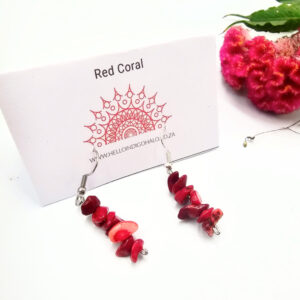
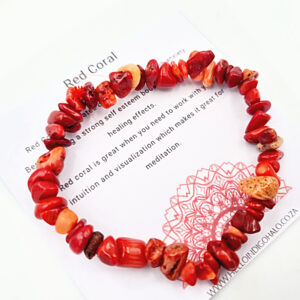
Smaller pieces can be shaped, drilled or used as chips and beads, allowing the rich colour to become the focus of earrings, bangles and other jewellery.
Our current Red Coral collection is particularly jewellery-led, so look at differences in colour, bead or chip shape, natural markings and overall finish when choosing a piece.
For more wearable gemstone and natural-material designs, browse our Jewellery collection.
Red Coral vs Agatized Coral
Despite sharing the word “coral”, Red Coral and Agatized Coral are very different materials.
Red Coral is organic skeletal material produced by marine coral.
Agatized Coral begins with ancient coral but undergoes fossilisation and mineral replacement, with silica replacing the original skeletal material over geological time.
So one is an organic gem material derived from coral skeleton, while the other is a fossilised and mineralised record of ancient coral.
Red Coral Meaning
Within contemporary crystal and spiritual traditions, Red Coral is associated with vitality, courage, determination, passion and protection.
Its strong connection with the sea also gives it symbolism around natural cycles and the relationship between living organisms and their environment.
Because coral's symbolic use stretches back far beyond the modern crystal movement, its contemporary meaning sits alongside a much older history of jewellery, amulets and culturally significant adornment.
Red Coral & the Root Chakra
Modern crystal practice most commonly associates Red Coral with the Root Chakra because of its rich red colouring and traditional themes of vitality, grounding and strength.
It may also be connected with the Sacral Chakra, particularly where its colouring leans towards orange-red and the intention involves passion, creativity or movement.
Explore more stones and spiritual tools through our Chakra Balance collection.
Caring for Red Coral Jewellery
Coral requires gentler treatment than many crystalline gemstones.
It is relatively soft and can be scratched by harder materials. Acids and harsh chemicals can also affect its calcium-carbonate structure.
Avoid perfume, hairspray and household cleaning products directly on coral jewellery, and don't use ultrasonic or steam cleaners unless a qualified jeweller has confirmed they are appropriate for the specific piece.
Put jewellery on after applying cosmetics and fragrances, and wipe it gently with a soft cloth after wearing.
Frequently Asked Questions About Red Coral
Is Red Coral a crystal?
No. Coral is an organic gem material produced by marine animals rather than a mineral crystal.
Is Red Coral naturally red?
Some precious coral species are naturally pink to red, but coral can also be dyed or otherwise treated. Colour alone isn't sufficient to determine whether an individual piece is naturally coloured.
What is Red Coral made from?
Gem coral consists primarily of calcium carbonate forming the hard skeletal structure produced by colonies of coral polyps.
Is Red Coral the same as Agatized Coral?
No. Red Coral is organic skeletal gem material, while Agatized Coral is fossil coral in which the original structure has undergone mineral replacement by silica.
Why should Red Coral jewellery be kept away from perfume?
Coral is an organic calcium-carbonate gem material and is more sensitive than many hard crystalline gemstones. Keeping cosmetics, perfume and harsh chemicals away from it helps preserve its surface and polish.