
Red Garnet
Deep wine, crimson and burgundy tones make Red Garnet one of the most recognisable members of the Garnet family. Worn as a gemstone since ancient times and celebrated as January’s birthstone, Red Garnet is traditionally associated with passion, vitality, courage, commitment and grounding.
Showing all 7 resultsSorted by latest

Red Garnet: January's Deep Red Birthstone
From rich wine and burgundy to glowing crimson, Red Garnet is the colour most people picture when they hear the name Garnet.
But Garnet isn't actually one single mineral.
It is a group of closely related minerals that share a similar crystal structure while varying in chemical composition — and Garnets can occur in far more colours than red.
The classic deep reds remain some of the best known, with Almandine and Pyrope particularly important among red Garnets.
Is Every Red Garnet the Same Mineral?
No.
The Garnet group contains several recognised mineral species, including Almandine, Pyrope, Spessartine, Grossular and Andradite.
Almandine and Pyrope can both occur in red to purplish-red shades, and natural Garnets can also have compositions that fall between different Garnet end-members.
That means colour alone isn't enough to identify the exact Garnet species.
Unless an individual stone has been reliably identified or supplied as a particular species, Red Garnet is a useful and accurate commercial description without pretending we know more about its chemistry than we do.
Browse more individual stones and minerals through our Crystal Names A–Z.
Did You Know? Garnet Is Named After a Pomegranate
The Garnet name has a wonderfully appropriate origin.
It comes from the medieval Latin granatus, linked with the pomegranate.
Look at the glossy deep-red seeds inside a ripe pomegranate and the comparison becomes obvious.
Small polished red Garnets can have the same rich, almost glowing red appearance.
The connection is centuries old, making this one of those gemstone names where the history still makes immediate visual sense today.
Red Garnet Has Been Worn for Thousands of Years
Garnet's history goes far beyond modern crystal traditions.
Red Garnets were used as gemstones in the ancient world, and Garnet jewellery has been found dating back thousands of years.
In ancient Egypt, red Garnets were used in jewellery, including necklaces worn during the age of the pharaohs.
The Romans also valued Garnet. Carved Garnet intaglios were set into signet rings and used to impress designs into the wax that sealed important documents.
So when you wear Red Garnet today, you're choosing a gemstone with a genuinely ancient jewellery history rather than a modern fashion discovery.
Red Garnet Is January's Birthstone
Garnet is the traditional January birthstone.
Although Garnets can occur in green, orange, yellow, purple and other colours, deep red remains the colour most strongly associated with the name.
That makes Red Garnet jewellery a natural January birthday gift, while still being easy to wear purely for its rich colour and history.
Garnet is also traditionally associated with the second wedding anniversary, giving it another long-established place in symbolic jewellery.
Red Garnet Jewellery
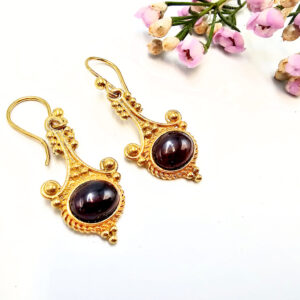
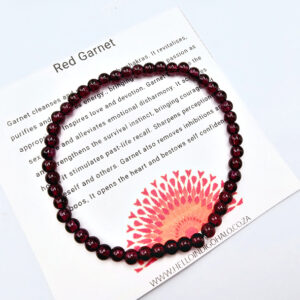
Garnet works particularly well in jewellery because its deep colour can range from almost opaque burgundy to brighter red where light passes through thinner or clearer material.
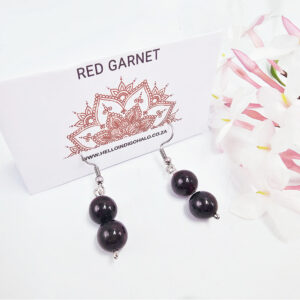
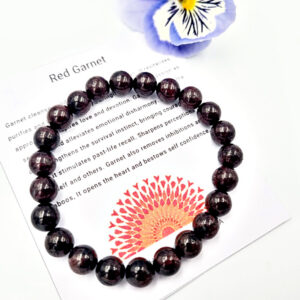
Beads can create a rich, continuous band of colour, while earrings allow individual Garnets to catch changing light as they move.
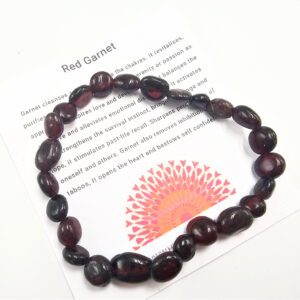
Because natural Garnet varies, don't expect every bead or stone to be exactly the same shade.
Small differences in red, burgundy, brownish-red and translucency are part of the natural character of the material.
Browse more wearable stone designs in our Jewellery collection.
Red Garnet Isn't the Only Colour of Garnet
The name Garnet is so strongly associated with dark red that it's easy to assume all Garnets look alike.
They don't.
Different members of the Garnet group can produce orange, yellow, green, purple-red and even colour-changing gemstones.
Tsavorite, for example, is a vivid green Grossular Garnet, while Demantoid is a famous green Andradite Garnet. Spessartine is particularly well known for orange colours.
Even within the reds, Garnet can range from orangey red through classic crimson to deep purplish-red.
This enormous colour range is one reason mineralogists speak of the Garnet group rather than treating Garnet as one simple mineral.
Red Garnet Meaning
Within crystal traditions, Red Garnet is associated with passion, vitality, courage, commitment, motivation and perseverance.
Its intense red colour has long encouraged symbolism around life force, strength and desire.
It is also commonly chosen around intentions involving commitment — not only romantic commitment, but staying devoted to a goal, relationship, creative project or personal direction.
This combination of passion and persistence gives Red Garnet a slightly different character from stones associated purely with calm or reflection.
These are traditional and metaphysical associations rather than scientifically established effects.
Red Garnet & the Root Chakra
Red Garnet is strongly associated with the Root Chakra, traditionally connected with grounding, stability, security and our relationship with the physical world.
Its rich red colouring also lends itself to intentions around vitality, courage and feeling more present.
Some crystal traditions extend Garnet's symbolism towards the Sacral Chakra where the focus is passion, creativity and desire, but the Root Chakra remains its strongest modern association.
Explore more stones and spiritual tools through our Chakra Balance collection.
Choosing Red Garnet
When choosing Red Garnet, pay attention to colour, translucency and form.
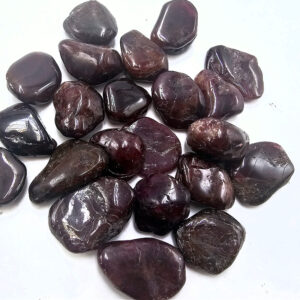
Some stones look almost black-red in ordinary indoor light but reveal deep wine or crimson tones when held towards a brighter light.
Tumbled stones offer a simple way to appreciate Garnet as a natural stone, while beads and earrings turn its dark red colouring into wearable jewellery.
There isn't one ideal shade that every Red Garnet needs to match.
Caring for Red Garnet
Garnets generally measure around 6.5 to 7.5 on the Mohs hardness scale, making them suitable for many types of jewellery with sensible care.
They can still scratch, chip or fracture if knocked hard.
Clean Red Garnet gently with mild soap, lukewarm water and a soft cloth or brush. Store jewellery away from harder gemstones where possible and consider the construction of the whole piece — including stringing, findings and metalwork — when cleaning.
Frequently Asked Questions About Red Garnet
Is Red Garnet always Almandine?
No. Almandine is an important red Garnet species, but Pyrope and mixtures within the Garnet group can also produce red to purplish-red gemstones. Colour alone can't reliably establish the exact species.
Is Garnet only red?
No. Garnets occur in an extraordinary range of colours including orange, yellow, green and purple-red. Some rare Garnets can even change colour under different lighting.
Is Red Garnet the January birthstone?
Yes. Garnet is the traditional birthstone for January, with deep red Garnet being the colour most strongly associated with it.
Why is Garnet named after a pomegranate?
The name traces back to the medieval Latin granatus, referring to the resemblance between deep red Garnets and the glossy red seeds of a pomegranate.
Does Red Garnet need special care?
Garnet is reasonably durable, but it isn't indestructible. Avoid hard impacts and harsh chemicals, and clean it gently with mild soap and lukewarm water.