
Rhodonite
Rhodonite has a wonderfully earthy take on pink, ranging from soft rose and dusty blush to deeper red-pink tones, often with contrasting darker markings. Browse Rhodonite tumble stones and crystal jewellery featuring this manganese-rich mineral. Within crystal traditions, Rhodonite is especially associated with compassion, emotional balance, forgiveness, self-worth and the Heart Chakra.
Showing all 6 resultsSorted by latest
Pink, But Not Particularly Delicate About It
Rhodonite doesn't do sugary pink.
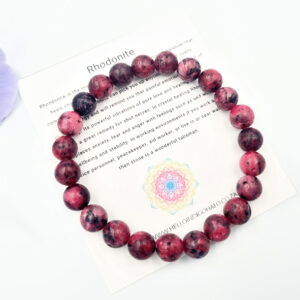
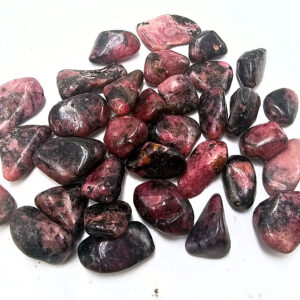
Its colour can move through rose, dusty pink, reddish-pink and brownish-red, often interrupted by darker patches, veins or markings. That contrast gives Rhodonite a much earthier personality than many other pink crystals.
The colour is also connected to the mineral's chemistry. Rhodonite belongs to a group of manganese-rich silicate minerals, and manganese is an important part of its distinctive identity.
Even the name points towards its colour: Rhodonite comes from the Greek word for “rose”.
That makes it a particularly satisfying stone if you like pink crystals but want something with more contrast and geological character.
Why Does Rhodonite Have Black or Dark Markings?
Those dark areas are one of the features that can make polished Rhodonite so recognisable.
Rhodonite can occur alongside manganese oxides and other associated minerals, producing darker brown, grey or black-looking areas against its characteristic pink.
The amount and patterning can vary dramatically.
One tumble stone might be predominantly pink with only a fine dark line. Another may have bold black-looking patches breaking through the colour. Others can lean towards deeper red, muted rose or brownish tones.
Natural variation is therefore part of shopping for Rhodonite rather than something every piece needs to hide.
For a smooth, pocket-sized form that makes those patterns easy to appreciate, browse our wider Tumbled Stones collection.
Rhodonite and the Heart
Pink crystals naturally gather associations with love, but Rhodonite has developed a slightly different metaphysical personality from the softer romantic symbolism often attached to pink stones.
Within modern crystal traditions, Rhodonite is associated with compassion, forgiveness, emotional balance, self-worth and the healing of difficult emotional experiences. It is most commonly connected with the Heart Chakra.
This is less about fairy-tale romance and more about the complicated human side of caring: patience, understanding, boundaries, forgiveness and learning to treat yourself with some of the compassion you give other people.
That is one reason Rhodonite appears naturally in jewellery and crystal combinations built around themes of self-love.
Rhodonite and Rose Quartz Are Not the Same Stone
They may share a pink colour palette, but they are completely different minerals.
Rhodonite is a manganese-rich silicate mineral. Its pink can be earthy and strongly contrasted by darker markings.
Rose Quartz is a variety of quartz. It is generally known for softer translucent-to-cloudy pink colouring rather than Rhodonite's characteristic dark contrasting areas.
Their metaphysical traditions overlap around the heart, love and emotional themes, but they are not interchangeable.
Within crystal traditions, Rose Quartz is especially associated with love, gentleness and emotional openness, while Rhodonite tends to lean towards compassion, forgiveness, balance and self-worth.
If softer pink quartz is what catches your eye, compare the two in our Rose Quartz collection.
A Self-Love Combination
Rhodonite can also become more interesting when paired with other crystals.
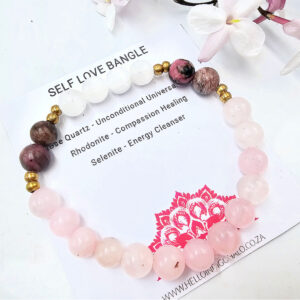
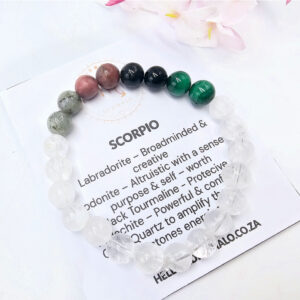
HIH's Self Love Gemstone Bangle combines Rhodonite, Rose Quartz and Selenite, bringing three visually different stones together in one bracelet.
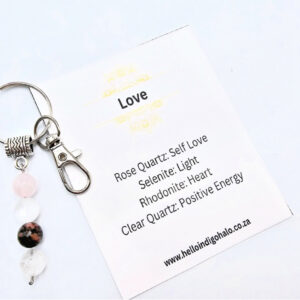
Within crystal traditions, Rose Quartz contributes its familiar connection with love, Rhodonite brings compassion and self-worth themes, while Selenite is traditionally associated with clarity and energetic cleansing.
The combination also works visually: pink stones are broken up by Selenite's pale appearance and brass bead spacers rather than creating one uninterrupted block of pink.
If wearable crystals appeal to you, our Round Bead Bangles let you compare Rhodonite-containing jewellery with other gemstone bead combinations.
Rhodonite or Rhodochrosite?
The names are similar enough to cause confusion, and both minerals can be pink because both have an important relationship with manganese.
But they are not the same mineral.
Rhodonite is a silicate mineral, while Rhodochrosite is a manganese carbonate. Their appearances can also differ: Rhodochrosite is particularly well known for pink-and-white banding in some material, while Rhodonite is often recognised by pink colouring combined with darker manganese-rich markings.
If you encounter both names while crystal shopping, don't assume one is simply another trade name for the other.
They are different stones.
You can compare the two through our Rhodochrosite collection.
Choosing Rhodonite Online
With Rhodonite, look at the pattern as much as the colour.
Choose a more predominantly pink piece if the rose colouring is what attracts you.
Choose a piece with stronger dark markings if you enjoy high contrast and want the mineral's patterning to stand out.
A tumble stone is a simple choice for holding, carrying or adding to a crystal collection, while jewellery lets the stone's pink-and-dark combination become part of something wearable.
There is no single pattern that represents “perfect” Rhodonite.
Part of its charm is precisely that the manganese-rich pink and darker mineral areas don't arrange themselves according to a catalogue photograph.
A South African Mineral Connection
Rhodonite isn't simply an imported name on a crystal label — the mineral also has a genuine South African geological connection.
Notable Rhodonite specimens have been recorded from manganese-rich deposits in the Northern Cape, including Wessels Mine in the Kalahari manganese field.
That doesn't mean every Rhodonite product sold by HIH comes from South Africa; origin should always be verified for the individual stock before making that claim.
It does, however, make Rhodonite particularly interesting within a South African crystal shop: this pink manganese mineral is genuinely part of the country's mineralogical landscape.
For more stones arranged by mineral and gemstone name, continue into our Crystal Names collection.
Frequently Asked Questions
What gives Rhodonite its pink colour?
Rhodonite is a manganese-rich silicate mineral, and manganese is central to its characteristic pink to red colouring. Natural pieces can range from softer rose tones to deeper reddish or brownish pink.
What are the black markings in Rhodonite?
Dark markings in Rhodonite material can be associated with manganese oxides and other minerals. Their pattern and amount vary naturally, which is why one Rhodonite stone can look very different from another.
Is Rhodonite the same as Rose Quartz?
No. Rhodonite is a manganese-rich silicate mineral, while Rose Quartz is a variety of quartz. They can both be pink, but their mineral composition and typical appearance are different.
Is Rhodonite the same as Rhodochrosite?
No. Rhodonite is a silicate mineral, while Rhodochrosite is a manganese carbonate. Although both can be pink and manganese-rich, they are separate minerals.
What is Rhodonite traditionally associated with?
Within modern crystal traditions, Rhodonite is commonly associated with compassion, forgiveness, emotional balance, self-worth and the Heart Chakra.