
Ruby Zoisite
Bold green Zoisite and deep red Ruby meet in Ruby Zoisite, also known as Ruby in Zoisite or Anyolite. Each piece has its own mix of colour, pattern and contrast, often with darker mineral areas running through the stone. Traditionally, Ruby Zoisite is associated with vitality, growth, courage and the heart.
Showing all 3 resultsSorted by latest
-
-
-
Ruby Zoisite Tumble Stones
Original price was: R29.00.R19.00Current price is: R19.00. Add to basketQuick View
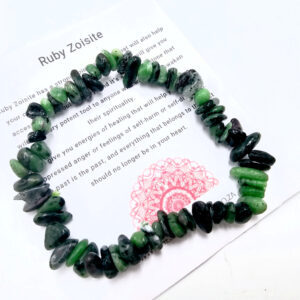
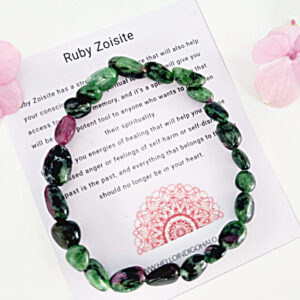
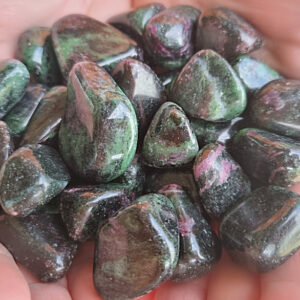
Ruby Zoisite: Two Very Different Minerals in One Stone
Ruby Zoisite is difficult to mistake for something ordinary.
Rich green Zoisite sits alongside red to pinkish-red Ruby, often with dark mineral areas adding even more contrast. Cut and polished, the colours can form patches, streaks and wonderfully irregular patterns that change from one piece to the next.
It is commonly called Ruby in Zoisite, while the name Anyolite is also widely used for this distinctive material.
Explore more unusual minerals and stones in our Crystal Names collection.
What Is Ruby Zoisite?
Ruby Zoisite isn't one individual mineral.
The red areas are Ruby, the red gem variety of Corundum, while the green material is Zoisite, a calcium aluminium silicate mineral.
The material can also contain dark amphibole minerals, creating the characteristic combination of red, green and black seen in many specimens.
That mixture is part of what makes Ruby Zoisite so visually interesting: you're looking at distinctly different minerals naturally occurring together in the same rock.
Anyolite: Another Name You'll See
Ruby Zoisite is also closely associated with the name Anyolite.
The name comes from a Maasai word associated with green, reflecting the striking green Zoisite that forms such a large part of the material.
Anyolite became particularly associated with material from Tanzania, where Ruby occurs with green Zoisite and dark amphibole.
You'll therefore see the names Ruby Zoisite, Ruby in Zoisite and Anyolite used in the crystal and lapidary trade.
Ruby Zoisite & Tanzania
Ruby Zoisite has an especially interesting East African story.
The famous material is associated with the Longido area of northern Tanzania, where Ruby occurs in green Zoisite and dark amphibole within metamorphic rocks.
Tanzania is also famous for another member of the Zoisite family:
Tanzanite.
They look completely different, but Tanzanite is the violet-blue gem variety of Zoisite.
So one mineral family gives us both the vivid blue-violet transparency associated with fine Tanzanite and the earthy green matrix seen in Ruby Zoisite.
That's a pretty impressive colour range for one mineral.
Why Are the Colours So Different?
Ruby and Zoisite bring completely different colours into the same material.
Ruby is Corundum, with chromium principally responsible for its famous red colour.
Zoisite can occur in several colours, while the green Zoisite associated with Anyolite provides the strong natural contrast around the Ruby.
Dark amphibole can add black or very deep green areas.
Because the proportions and positions of these minerals vary naturally, two polished pieces of Ruby Zoisite can look dramatically different.
One may be predominantly green with tiny flashes of Ruby.
Another might contain a much larger red section surrounded by green and black.
Neither pattern is more “correct” — it's simply the geology of that particular piece.
Ruby Zoisite vs Ruby Fuchsite
These two stones are regularly confused because both can show red Ruby against a green background.
But they're not the same material.
In Ruby Zoisite, the green mineral is Zoisite.
In Ruby Fuchsite, the green mineral is Fuchsite, a chromium-rich variety of Muscovite mica.
One useful visual clue is that Ruby Fuchsite can show pale blue Kyanite alteration rims around the Ruby crystals, while these rims aren't characteristic of Ruby Zoisite.
The materials also differ considerably in hardness: Zoisite is substantially harder than soft, micaceous Fuchsite.
So although they can look similar at first glance, their mineral composition is genuinely different.
Ruby Zoisite Meaning
Ruby Zoisite has developed an interesting symbolism because two visually and energetically contrasting stones occur together.
Within contemporary crystal traditions, Ruby is associated with vitality, passion, courage and motivation, while Zoisite is associated with growth, renewal and positive change.
Together, Ruby Zoisite is often chosen around intentions involving vitality, emotional growth, courage, enthusiasm and moving forward.
It's a particularly fitting stone for periods where you want both energy and a sense of direction rather than simply rushing ahead.
These are traditional and metaphysical associations rather than scientifically established effects.
Ruby Zoisite & the Chakras
Ruby Zoisite is most commonly connected with the Heart and Root Chakras.
The green Zoisite naturally lends itself to Heart Chakra traditions involving growth, compassion and emotional balance.
The red Ruby provides a very different association with the Root Chakra, vitality, courage and physical energy.
That red-and-green combination is one reason Ruby Zoisite has become so popular within modern crystal traditions: symbolically, it brings heart and vitality together in the same stone.
Explore more stones and tools used in energy traditions through our Chakra Balance collection.
Ruby Zoisite Jewellery
Polishing Ruby Zoisite reveals its colour contrast particularly well.
Beads and gemstone nuggets can move from green to black to red across a single piece, so a bangle made from the material doesn't need every bead to match perfectly.
In fact, overly uniform colour would lose much of what makes Ruby Zoisite interesting.
Natural variation in the amount of Ruby, Zoisite and darker mineral material means each piece develops its own character.
Browse more wearable stone designs in our Bangles & Bracelets collection.
Choosing Ruby Zoisite
Start with the pattern you like.
If you love the contrast, look for pieces where the red Ruby stands clearly against the green Zoisite.
If you prefer something earthier, a piece with more green and dark mineral areas may appeal more.
Tumble stones are particularly good for appreciating larger patches of colour and natural pattern, while jewellery turns those variations into something wearable.
Don't expect every piece to contain equal amounts of red and green.
The irregularity is part of the appeal.
Caring for Ruby Zoisite
Ruby itself is extremely hard at 9 on the Mohs scale, but Ruby Zoisite should not be treated as though the entire piece has Ruby's hardness.
The surrounding Zoisite is considerably softer, at around 6 to 6.5 on the Mohs scale.
That means sensible care is still important.
Avoid hard knocks, harsh chemicals and abrasive cleaning. For routine care, use a soft cloth and mild cleaning rather than assuming the whole stone can take whatever Ruby can.
Jewellery components such as elastic, cord and metal findings may also require gentler treatment.
Frequently Asked Questions About Ruby Zoisite
Is Ruby Zoisite real Ruby?
Yes. Ruby Zoisite contains genuine Ruby, which is red Corundum, occurring naturally with green Zoisite and commonly darker amphibole minerals.
Is Ruby Zoisite the same as Anyolite?
The names are closely associated in the gemstone trade. Anyolite refers to the distinctive green Zoisite-rich material from Tanzania, particularly when associated with Ruby.
Is Ruby Zoisite the same as Ruby Fuchsite?
No. Ruby Zoisite contains green Zoisite, while Ruby Fuchsite contains green Fuchsite mica. They can look similar but are mineralogically different.
Why doesn't every Ruby Zoisite stone have the same amount of red?
Ruby, Zoisite and darker minerals occur in naturally varying proportions and patterns, so some pieces contain prominent Ruby while others are predominantly green.
Where does Ruby Zoisite come from?
The best-known Ruby Zoisite or Anyolite material is associated with Tanzania, particularly the Longido area in the north of the country.