
Selenite
Glowing white towers, delicate carvings, charging plates, jewellery and statement lamps make Selenite one of our most varied crystal collections. Its luminous, silky appearance is instantly recognisable, while different shapes transform it from a beautiful mineral specimen into striking décor, wearable pieces and symbolic tools used within modern crystal traditions.
Showing 1–25 of 55 resultsSorted by latest
Why Selenite Seems to Glow
Put a piece of Selenite near a light source and you'll understand much of its appeal.
The white material commonly sold as Selenite can have a silky, almost luminous quality, with light travelling along its fibrous structure rather than simply reflecting from a flat surface. Cut it into a tower or lamp and that character becomes even more dramatic.
Hello Indigo Halo's collection takes this distinctive material in many directions: towers, charging plates, bowls, palm stones, carvings, spheres, jewellery, lamps, rough sticks, bookends and natural Desert Rose specimens.
If you'd like to browse beyond one mineral, our Crystal Names collection brings together the wider HIH gemstone and mineral range.
Selenite or Satin Spar? The Name Can Be Confusing
Here's something many crystal shoppers aren't told.
Selenite and Satin Spar are both varieties of gypsum, but they describe different crystal habits.
True mineralogical Selenite typically forms transparent or translucent crystals and sheets. The opaque-to-translucent white material with long parallel fibres that is widely carved into towers, bowls, charging plates and similar pieces is generally Satin Spar gypsum.
However, “Selenite” has become the established commercial name for this material throughout much of the crystal trade. That's why you'll commonly see white Satin Spar products labelled and sold as Selenite.
Rather than pretending the trade terminology doesn't exist, it's more useful to understand the distinction: when you see a familiar white fibrous “Selenite tower”, you're usually looking at a gypsum variety commonly called Selenite commercially.
Why Are There So Many Selenite Shapes?
Some stones lend themselves particularly well to one format. Selenite is almost the opposite.
Its pale colour and distinctive fibrous appearance allow very different shapes to retain a recognisable Selenite character.
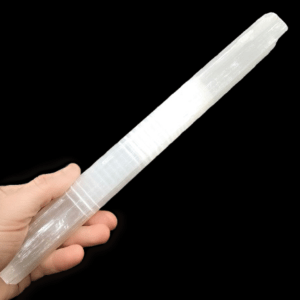
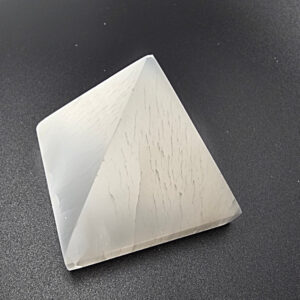
Towers and points emphasise vertical lines and work beautifully as simple mineral décor.
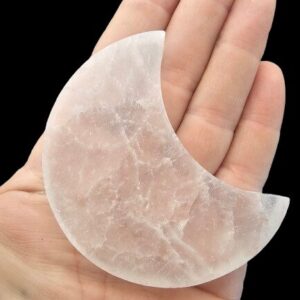
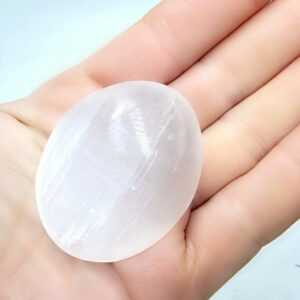
Palm stones create a compact, smooth piece designed to sit comfortably in the hand.
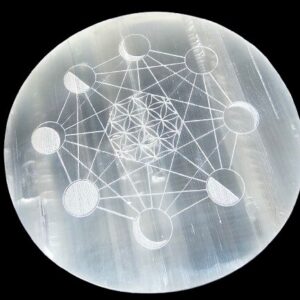
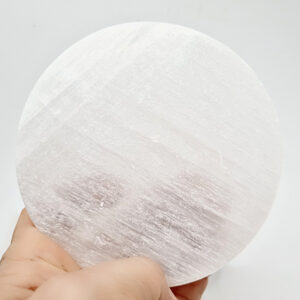
Bowls and charging plates provide flat or open surfaces and have become particularly popular within modern crystal practices.
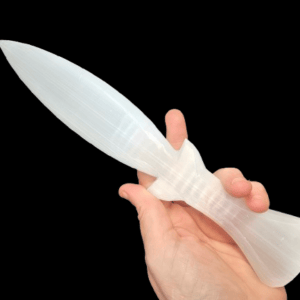
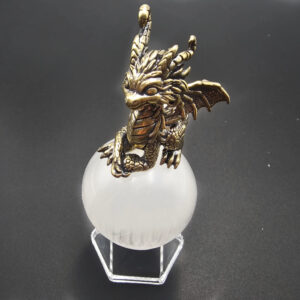
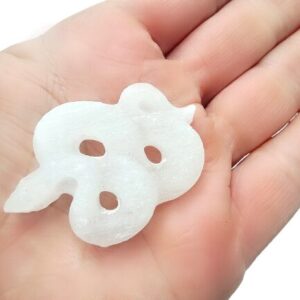
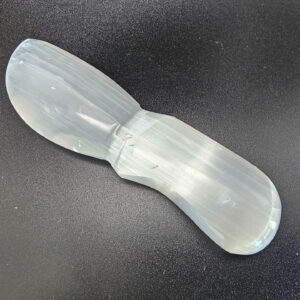
Carvings turn the pale material into mushrooms, snakes, dragons and other decorative forms.
Bookends and larger pieces allow Selenite to become part of a room rather than simply a small crystal collection.
Choosing between them is therefore less about finding the “best” Selenite and more about deciding what you want the object itself to do.
Selenite Lamps: When the Mineral Becomes the Light
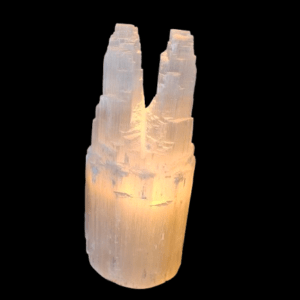
Selenite's fibrous structure makes lighting one of its most striking applications.
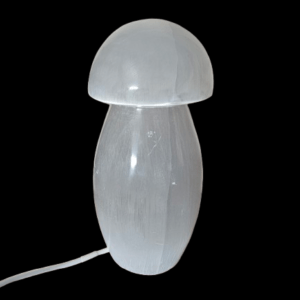
When illuminated from within or behind, the material can develop a warm, diffused glow while its natural lines remain visible. HIH's collection includes tower lamps as well as more unusual designs such as mushroom and Tree of Life styles.
These pieces work differently from a small crystal specimen because they become part of the atmosphere and lighting of a room.
Browse our Crystal Lamps collection if you're particularly interested in illuminated mineral décor, including Selenite designs alongside other available crystal lighting.
Charging Plates, Bowls & Crystal Traditions
Selenite charging plates and bowls are among the forms customers most strongly associate with contemporary crystal practice.
Within those traditions, Selenite is commonly associated with cleansing, clarity, purification and spiritual awareness, and people may place jewellery or other stones onto a Selenite plate or into a bowl as part of a symbolic cleansing or charging ritual.
Some people also position Selenite near other crystals, on an altar, beside a bed or within a meditation space for similar reasons.
These are metaphysical and spiritual practices rather than scientifically established effects of gypsum. A Selenite plate doesn't physically recharge another mineral like a battery; its significance comes from the crystal tradition or personal ritual in which it is used.
Desert Rose Shows Another Side of Gypsum
Not everything in the Selenite collection looks like a white polished tower.
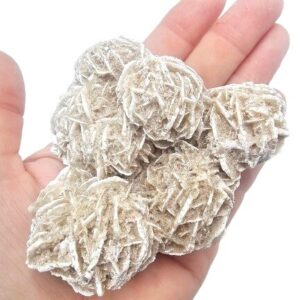
Desert Rose is a beautiful rosette-like formation of gypsum crystals, often incorporating sand as it develops in arid environments. The layered formations can resemble the petals of a flower, giving the material its familiar name.
HIH's current Selenite collection includes individual Desert Rose specimens, making them particularly interesting for anyone who wants to see how dramatically gypsum can differ from the familiar polished white material.
This is a great example of why collecting by mineral name can be so interesting: materials that are chemically related can look almost nothing alike.
Selenite Jewellery Is More Delicate Than It Looks
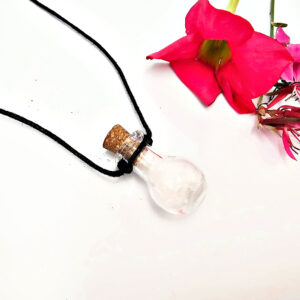
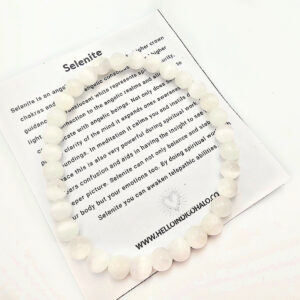
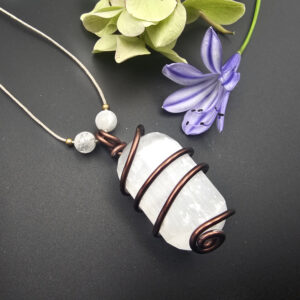
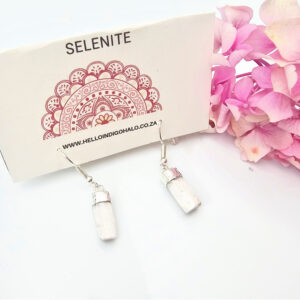
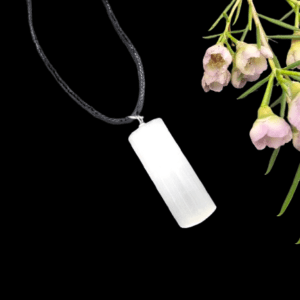
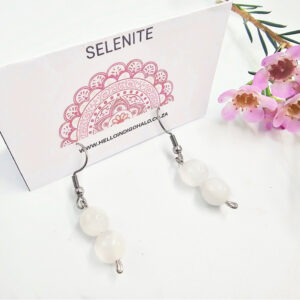
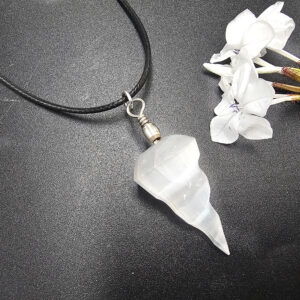
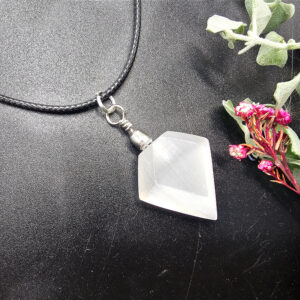
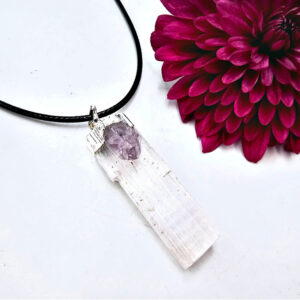
Selenite's luminous white appearance also translates beautifully into earrings, necklaces and bangles.
But this is one area where understanding the material matters.
Gypsum is very soft — around 2 on the Mohs hardness scale — so Selenite jewellery requires more careful handling than jewellery made with harder stones such as Quartz.
That doesn't mean it can't be worn. It simply means avoiding the assumption that every gemstone has the same durability.
Selenite jewellery is better suited to someone comfortable treating the piece gently rather than expecting it to withstand repeated knocks, scratching and rough everyday wear.
The Most Important Selenite Care Rule: Keep It Dry
If you remember one practical thing about Selenite, make it this:
Don't soak it in water.
Gypsum is water-sensitive and relatively soft. Extended exposure to water can damage the surface and gradually affect the material.
This matters particularly with bowls and charging plates because their shape can make them look like ordinary washable household objects. Don't treat a Selenite bowl like a ceramic dish.
Use a dry, soft cloth for routine dusting and cleaning. Avoid abrasive cleaners, harsh chemicals and unnecessary moisture.
Also protect Selenite from harder stones that can scratch it easily.
Choosing Selenite for a Space
Instead of choosing by metaphysical meaning alone, think about where the piece will live.
A tall tower can create height on a shelf or crystal display.
A lamp combines the mineral with ambient lighting.
A charging plate gives you a flat surface for jewellery or other small objects within a crystal ritual.
A bowl can become a focal point for a collection.
A carving adds personality.
A Desert Rose appeals more to the mineral collector who enjoys natural formation.
And a palm stone or small piece is an easy option when you want Selenite without dedicating much display space to it.
For another collection where the physical form plays a major role in choosing the piece, browse our Crystal Shapes collection and explore the different ways minerals are cut, carved, polished and displayed.
Frequently Asked Questions
Why does Selenite sometimes have lines or fibres running through it?
The familiar white material commercially sold as Selenite often has a fibrous Satin Spar structure. Those parallel fibres create its characteristic lines and silky appearance and can also help transmit light through the material.
Why does Selenite scratch so easily?
Gypsum is only around 2 on the Mohs hardness scale, making it much softer than many popular gemstones. Even relatively ordinary contact with harder objects can leave marks, so careful storage matters.
Can I put jewellery on a Selenite charging plate?
Physically, yes, provided you handle both the plate and jewellery carefully. Using the plate to “charge” or cleanse jewellery is part of modern crystal tradition rather than a scientifically demonstrated process.
Is Desert Rose the same material as white Selenite?
They're related through gypsum mineralogy but form very differently. Desert Rose develops distinctive rosette-like crystal formations, often incorporating sand, while the familiar white carved material sold as Selenite is usually fibrous Satin Spar gypsum.
Is Selenite a good gift?
It can be particularly appealing for someone who enjoys unusual mineral décor because there are so many formats to choose from — from small jewellery and palm stones to carved pieces, charging plates and illuminated lamps. Its softness is worth mentioning if the recipient is unfamiliar with the material.