
Silicon Carbide
Electric blues, greens, purples and gold flash across Silicon Carbide, a man-made crystalline material also known as Carborundum. Famous for its remarkable hardness and dramatic rainbow surface, these clusters turn an important industrial material into spectacular display specimens. In modern crystal traditions, Silicon Carbide is associated with energy, creativity and transformation.
Showing all 2 resultsSorted by latest
Silicon Carbide: The Man-Made Crystal With a Rainbow Surface
Silicon Carbide looks almost too dramatic to be real.
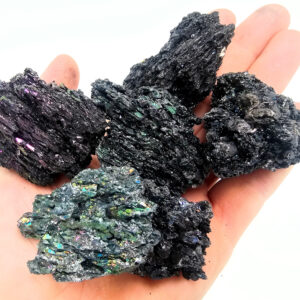
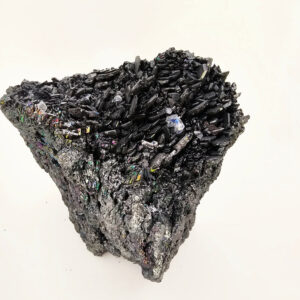
Jagged dark crystals catch the light in flashes of blue, purple, green, bronze and gold, giving larger clusters an almost metallic, otherworldly appearance.
But this isn't a naturally mined rainbow crystal.
The spectacular clusters commonly sold in crystal and mineral shops are manufactured Silicon Carbide, a material also widely known as Carborundum.
Its man-made origin doesn't make it less interesting. In fact, its story is one of the most unusual in our Crystal Names collection.
What Is Silicon Carbide?
Silicon Carbide is a compound of silicon and carbon with the chemical formula SiC.
The crystalline material is exceptionally hard and resistant to wear and heat, giving it important industrial applications as an abrasive and high-performance ceramic material.
Manufactured Silicon Carbide can grow into dramatic clusters of dark, sharply defined crystals with an iridescent surface.
These are the specimens commonly encountered in crystal shops.
So unlike Quartz, Calcite or Amethyst, the colourful Silicon Carbide cluster on your shelf wasn't simply extracted from a natural crystal pocket underground.
It was created through an industrial process.
Carborundum: Another Name for Silicon Carbide
You'll frequently encounter Silicon Carbide under the name Carborundum.
Carborundum became closely associated with manufactured Silicon Carbide after Edward Goodrich Acheson's work producing the material commercially in the late 19th century.
Acheson initially thought he had created a compound of carbon and aluminium and combined carbon with corundum to create the name Carborundum.
The chemistry turned out to be different.
What he had produced was Silicon Carbide.
The name stuck.
Today, Carborundum remains one of the best-known names associated with synthetic Silicon Carbide, particularly in abrasives and mineral collecting.
Why Does Silicon Carbide Look Like a Rainbow?
The extraordinary colours on these clusters aren't different bands of blue, purple and gold minerals growing together.
Much of the rainbow appearance comes from thin surface films formed through oxidation, which interact with light.
Different wavelengths of light interfere with one another, producing the shifting iridescent colours visible across the dark Silicon Carbide beneath.
It's similar in principle to the changing rainbow colours visible on a thin film of oil.
Move the specimen or change the lighting and different colours can suddenly become much stronger.
That makes Silicon Carbide particularly effective as a display specimen.
One of the Hardest Materials Around
Silicon Carbide is extraordinarily hard.
Depending on the form and measurement method, it sits around 9 to 9.5 on the Mohs hardness scale, placing it among the hardest commonly encountered materials.
That hardness explains one of its most important industrial uses:
abrasives.
Silicon Carbide has long been used in grinding, cutting and polishing applications because its hard crystal edges can wear away softer materials.
So the same jagged crystal structure that makes a Carborundum cluster look spectacular also helps explain why Silicon Carbide became such an important industrial material.
Silicon Carbide vs Moissanite
Here's where the story gets particularly interesting.
Silicon Carbide does occur naturally.
The naturally occurring mineral form of SiC is called Moissanite.
Natural Moissanite is extremely rare and was first recognised in material associated with the Canyon Diablo meteorite in Arizona. Tiny natural Moissanite crystals have subsequently been identified in some meteorites and terrestrial rocks.
The large rainbow Silicon Carbide clusters commonly sold in crystal shops, however, are synthetic Silicon Carbide, not rare natural Moissanite specimens.
Synthetic gem-quality Silicon Carbide can also be grown specifically for jewellery and sold as Moissanite.
So the chemistry may be SiC in all of these cases, but the origin, form and commercial use can be very different.
Man-Made Doesn't Mean Fake
Silicon Carbide is a good example of why synthetic doesn't automatically mean fake.
The material really is Silicon Carbide.
What's important is accurately describing how it was produced.
A manufactured Carborundum cluster shouldn't be sold as though miners discovered it naturally growing in a cave.
At the same time, its industrial origin doesn't make the crystalline structure, extreme hardness or rainbow optical effects imaginary.
For many collectors, that unusual combination is exactly what makes it appealing.
Why Collect Silicon Carbide?
Some people collect minerals because they're rare.
Others collect them because they're beautiful, scientifically interesting or simply strange.
Silicon Carbide comfortably fits the last three.
Its jagged crystal formations can look almost futuristic, while the iridescent surface changes dramatically with light and viewing angle.
Larger clusters make striking display pieces, while smaller pieces allow you to examine the crystal texture and rainbow surface up close.
Because clusters can contain sharp projecting crystals, choose a stable surface for display and handle the edges with care.
Browse more unusual display pieces through our Crystals collection.
Silicon Carbide Meaning
Although Silicon Carbide is manufactured rather than a traditional natural gemstone, it has developed its own place within modern crystal traditions.
It is commonly associated with energy, creativity, transformation, determination and breaking through limitations.
Its industrial story also gives those associations an interesting symbolic foundation: raw elements are transformed through intense manufacturing conditions into an exceptionally hard crystalline material with a brilliant rainbow surface.
For some people, that makes Silicon Carbide a fitting symbol for transformation through challenge.
These are contemporary metaphysical associations rather than scientifically established effects.
Silicon Carbide & the Chakras
Because its iridescent surface can display several colours at once, Silicon Carbide isn't always assigned to one single Chakra.
Within modern crystal practices it may be used across multiple Chakra traditions, with its bright rainbow appearance contributing to associations with energy, movement and transformation.
Explore more tools used in contemporary energy traditions through our Chakra Balance collection.
Choosing a Silicon Carbide Cluster
With Silicon Carbide, look at the crystal formation and iridescence.
Some clusters have dense groups of smaller crystals, while others develop larger projecting structures.
Colour also changes according to lighting and viewing angle, so turn the specimen rather than judging it from one direction.
Individual pieces won't necessarily display identical proportions of blue, purple, green or gold.
That's part of the visual appeal.
Caring for Silicon Carbide
Silicon Carbide itself is extremely hard, but clusters can still have sharp, brittle projecting crystal edges.
Handle them carefully rather than gripping or rubbing the crystal points.
For display pieces, gentle dusting is usually sufficient. Avoid dropping or knocking clusters against hard surfaces, as projecting sections may chip or break.
Because of their sharp texture, keep larger clusters somewhere stable where they won't be accidentally grabbed or knocked over.
Frequently Asked Questions About Silicon Carbide
Is Silicon Carbide natural?
The large iridescent Silicon Carbide clusters commonly sold as Carborundum are manufactured. Naturally occurring Silicon Carbide does exist, but it is the extremely rare mineral Moissanite.
Is Carborundum the same as Silicon Carbide?
Carborundum is a well-known name historically associated with manufactured Silicon Carbide, or SiC.
Why is Silicon Carbide rainbow coloured?
The iridescent colours on manufactured Silicon Carbide clusters are associated with thin surface films and light interference, creating shifting blues, purples, greens, bronze and gold.
Is Silicon Carbide the same as Moissanite?
They share the same basic chemical composition, SiC, but the terms aren't interchangeable in every context. Moissanite is the mineral name for naturally occurring Silicon Carbide and is also used commercially for synthetic gem-quality SiC grown for jewellery.
Is Silicon Carbide a real crystal if it is man-made?
Yes. Manufactured Silicon Carbide can form genuine crystalline structures. The important distinction is that the colourful clusters are artificially produced rather than naturally mined mineral specimens.