
Turquoise
From vivid sky blue and blue-green to softer greenish shades, Turquoise is one of the world’s most recognisable gemstones. This naturally opaque to semitranslucent copper aluminium phosphate can appear in beautifully even colour or with contrasting veins and matrix that make each piece distinctive. Browse Turquoise stones and jewellery for their individual colour and character. Within crystal traditions, Turquoise is associated with communication, protection, wisdom and balance.
Showing all 5 resultsSorted by latest
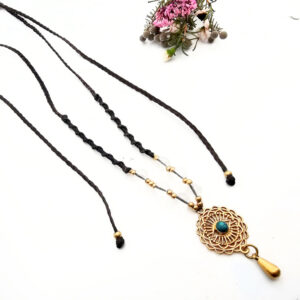
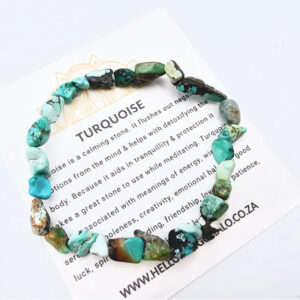
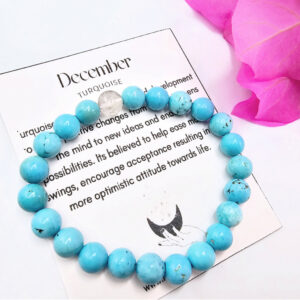
More Than a Famous Shade of Blue
Few gemstones have made such an impression that an entire colour is named after them.
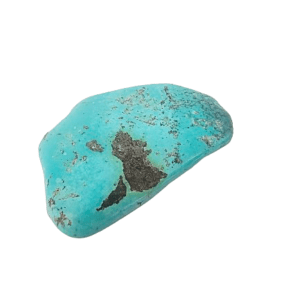
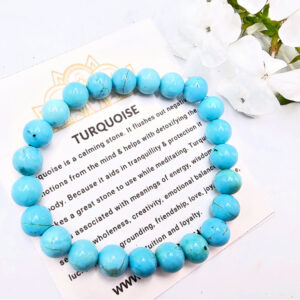
Turquoise is famous for blue, but natural material can range through sky blue, blue-green and greenish shades. Some pieces have relatively even colour, while others contain brown, black or differently coloured matrix that creates intricate natural patterns.
That variation is part of Turquoise's identity rather than something every piece needs to hide.
What Is Turquoise?
Turquoise is a naturally occurring hydrated copper aluminium phosphate mineral.
Its ideal formula is CuAl₆(PO₄)₄(OH)₈·4H₂O, and it belongs to the Turquoise mineral group.
It commonly forms as opaque to semitranslucent material rather than the transparent, faceted crystals people may associate with gemstones such as Topaz or Quartz.
Turquoise typically develops in dry regions where copper-bearing waters interact with aluminium- and phosphorus-bearing rocks and minerals.
Why Is Turquoise Blue?
Copper plays an important role in the characteristic colour of Turquoise.
The classic appearance ranges from vivid sky and robin's-egg blues through blue-green and greener shades.
Colour alone, however, isn't enough to establish that a blue stone is genuine Turquoise.
Many other natural materials, manufactured products and dyed stones can imitate its famous appearance.
For valuable pieces, reliable supplier information and professional gem identification are much more useful than internet colour tests.
What Is Turquoise Matrix?
Matrix is the host-rock or veining material that can remain associated with Turquoise.
It may create brown, black, yellowish or other contrasting patterns running through the blue or green material.
Some shoppers prefer clean, relatively even blue Turquoise. Others deliberately seek dramatic spiderweb or matrix patterns because they give the stone such individual character.
Neither preference is inherently right or wrong.
When choosing Turquoise, consider the complete combination of colour, matrix, texture, finish and treatment information rather than judging every piece against one perfect blue example.
Is All Turquoise Completely Untreated?
No.
This is one of the most important things to understand when buying Turquoise.
Natural Turquoise can be porous, and various treatments have been used to improve durability, colour or surface appearance.
Stabilised or impregnated Turquoise has material introduced into its pores to improve stability and sometimes appearance.
Dyed Turquoise has had colour added or enhanced.
Other enhancement techniques also exist.
A treated piece can still contain genuine natural Turquoise. The important issue is accurate disclosure.
For HIH product descriptions, don't automatically use phrases such as “100% untreated natural Turquoise” unless supplier information supports that claim.
Natural Turquoise vs Imitation Turquoise
Treatment and imitation aren't the same thing.
A stabilised natural Turquoise begins with genuine Turquoise material.
An imitation is another material made or altered to resemble Turquoise.
Dyed Howlite and other materials are commonly encountered in the wider crystal and jewellery trade because their natural veining can create a Turquoise-like appearance after colouring.
This doesn't make Howlite an inferior material—it simply means it should be sold as what it actually is.
Accurate naming allows both stones to keep their own identity.
What About “African Turquoise”?
This name needs particular care.
Material sold as African Turquoise isn't automatically the mineral Turquoise simply because the trade name contains the word.
The name has been applied commercially to other blue-green materials.
For HIH, the mineral identity given for the individual product should determine its Crystal Names category—not the marketing name alone.
If an African Turquoise product is identified as Chrysocolla, Jasper or another material, explain the trade name clearly and categorise it according to what the stone actually is.
Choosing Turquoise
Turquoise is a stone where good product information really matters.
Consider:
Colour — compare blue, blue-green and greener material.
Matrix — decide whether you prefer relatively clean colour or visible natural veining and patterns.
Texture and polish — finer, denser material can take a particularly attractive polish.
Treatment — check whether the supplier identifies the material as untreated, stabilised, dyed or otherwise enhanced.
Origin — locality can interest collectors, but only use specific mine or country claims when they are actually known.
Construction — with jewellery, consider the metal, cord, setting or wire as well as the gemstone.
Most importantly, don't assume that every piece of genuine Turquoise should look exactly alike.
Turquoise Through History
Turquoise has been valued as an ornamental and jewellery material for thousands of years.
Ancient Egyptian examples date back millennia, while the gemstone also developed important cultural histories in Iran, Central Asia and the Americas.
Its English name ultimately relates to an old association with Turkey, through which material historically reached European markets.
Because Turquoise carries genuine cultural significance in different parts of the world, product descriptions should avoid blending unrelated traditions into one universal “ancient meaning”.
Specific traditions are more interesting when described accurately.
Turquoise in Crystal Traditions
Within modern crystal traditions, Turquoise is commonly associated with communication, protection, wisdom, balance and self-expression.
Its blue and blue-green colouring also leads to symbolic associations with the Throat Chakra.
These are metaphysical traditions rather than scientifically demonstrated effects of Turquoise.
Avoid claims that Turquoise treats illness, detoxifies the body or guarantees protection from physical harm.
Its remarkable mineralogy, colour and long human history already provide plenty to appreciate.
Caring for Turquoise
Turquoise deserves gentle care.
It has a Mohs hardness of approximately 5–6, but its porosity and sensitivity to chemicals are particularly important.
Clean Turquoise gently with warm soapy water and avoid steam and ultrasonic cleaners.
Keep it away from harsh household chemicals, cosmetics and prolonged contact with oils or perspiration where practical, as these can affect some Turquoise.
Treatment also influences appropriate care, so follow any specific supplier instructions supplied with the piece.
Frequently Asked Questions
What is Turquoise?
Turquoise is a naturally occurring hydrated copper aluminium phosphate mineral famous for its blue, blue-green and greenish colours.
Is green Turquoise real?
Yes. Natural Turquoise isn't restricted to bright blue and can occur in blue-green and greener shades.
What does stabilised Turquoise mean?
Stabilisation or impregnation introduces material into porous Turquoise to improve its durability and sometimes its appearance. It doesn't automatically mean the underlying stone isn't genuine Turquoise.
Is African Turquoise real Turquoise?
Not necessarily. “African Turquoise” is a commercial name that can be applied to other blue-green materials. The actual mineral identity should be checked rather than relying on the trade name.
What is Turquoise traditionally associated with?
Within crystal traditions, Turquoise is commonly associated with communication, protection, wisdom, balance and self-expression.