
Ulexite TV Rock
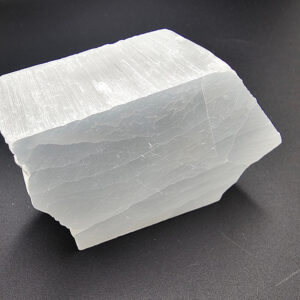
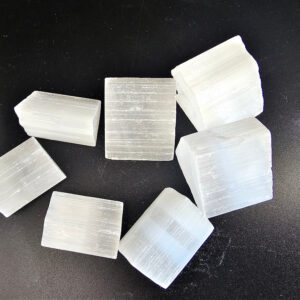
Place a piece of Ulexite over printed words and something wonderfully strange can happen—the image appears to rise towards the stone’s surface. Nicknamed TV Rock, this soft white borate mineral contains naturally aligned fibres that create its famous fibre-optic effect. Browse Ulexite for its unusual optical character, silky appearance and fascinating mineral structure. Within crystal traditions, Ulexite is associated with insight, clarity, intuition and seeing situations from a different perspective.
Showing all 2 resultsSorted by latest
The Stone That Appears to Lift Words Off a Page
Ulexite has one of the most entertaining natural optical effects in the mineral world.
Place a suitable polished piece over printed words or an image and the picture can appear to be transported through the stone towards its upper surface.
It looks almost like a tiny natural screen.
That's where the wonderfully appropriate nickname TV Rock comes from.
What Is Ulexite?
Ulexite is a naturally occurring hydrated sodium-calcium borate mineral.
Its chemical formula is NaCaB₅O₆(OH)₆·5H₂O, and it crystallises in the triclinic crystal system.
It is commonly white or colourless, although greyish material can occur when clay or other material is included.
Many Ulexite specimens have a fibrous structure and silky appearance. Those fibres are responsible for the optical behaviour that makes certain pieces particularly popular with mineral collectors.
Why Is Ulexite Called TV Rock?
The name isn't simply a whimsical crystal-shop invention.
Certain fibrous Ulexite specimens can behave rather like a bundle of natural optical fibres.
When the fibres are correctly oriented and a suitable surface is cut and polished across them, light from an object beneath the specimen is transmitted through the parallel fibres.
Place the stone over text and the letters can appear close to the upper surface instead of remaining visually down on the page.
The mineral isn't electronically magnifying the words and there certainly isn't a tiny television hiding inside it.
It's an optical effect created by Ulexite's remarkable natural structure.
Does Every Piece of Ulexite Show the TV Effect?
Not necessarily.
Ulexite occurs in different habits, and the famous image-transmitting effect depends on the fibrous structure and how the specimen is oriented and prepared.
Some pieces are especially good examples of optical or TV Rock Ulexite, while others are collected for their silky fibres, crystal form or unusual mineral character.
For a customer specifically wanting the classic TV Rock experiment, the product description should clearly say whether the individual piece has a suitable polished viewing surface and displays the effect.
Don't promise it for every rough piece simply because the mineral is Ulexite.
What Does Ulexite Look Like?
Ulexite is generally much quieter in colour than many gemstones.
Expect white, colourless and sometimes greyish material rather than vivid jewel tones.
Its attraction lies in texture and optical behaviour.
Fibrous specimens can display a silky lustre, while other forms may look quite different.
This makes Ulexite a good reminder that a mineral doesn't need intense colour to be fascinating.
Sometimes structure is the star of the show.
Ulexite Is Surprisingly Soft
Ulexite has a Mohs hardness of only around 2.5.
For comparison, Quartz is Mohs 7.
That makes Ulexite considerably easier to scratch than many familiar stones in a crystal collection.
Treat polished optical surfaces particularly carefully. Scratches can interfere with the clean appearance that makes TV Rock specimens so enjoyable to demonstrate.
Store Ulexite separately from harder minerals rather than allowing it to tumble around loose in a box with Quartz, Agate or other harder stones.
Keep Ulexite Away From Water
Ulexite also deserves unusually cautious cleaning.
This is not a stone for generic “wash your crystals under running water” advice.
Because Ulexite is a hydrated borate and is affected by water, repeated soaking or washing is inappropriate.
For ordinary display specimens, gentle dry cleaning with a very soft brush or cloth is the safer approach.
Avoid salt water, prolonged soaking, household cleaners and abrasive scrubbing.
The same caution applies to metaphysical cleansing rituals: if you prefer symbolic cleansing, choose a dry method rather than immersing Ulexite in water.
Choosing Ulexite or TV Rock
Consider what you want from the specimen.
Optical effect — if you specifically want TV Rock, look for a piece prepared to demonstrate image transmission.
Surface condition — scratches can make a polished optical face less attractive.
Fibrous character — look at the silky parallel structure that gives Ulexite so much of its personality.
Colour — white, colourless and subtle greyish variation is normal.
Shape — natural mineral specimens and prepared optical pieces can look quite different.
Purpose — a mineral collector may value a natural specimen differently from someone choosing Ulexite specifically to demonstrate its TV Rock effect.
For optical pieces, try them over dark printed text and move your viewing angle slightly. The result can be much easier to appreciate in person than in a single product photograph.
Ulexite in Crystal Traditions
Within crystal traditions, Ulexite is commonly associated with insight, mental clarity, intuition, imagination and seeing beyond the obvious.
Its unusual ability to transmit an image through its fibres has understandably inspired symbolic connections with perception and looking at situations from a different perspective.
These are metaphysical traditions rather than scientifically demonstrated effects of Ulexite.
The real optical phenomenon isn't metaphysical at all—it comes from the mineral's fibrous structure and interaction with light.
That combination of genuine science and symbolic tradition is part of what makes Ulexite such an interesting addition to a crystal collection.
Frequently Asked Questions
What is Ulexite?
Ulexite is a naturally occurring hydrated sodium-calcium borate mineral, commonly white or colourless and often fibrous in structure.
Why is Ulexite called TV Rock?
Certain fibrous Ulexite specimens transmit an image through their parallel fibres. When placed over printed text, the letters can appear to rise towards the upper surface, leading to the nickname TV Rock.
Is the TV Rock effect natural?
Yes. The optical effect comes from Ulexite's naturally aligned fibrous structure, although specimens generally need the correct orientation and suitable surfaces for the effect to be demonstrated clearly.
Can Ulexite go in water?
Water exposure should be avoided. Ulexite is a soft hydrated borate mineral that can be affected by water, so gentle dry cleaning is preferable to soaking or washing.
What is Ulexite traditionally associated with?
Within crystal traditions, Ulexite is commonly associated with insight, clarity, intuition, imagination and seeing situations from a different perspective.