
Hindu Statues
Showing 26–38 of 38 resultsSorted by latest
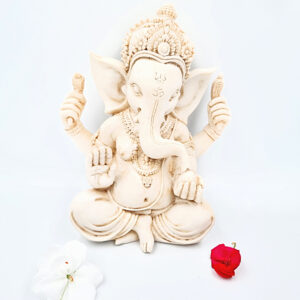
Hindu Statues of Ganesha, Shiva, Lakshmi & Other Deities
Hindu Statues can be devotional objects, expressions of faith, meaningful gifts or beautiful representations of the extraordinarily rich iconography found across Hindu traditions.
Our changing collection includes representations of Ganesha, Shiva, Lakshmi, Krishna, Saraswati, Hanuman, Durga, Kali, Vishnu and other sacred figures in a variety of sizes and designs.
If you're unfamiliar with Hindu iconography, learning who each deity is and recognising some of their traditional attributes can help you choose a statue with greater understanding and respect.
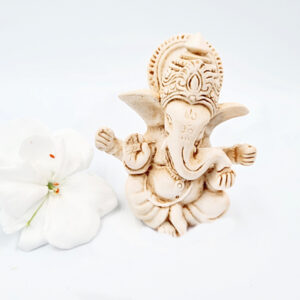
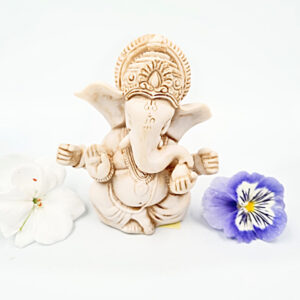
Ganesha Statues
With his distinctive elephant head, Ganesha is one of the most widely recognised Hindu deities.
Ganesha is traditionally associated with wisdom and new beginnings and is widely revered as a remover of obstacles. He is the son of Shiva and Parvati and is represented in many different forms across Hindu art and devotional traditions.
Ganesha is particularly associated with beginnings, which is one reason his image may be encountered in homes, businesses and places of worship.
Our collection includes Ganesha statues in several sizes and designs, including seated and lotus-inspired figures.
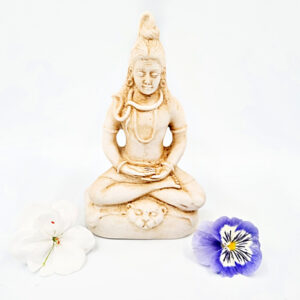
Shiva Statues
Shiva is one of Hinduism's major deities and takes many forms within Hindu theology and devotional traditions.
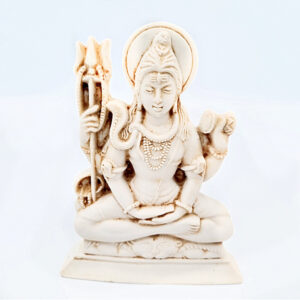
He is associated with transformation and is often represented as a yogi or in symbolic forms connected with meditation and asceticism.
The HIH collection includes several representations of Shiva, from smaller seated figures to larger statement statues.
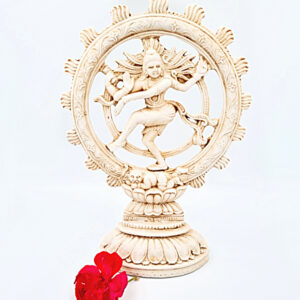
Nataraja — Shiva as Lord of the Dance
One of Shiva's most extraordinary representations is Nataraja, the dancing form of Shiva.
The familiar image of Shiva dancing within a ring of flames is rich with symbolism connected with cosmic cycles of creation and destruction.
A Nataraja statue is therefore much more than simply a dancing figure and is best appreciated with an understanding of its religious and philosophical context.
Lakshmi Statues
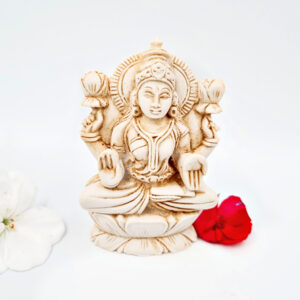
Lakshmi is a major Hindu goddess traditionally associated with prosperity, good fortune and abundance.
She is also associated with beauty and auspiciousness and is particularly significant during celebrations such as Diwali.
Lakshmi is frequently depicted seated or standing on a lotus, an important symbol appearing throughout Indian religious art.
Rather than treating a Lakshmi statue as an object that guarantees wealth, it is more accurate to understand prosperity and auspiciousness as part of her traditional religious symbolism.
Saraswati Statues
Saraswati is traditionally associated with knowledge, learning, music, language and the arts.
She is commonly depicted with a veena, a stringed musical instrument, and her imagery may include other attributes carrying symbolic significance.
A Saraswati statue may be especially meaningful for students, teachers, musicians, writers and others who connect with the traditions and qualities she represents.
Krishna Statues
Krishna is one of Hinduism's most beloved deities and is particularly important within Vaishnava traditions.
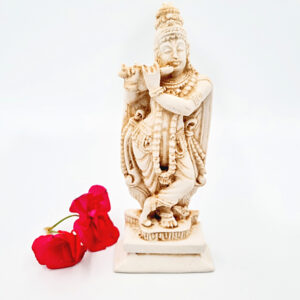
His stories and representations take many forms. Krishna is frequently depicted playing the flute and is central to a vast body of devotional, philosophical, artistic and literary traditions.
Krishna is also the speaker of the Bhagavad Gita, one of Hinduism's most influential sacred texts.
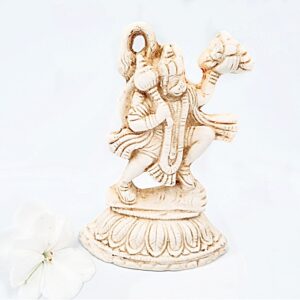
Hanuman Statues
Hanuman is one of the central figures of the Ramayana and is renowned for his devotion to Rama.
He is traditionally associated with qualities including devotion, courage, strength and service.
His recognisable monkey form and the stories surrounding his extraordinary feats make Hanuman one of the most distinctive figures represented in Hindu religious art.
Durga Statues
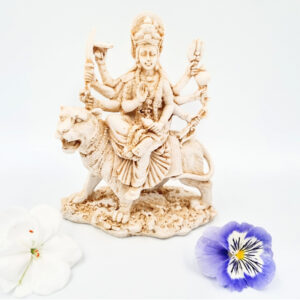
Durga is a powerful Hindu goddess commonly depicted as a warrior figure, often riding a lion or tiger and carrying weapons in multiple hands.
She is celebrated particularly for her victory over the buffalo demon Mahishasura, a story symbolising the triumph of divine power over destructive forces.
Durga is an important form of the Goddess, or Devi, and holds particular significance within Shakta traditions.
Kali Statues
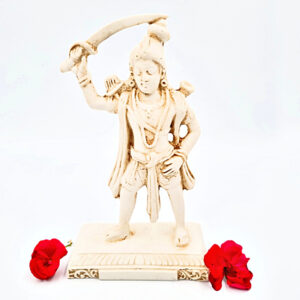
Kali is a powerful form of the Hindu Goddess whose dramatic iconography is sometimes misunderstood when viewed outside its religious context.
Her fierce appearance is connected with themes including time, transformation and the destruction of evil and ignorance.
Rather than describing Kali simply as frightening or dark, understanding the symbolism behind her imagery gives a much more respectful picture of her importance within Hindu traditions.
Vishnu Statues
Vishnu is one of the principal deities of Hinduism and is particularly central to Vaishnava traditions.
He is traditionally associated with the preservation and maintenance of cosmic order and is represented through a rich body of religious art and symbolism.
Hindu traditions also recognise various avatars of Vishnu, including figures such as Rama and Krishna.
Hindu Statues for Home Altars & Prayer Spaces
For practising Hindus, a murti can have a devotional significance that goes far beyond ordinary decoration.
If you're choosing a statue for a home altar or prayer space, the particular tradition you follow may guide how the figure is selected, positioned and cared for.
Hindu traditions are diverse, so there isn't one universal set of display rules that applies to every deity, household or devotional practice.
If you're unfamiliar with a particular religious practice, learning about the deity and tradition is more respectful than relying on generic “spiritual décor” rules.
Choosing a Hindu Statue
Start with the figure and what draws you towards it.
You might choose according to:
- The deity represented
- Religious or personal significance
- Traditional symbolism
- The particular pose or form
- Available display space
- Size and visual presence
- A meaningful occasion or gift
Always check the measurements on the individual product page. Our Hindu statues range from smaller figures suitable for compact spaces to considerably larger statement pieces.
Giving Hindu Statues as Gifts
A Hindu statue can be a deeply meaningful gift when you understand the recipient's beliefs and the significance of the deity represented.
Rather than choosing solely according to generic ideas such as “luck” or “wealth”, consider the deity's broader religious meaning and whether the figure is appropriate for the person receiving it.
A little understanding turns a beautiful object into a far more thoughtful gift.
Caring for Hindu Statues
Care requirements depend on the material, paint and decorative finish of the individual piece.
Dust statues gently using a soft cloth and avoid abrasive products that could damage painted or metallic finishes.
Place statues somewhere stable and check the individual listing for dimensions, materials and product-specific care information.
If a statue is being used devotionally, follow the practices appropriate to your own tradition.
Frequently Asked Questions About Hindu Statues
What are Hindu statues called?
In Hindu devotional contexts, sacred images or representations may be referred to as murtis. Their religious significance can extend far beyond that of an ordinary decorative statue.
What does Ganesha represent?
Ganesha is traditionally associated with wisdom and new beginnings and is widely revered as the remover of obstacles. His elephant-headed form is one of the most recognisable images in Hindu iconography.
What does Lakshmi represent?
Lakshmi is traditionally associated with prosperity, good fortune, auspiciousness and abundance. She is an important Hindu goddess and is particularly associated with celebrations such as Diwali.
What does Saraswati represent?
Saraswati is traditionally associated with knowledge, learning, music, language and the arts. She is often depicted holding or playing a veena.
Who is Hanuman?
Hanuman is a central figure in the Ramayana and is renowned for his devotion to Rama. He is traditionally associated with qualities including devotion, courage, strength and service.
Is Nataraja a form of Shiva?
Yes. Nataraja is the dancing form of Shiva and is one of the most recognisable representations of the deity. The image carries complex symbolism associated with cosmic creation and destruction.
Are Krishna and Vishnu connected?
Yes. Within Hindu traditions, Krishna is widely understood as an avatar of Vishnu, although Krishna is also worshipped as the Supreme Being within particular traditions.
Can Hindu statues be used purely as décor?
Hindu statues are sacred representations for many people. Someone may appreciate Hindu art without being Hindu, but recognising the religious and cultural significance of the figures and displaying them respectfully is important.
Where should I place a Hindu statue?
There isn't one universal placement rule covering every Hindu deity and tradition. For devotional use, follow the practices of your own tradition. For respectful decorative display, choose a clean, stable position and learn about the particular figure rather than relying on generic placement rules.