
Amethyst
Showing 76–99 of 99 resultsSorted by latest






Amethyst Crystals: From Natural Clusters to Polished Pieces
Few crystals are as instantly recognisable as Amethyst. Its purple colour can range from delicate lilac and lavender through to rich violet, with individual pieces showing different zoning, transparency, inclusions and crystal formations.
Amethyst is a purple variety of quartz, and its combination of mineral beauty, variety and accessibility has made it popular with gemstone collectors, jewellery lovers and people interested in crystal traditions.
If you'd like to discover other gemstones alongside Amethyst, browse our Crystal Names collection to explore the wider HIH range alphabetically by stone.
What Is Amethyst?
Amethyst is the purple variety of the mineral quartz. Its colour is linked to iron within the quartz together with natural irradiation and geological processes that create colour centres in the crystal.
Like other quartz varieties, Amethyst has a Mohs hardness of 7, making it durable enough for many forms of jewellery and polished crystal pieces.
Natural Amethyst can vary enormously. Some specimens are pale and translucent, others display intense purple colour, and many show bands or zones of different shades within the same crystal.
Amethyst Clusters & Natural Formations
One of the most spectacular ways to appreciate Amethyst is in its natural crystal form.
Amethyst commonly develops as crystals lining cavities within rock. When multiple points grow together, they can create clusters and druzy surfaces that sparkle as they catch the light.
Clusters can range from small collectible specimens to much larger display pieces. Their points, colour zoning, matrix and formations mean that two natural specimens are rarely identical.
If natural formations are what attract you most, our Crystal Clusters collection lets you compare Amethyst with clusters and mineral formations from other stones.
Polished Amethyst Points, Shapes & Collectables
Polishing and carving reveal another side of Amethyst.
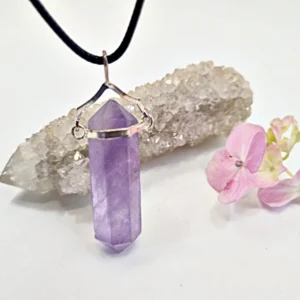
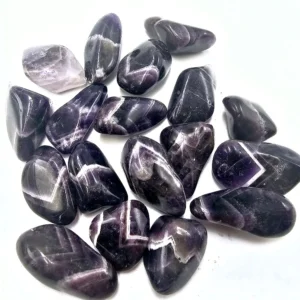
The HIH collection can include polished points, towers, hearts, tumbles, spheres, carvings and other decorative forms alongside natural specimens.
Polished pieces can make colour zoning, inclusions and patterns particularly easy to appreciate, while shaped crystals give collectors the option to choose according to both gemstone and form.
Explore our wider Crystal Shapes collection if you'd like to compare different forms across many gemstones.
Amethyst Jewellery
Amethyst's combination of rich colour and good durability has made it a long-standing jewellery stone.
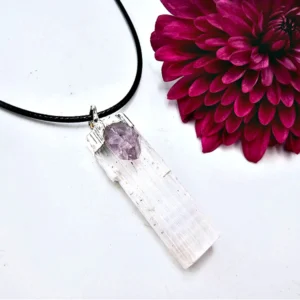
At Hello Indigo Halo you'll find Amethyst appearing across changing jewellery designs including necklaces, earrings, bangles, rings, anklets and crystal bottle pieces, with styles ranging from simple gemstone accents to more unusual statement designs.
The exact selection changes as new pieces arrive, so the live product grid is the best guide to the Amethyst jewellery currently available.
Amethyst Meaning & Traditional Associations
Amethyst has a long history of symbolism and has accumulated many meanings across different periods and traditions.
Within modern crystal practices, Amethyst is commonly associated with calm, clarity, intuition, spiritual awareness and meditation. It is also frequently connected with the crown and third-eye chakras in contemporary chakra practices.
These are traditional and metaphysical associations rather than scientifically established effects of the mineral.
For customers interested specifically in chakra-related tools, jewellery and sets, our Chakra Balance collection explores the modern seven-chakra system across a wider selection of products.
How to Choose an Amethyst Crystal
There isn't one perfect shade or shape of Amethyst.
If you're choosing primarily for appearance, look at the purple tone, transparency, crystal formation, pattern and overall shape that appeals to you.
Someone building a mineral collection might prefer a natural cluster or unusual specimen, while a polished point, heart or sphere may suit a decorative display. Smaller pieces and jewellery can be easier choices when you'd like to carry or wear Amethyst.
If you're buying a specific natural specimen, check whether the listing shows the exact piece or a representative example.
Why Does Amethyst Vary in Colour?
Amethyst isn't one uniform shade of purple.
Its colour can range from pale lilac through medium violet to much deeper purple. Individual crystals may also show colour zoning, where some areas are noticeably darker than others.
Geological conditions, trace elements and subsequent processes all contribute to these differences.
Photography, lighting and screens can also affect how purple tones appear online, so some variation between an image and the stone viewed in person is normal.
Amethyst, Citrine & Quartz
Amethyst belongs to the quartz family, alongside varieties such as Citrine and Smoky Quartz.
Amethyst and Citrine are particularly interesting because both are coloured varieties of quartz, although their colours develop under different conditions. Some material can even display both purple and yellow-orange areas and is known as Ametrine.
Understanding the mineral family can be a fascinating way to move beyond choosing crystals purely by colour and begin exploring how different varieties are related.
Caring for Amethyst
Amethyst is reasonably durable, but it still deserves appropriate care.
Avoid hard knocks that could chip a point, edge or jewellery setting. For routine cleaning of suitable pieces, gentle methods are preferable to harsh chemicals or abrasive cleaners.
One particularly useful consideration is prolonged strong sunlight. Amethyst colour can fade with extended exposure to intense light, so valuable or particularly colourful specimens are better displayed away from sustained direct sunlight.
Jewellery should also be cared for according to the metal, setting and other materials used in the individual piece.
Frequently Asked Questions About Amethyst
What is Amethyst?
Amethyst is the purple variety of quartz. Its colour can range from pale lilac to deep violet and may vary considerably between natural specimens.
What is Amethyst traditionally associated with?
Within modern crystal traditions, Amethyst is commonly associated with calm, clarity, intuition, meditation and spiritual awareness. These are traditional metaphysical associations rather than scientifically established effects.
Why are some Amethyst crystals darker than others?
Natural Amethyst varies because colour intensity and zoning depend on the material and conditions in which the crystal formed. Pale and deeply coloured Amethyst can both be natural.
Can Amethyst fade in sunlight?
Yes. Prolonged exposure to strong light can cause the colour of Amethyst to fade, so long-term display in intense direct sunlight is best avoided.
Is Amethyst suitable for jewellery?
Amethyst has a Mohs hardness of 7 and is widely used as a gemstone. Jewellery still needs sensible care, particularly around knocks, settings, chemicals and the other materials used in the piece.
Is every Amethyst crystal unique?
Natural specimens can vary in colour, inclusions, crystal formation, pattern and matrix. Polished pieces made from natural Amethyst can also retain individual variations, so pieces should not be expected to look perfectly identical.