
Azurite
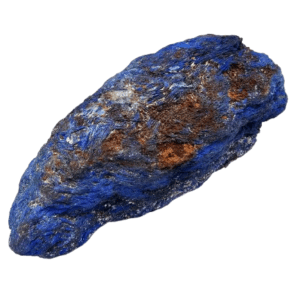
Intensely blue and unmistakably mineral, Azurite is a copper carbonate mineral prized for rich azure colouring and striking natural formations. Browse individual rough Azurite specimens with deep blue crystal areas, earthy matrix and naturally varied structure. Within crystal traditions, Azurite is commonly associated with insight, intuition, reflection, communication and greater mental clarity.
Showing the single result
Few Minerals Do Blue Quite Like Azurite
Azurite earns its name very quickly.
Its colour can move from vivid royal blue and rich azure into darker navy or almost velvety blue-black areas, depending on crystal size, matrix and surface formation.
That depth of colour is one of the main reasons Azurite has fascinated mineral collectors for centuries.
For natural specimens, however, colour is only part of the story.
The matrix, crystal habit, associated minerals and balance between bright blue and earthy host rock can completely change the character of a piece.
What Is Azurite?
Azurite is a recognised copper carbonate hydroxide mineral with the formula:
Cu₃(CO₃)₂(OH)₂
Its rich blue colour is directly linked with its copper chemistry.
Azurite commonly develops in the oxidised zones of copper-bearing mineral deposits, where changing chemical conditions near the Earth's surface allow secondary copper minerals to form.
That geological setting also explains why Azurite is so often associated with other copper minerals.
Azurite and Malachite Often Appear Together
One of the most useful things to understand about Azurite is its relationship with Malachite.
Both are copper carbonate minerals, but they are different mineral species.
Azurite is strongly associated with blue.
Malachite is famous for vivid green.
In natural copper deposits they are frequently found together, and Azurite can alter or transform into Malachite over geological time.
That means blue Azurite with green Malachite is not an unusual combination.
If a specimen genuinely contains both minerals, naming both can make the product more useful to collectors.
However, do not automatically add a Malachite category just because Azurite commonly occurs with it. The green mineral must actually be visible or verified in the individual specimen.
Rough Azurite Is About the Whole Specimen
HIH's freshest catalogue evidence currently shows individual Azurite Rough Specimen pieces.
That is a particularly good format for this mineral because rough material lets you see more than colour alone.
Look for:
- depth and distribution of the blue
- visible crystal areas
- contrast with the host matrix
- any verified associated minerals
- natural cavities or surface texture
- the overall balance and shape of the specimen.
Two pieces of the same weight can look dramatically different.
One may concentrate the blue in a smaller, richer area.
Another may show more Azurite spread through a larger matrix.
Neither approach is automatically better.
The appeal comes from the actual specimen.
For more individually photographed natural collector pieces, browse Selected Crystals – Rough.
Why Is Azurite So Blue?
Azurite's blue colour is not a coating or decorative surface effect in genuine natural material.
It comes from the way copper within the mineral interacts with light.
This is why rich blue Azurite can remain visually intense even in quite small crystal areas.
Natural specimens may still include paler zones, dark matrix, brown rock or other minerals.
The presence of matrix should not automatically be treated as a defect.
For a collector specimen, it can provide useful geological context and striking contrast.
Azurite Can Form More Than One Shape
Azurite is not limited to one neat crystal form.
It can occur as tabular or prismatic crystals, massive material, rounded or botryoidal formations and other natural habits.
Some specimens display obvious sparkling crystal faces.
Others appear more compact or crust-like.
This makes the term Azurite specimen more useful than promising that every piece will contain large, perfectly formed crystals.
Natural mineral formations do not need to look identical to be interesting.
Choosing an Azurite Specimen
Start with what actually attracts you.
If colour matters most, look for a piece with strongly visible blue.
If you prefer geology and texture, you may be drawn to a specimen with more matrix, cavities or contrasting minerals.
If the product is individually photographed, use that image as your primary guide because collector specimens are not interchangeable.
Weight alone should never be the only deciding factor.
A smaller Azurite specimen with concentrated crystals may have a completely different visual impact from a heavier matrix-rich piece.
For a wider look at minerals arranged alphabetically by name, browse the Crystal Names collection.
Azurite in Crystal Traditions
Within crystal traditions, Azurite is commonly associated with intuition, insight, reflection, communication and mental clarity.
Its intense blue colour has also led to strong symbolic links with the Third Eye and Throat Chakras in modern metaphysical practice.
These are traditional spiritual associations rather than scientifically demonstrated effects of copper carbonate.
Azurite remains a fascinating mineral whether you collect it for symbolism, colour or geology.
Caring for Azurite
Azurite deserves gentle handling.
It is relatively soft compared with Quartz and can be brittle, so protect crystal faces from scratching and hard knocks.
Avoid acids, harsh household chemicals and aggressive cleaning.
For rough collector specimens, gentle dusting with a soft brush is often safer than soaking or scrubbing.
If a specimen contains several different minerals or a delicate matrix, always care for the whole piece according to its most fragile component.
Frequently Asked Questions
What is Azurite?
Azurite is a naturally occurring copper carbonate hydroxide mineral best known for its intense blue colour.
Is Azurite the same as Malachite?
No. They are different copper minerals, although they commonly occur together and Azurite can alter into Malachite.
Why is Azurite blue?
Its colour is related to copper within the mineral's structure and the way that structure interacts with light.
Is every Azurite specimen bright blue?
No. Natural pieces can include rich blue crystals, darker areas, earthy matrix and associated minerals in different proportions.
What is Azurite traditionally associated with?
Within crystal traditions, Azurite is commonly associated with intuition, insight, communication, reflection and mental clarity.