
Blue Obsidian
Deep blue colour and a glassy finish give Blue Obsidian its striking appearance. The name is used in the crystal trade for several blue glassy materials, so colour, transparency and origin can vary considerably. Within modern crystal traditions, Blue Obsidian is associated with communication, insight, protection and seeing situations more clearly.
Showing the single result
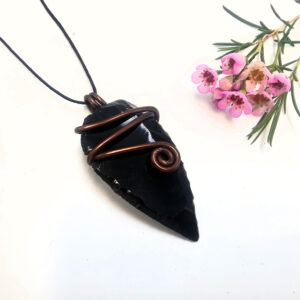
Blue Obsidian: A Beautiful Name With a Complicated Identity
Blue Obsidian immediately stands out because obsidian is usually associated with black volcanic glass.
But this is one crystal-trade name where appearance matters.
Natural obsidian can display blue, silver and rainbow-like sheen caused by the way light interacts with structures or inclusions within the volcanic glass. Material with a strongly transparent, vivid blue body colour is also widely sold under the name Blue Obsidian, although this type of material is commonly manufactured glass rather than naturally occurring obsidian.
That means pieces sold as Blue Obsidian can represent very different materials.
Rather than assuming every blue glassy stone has exactly the same geological origin, look at the individual piece and any provenance supplied with it.
For other stones organised by name, browse our Crystal Names A–Z.
Natural Obsidian Begins With a Volcano
True obsidian is natural volcanic glass.
It forms when silica-rich molten rock cools quickly enough that there isn't sufficient time for an ordinary crystalline structure to develop.
That's why obsidian behaves differently from crystalline minerals such as Quartz.
It can break with extremely sharp curved edges, known as conchoidal fracture, and people have used that property for cutting tools and blades for thousands of years.
Black is its most familiar appearance, but natural obsidian can also display mahogany patterns, snowflake-like inclusions and beautiful gold, silver or rainbow sheen.
Explore our Black Obsidian collection to see the classic dark side of this volcanic material.
So Can Natural Obsidian Actually Look Blue?
Yes — but there is an important distinction.
Natural obsidian can show blue sheen, iridescence or blue-toned optical effects, particularly when light interacts with microscopic structures within the glass.
That isn't necessarily the same thing as a chunk of perfectly transparent electric-blue glass.
Bright transparent blue material is particularly important to identify carefully because manufactured glass is frequently sold under Blue Obsidian names in the crystal and decorative-stone trade.
Colour alone isn't enough to establish geological origin.
The more dramatic and glass-clear the blue becomes, the more useful reliable provenance or material identification becomes.
Why Is Some “Blue Obsidian” Man-Made?
Glass can be manufactured in extraordinary colours.
Once a blue glass has been shaped, polished or carved into familiar crystal forms, its glassy appearance can resemble the texture people associate with obsidian.
That has led to manufactured blue glass being marketed under names such as Blue Obsidian.
This doesn't mean a piece can't be beautiful, collectible or meaningful to someone.
It simply means manufactured glass and natural volcanic obsidian aren't geologically the same thing.
At HIH, we'd rather keep that distinction clear than make a dramatic natural-origin claim simply because a trade name contains the word Obsidian.
Blue Obsidian Meaning
Blue Obsidian has developed its own identity within modern crystal and metaphysical traditions.
It is commonly associated with communication, clarity, insight, protection and self-expression.
The protective associations draw strongly from the wider metaphysical traditions surrounding Obsidian, while its blue colour has encouraged additional connections with communication and the Throat Chakra.
Some practitioners use Blue Obsidian symbolically when they want to look at a situation more clearly, express something they've been holding back or bring hidden thoughts into the open.
These are metaphysical beliefs and traditions rather than scientifically established properties of the material.
But they have become an important part of why Blue Obsidian is popular within contemporary crystal culture.
Blue Obsidian and the Throat Chakra
Colour symbolism plays a large role in modern chakra practice.
Because the Throat Chakra is represented by blue, Blue Obsidian is commonly associated with communication, honesty and self-expression.
That creates an interesting combination with Obsidian's broader metaphysical reputation.
Black Obsidian is often connected with revealing what is hidden, grounding and protection.
Blue Obsidian traditions take that idea towards seeing something clearly and then finding the words to express it.
Some practitioners therefore choose it for meditation, journalling, difficult conversations or periods when they are trying to understand their own thoughts more clearly.
If you enjoy choosing crystals through chakra traditions, browse our Chakra Balance collection.
A Modern Crystal Can Still Have a Story
Not every crystal tradition needs to be thousands of years old to matter to the people who practise it.
Some Blue Obsidian beliefs have developed alongside the modern crystal movement, particularly around its unusual colour and its relationship with the much older symbolic reputation of Obsidian.
If the material is manufactured glass, that also doesn't automatically erase the symbolism someone associates with it.
A person may still use a Blue Obsidian trade piece as a symbolic object for communication, protection or reflection.
The important thing is simply not to confuse metaphysical meaning with geological origin.
Those are two different stories, and both can be told.
Blue Obsidian, Black Obsidian and Blue Howlite
Colour names can make completely unrelated stones sound connected.
Black Obsidian is natural volcanic glass.
Blue Howlite is typically pale Howlite that has been dyed blue.
Blue Obsidian is a trade term that requires more attention because material sold under the name can include blue-effect natural volcanic glass as well as manufactured blue glass.
They may all appear in a crystal shop, but their geological stories are completely different.
That's why knowing the name is only the beginning.
Choosing Blue Obsidian
Start with what actually attracts you.
Is it a deep navy colour?
A blue sheen that appears only when the piece moves?
A translucent edge?
Or intensely clear blue glass?
Then look at the product information.
If natural geological origin matters to you, provenance and accurate material identification are more important than the trade name alone.
If what you love is simply the colour, shape and metaphysical symbolism, you may make a completely different choice.
Neither approach requires pretending the material is something it isn't.
Caring for Blue Obsidian
Whether you're handling natural obsidian or glass sold under the Blue Obsidian trade name, remember that glassy materials can chip.
Avoid hard knocks, drops and abrasive cleaning.
Edges on damaged glass can become extremely sharp, so don't continue handling a piece that has developed a serious chip or fracture.
For ordinary cleaning, gentle wiping with a soft cloth is generally preferable to aggressive scrubbing or harsh household chemicals.
Frequently Asked Questions
Is Blue Obsidian naturally blue?
Natural obsidian can display blue sheen and blue-toned optical effects. However, vivid transparent blue material sold as Blue Obsidian is commonly manufactured glass, so the trade name alone doesn't establish that a particular piece is natural volcanic obsidian.
Is Blue Obsidian the same as Black Obsidian?
Not necessarily. Black Obsidian is a well-established natural volcanic glass. Material sold as Blue Obsidian requires more careful identification because the name is also widely applied to manufactured blue glass.
What does Blue Obsidian mean in crystal traditions?
Within modern crystal traditions, Blue Obsidian is commonly associated with communication, insight, protection, clarity and self-expression. Its blue colour also gives it a strong association with the Throat Chakra.