
Labradorite
Showing 51–51 of 51 resultsSorted by latest
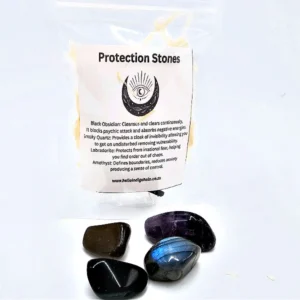
Labradorite Crystals & Gemstone Pieces
Few stones change as dramatically with movement and light as Labradorite.
At one angle it may appear smoky grey, charcoal or green-grey. Turn the stone and an unexpected flash of blue, green, gold or another iridescent colour can suddenly move across its surface.
Hello Indigo Halo's changing Labradorite collection brings together natural and polished crystals, tumble stones, spheres, wands, decorative pieces and Labradorite jewellery, giving you plenty of ways to explore this fascinating member of the feldspar mineral family.
If you'd like to discover Labradorite alongside other gemstones, browse our Crystal Names collection to explore the wider HIH range by stone.
What Is Labradorite?
Labradorite is a feldspar mineral best known for an optical phenomenon called labradorescence.
Rather than simply being a coloured stone, Labradorite can interact with light in a way that produces flashes or areas of iridescent colour when viewed from particular angles.
This optical effect is created by the internal structure of the mineral interacting with light.
That means the flash isn't painted onto the surface, and it won't necessarily be visible from every direction. Moving a piece through different angles and lighting is often the best way to appreciate its character.
What Colours Can Labradorite Flash?
Blue is probably the colour most strongly associated with Labradorite, but it isn't the only possibility.
Depending on the individual piece, Labradorite may reveal flashes of:
- Blue
- Green
- Gold
- Yellow
- Orange
- Other iridescent tones
Some stones show large areas of strong colour, while others have smaller or much subtler flashes.
A Labradorite with a quieter flash isn't necessarily inferior or less genuine. Natural stones simply vary, and colour, pattern, transparency, internal structure and viewing angle can all affect what you see.
Labradorite Tumbled Stones
A polished tumble is one of the simplest ways to start exploring Labradorite.
The smooth surface makes these pieces comfortable to handle and easy to add to a pocket-sized crystal collection, while moving a tumble around in your hand can reveal flashes that aren't immediately visible from one fixed angle.
If you enjoy collecting smaller polished gemstones, explore our Tumbled Stones collection to discover Labradorite alongside dozens of other stones.
Labradorite Spheres, Wands & Polished Shapes
Larger polished Labradorite can show the stone's pattern and optical character particularly beautifully.
Spheres allow you to view the mineral from many directions, while free forms preserve a less symmetrical silhouette. Wands create an elongated polished shape, and other carved or polished pieces offer their own ways of displaying the stone.
HIH's Crystal Wands collection includes Labradorite alongside wands made from other gemstones and imaginative handmade designs.
When choosing a larger Labradorite piece, look beyond size alone. Shape, markings, base colour and where the flash appears can make two similarly sized stones feel completely different.
Labradorite Jewellery
Labradorite works particularly well in jewellery because its predominantly smoky colouring can be surprisingly versatile while its flash adds something unexpected as the piece moves.
The HIH range can include Labradorite necklaces, earrings, bangles and other gemstone jewellery in changing designs and metal finishes.
For customers primarily interested in wearing their stones, our Gem & Crystal Necklaces collection includes Labradorite alongside necklaces featuring many other natural gemstones.
Remember that natural Labradorite used in jewellery can vary considerably. A particular strength, position or colour of flash shouldn't be assumed unless the individual product listing specifically guarantees it.
Labradorite Meaning & Traditional Associations
Labradorite is commonly associated with transformation, intuition, protection, inner strength and self-discovery within modern crystal and spiritual traditions.
Its connection with transformation feels particularly fitting to many people because of the way the stone itself appears to change as it moves through the light.
Some people choose Labradorite symbolically when beginning a new chapter, changing direction or moving through a period of personal growth.
These are traditional and metaphysical associations rather than scientifically established effects of the mineral. Labradorite can be appreciated just as readily for its mineralogy and extraordinary optical appearance.
How to Choose Labradorite
There is no single characteristic that makes one piece of Labradorite right for everyone.
If you're choosing visually, consider:
- Flash — strong and immediate or subtle and hidden
- Colour — blue, green, gold or mixed iridescent tones
- Base colour — from lighter grey to deeper smoky shades
- Shape — natural specimen, tumble, sphere, wand, jewellery or another polished form
- Pattern — markings and internal features can differ dramatically
If you're shopping online, remember that Labradorite is particularly dependent on angle and lighting. A still photograph captures only one view of a stone whose appearance can change considerably as it moves.
Why Doesn't My Labradorite Flash All the Time?
This is one of the most useful things to understand before buying Labradorite. Labradorescence is angle-dependent.
A stone may look predominantly grey from one direction and reveal brilliant colour when tilted towards a different light source. Another piece may show its strongest flash only across one particular area.
Photography can also capture a flash at its strongest angle, so you shouldn't expect every Labradorite to display exactly the same colour continuously in everyday lighting.
This changing appearance is part of what makes the stone so fascinating.
Natural Variation in Labradorite
Every natural Labradorite can have its own combination of colour, markings, inclusions, surface character and visible flash.
Two pieces cut into the same shape may therefore look noticeably different.
This is particularly important with jewellery and smaller polished pieces where the exact section of stone used can determine where the flash appears.
Natural variation isn't something we expect Labradorite pieces to hide — it's part of their individuality.
Caring for Labradorite
Labradorite is softer than quartz, so it deserves a little more care around harder minerals and surfaces.
Protect polished pieces and jewellery from hard knocks, scratching, harsh chemicals and abrasive cleaning.
For routine care, a soft cloth is a sensible starting point. Jewellery should also be cared for according to its metal, setting and any other materials used in the design.
Store pieces carefully rather than allowing them to knock repeatedly against harder gemstones or jewellery.
Frequently Asked Questions About Labradorite
What is Labradorite?
Labradorite is a feldspar mineral famous for an optical phenomenon known as labradorescence, which can create flashes of iridescent colour as the stone is moved through light.
Why does Labradorite flash blue?
The colour is produced by light interacting with structures inside the mineral. Depending on the individual stone and viewing angle, Labradorite can display blue, green, gold and other iridescent tones.
Does every Labradorite have a strong flash?
No. The colour, strength, position and visibility of labradorescence vary naturally. Some pieces display dramatic colour readily, while others have subtler flashes visible only from certain angles.
What is Labradorite traditionally associated with?
Within crystal traditions, Labradorite is commonly associated with transformation, intuition, protection, inner strength and self-discovery. These are traditional metaphysical associations rather than scientifically established effects.
How should I care for Labradorite?
Handle Labradorite gently and protect it from hard knocks, abrasive surfaces and harsh chemicals. For routine cleaning, begin with a soft cloth and follow any additional care instructions for the particular product or jewellery setting.