
Mookaite
Mustard yellow, ochre, burgundy, cream, red and purple can all appear within the wonderfully varied palette of Mookaite. This distinctive Australian stone is a silicified radiolarite rather than simply another Jasper variety, with patterns and colours that make every piece different. Browse Mookaite stones and jewellery chosen for their earthy character. Within crystal traditions, Mookaite is associated with grounding, courage and embracing change.
Showing all 11 resultsSorted by latest
-

-
-
-
-
-
-

-
-
-
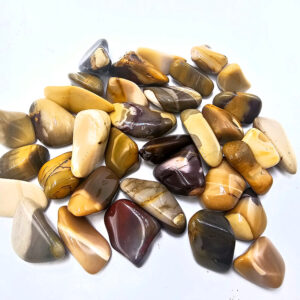
Mookaite Tumble Stones
Original price was: R25.00.R15.00Current price is: R15.00. Add to basketQuick View -
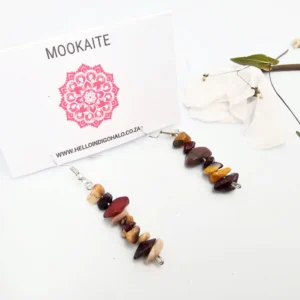
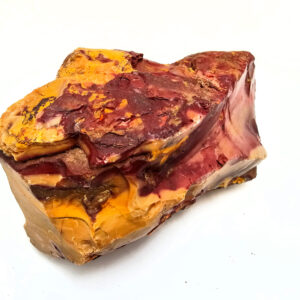


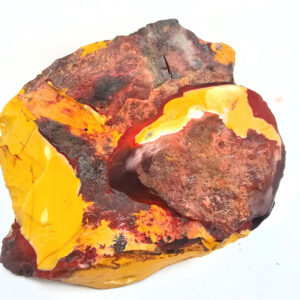
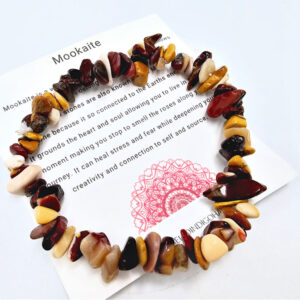
A Stone That Refuses to Pick One Colour
Some stones are instantly associated with one colour. Mookaite does things differently.
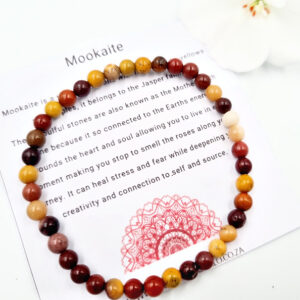
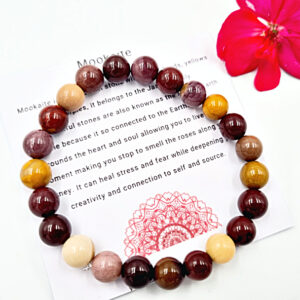
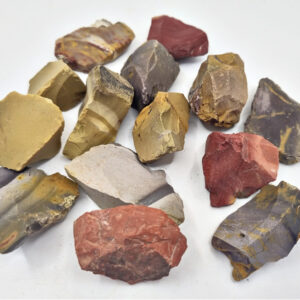
Mustard yellow can flow into burgundy. Cream can sit beside brick red. Ochre, brown, mauve, purple-red and golden tones can appear within the same material.
Sometimes the colours form broad sweeping areas; sometimes they create mottled patterns and unexpected transitions.
That natural variety is one of Mookaite's greatest attractions—and it means choosing a piece is often about finding the particular combination of colours that catches your eye.
What Is Mookaite?
Mookaite is a colourful silica-rich Australian rock material associated with the Windalia Radiolarite of Western Australia.
Although it is frequently sold as Mookaite Jasper or Mook Jasper, describing it simply as a variety of Jasper doesn't tell the whole geological story.
Mookaite is better understood as a silicified type of radiolarite. Its material contains extremely fine silica and preserves structures connected with microscopic marine organisms called radiolarians.
So while “Mookaite Jasper” remains a familiar and useful shopping term, Mookaite has a geological identity and origin that are much more interesting than the name suggests.
From an Ancient Sea to Australian Stone
Long before Mookaite became jewellery, polished stones and collector pieces, its story began in an ancient marine environment.
Radiolarians are tiny marine organisms with silica-rich skeletons. Enormous numbers accumulated within ancient seafloor sediments, eventually contributing to the radiolarian material from which Mookaite developed.
Mookaite occurs within the Windalia Radiolarite in Western Australia, where silicification and later geological processes produced the hard, colourful material collected today.
Even its name is connected to the landscape: Mookaite was named after Mooka Station, where the material occurs.
Where Do Mookaite's Colours Come From?
Mookaite's colour palette is one of its defining characteristics.
Depending on the individual piece, you may encounter:
mustard and golden yellow
ochre
brick and deep red
burgundy
cream and white
tan and brown
mauve and purple-red
Iron-rich material, including varying concentrations of hematite and goethite, contributes to its colourful mottling.
This is why two genuine pieces of Mookaite can look dramatically different.
A predominantly yellow stone isn't necessarily better than a burgundy one, and a strongly patterned piece isn't automatically more authentic than a quieter cream-and-ochre example.
Natural variation is part of Mookaite's identity.
Mookaite or Mookaite Jasper?
You will frequently see the names Mookaite, Mookaite Jasper and sometimes Mook Jasper used in the crystal and lapidary trade.
For shopping purposes, Mookaite Jasper is a familiar term.
Geologically, however, Mookaite is more accurately described as silicified radiolarite rather than simply being classified as a conventional Jasper variety.
For HIH, Mookaite should remain the main category name because it is concise, accurate and matches the term customers already use to find the material.
Choosing Mookaite
With such a naturally varied stone, there is no single “perfect” piece.
Consider:
Colour combination — choose the earthy palette that appeals to you most.
Pattern — look for bold colour blocks, mottling, sweeping transitions or quieter combinations.
Shape — tumbled stones emphasise smooth colour transitions, while beads and cabochons can highlight smaller sections of the pattern.
Jewellery style — Mookaite works particularly well with earthy, bohemian designs because no two stones need to match perfectly.
Natural variation — expect differences between pieces, particularly when buying stone-chip and beaded jewellery.
For a simple pocket-sized piece, browse the Mookaite Tumble Stones.
Wearing Mookaite
Mookaite's mixture of warm natural colours makes it particularly versatile for jewellery.
Small beads can create an earthy mixture of yellows, reds and creams, while stone chips emphasise its irregular natural colour changes. Larger polished cabochons allow more of the stone's individual pattern to become visible.
HIH also carries handmade designs where the stone becomes the main focal point, including polished Mookaite set into braided necklace designs.
Browse more wearable natural stones in the Gem & Crystal Necklaces collection or the Gem Chips Bangle collection.
Mookaite in Crystal Traditions
Within crystal traditions, Mookaite is commonly associated with grounding, courage, confidence, adventure, adaptability and embracing change.
Its earthy colours also encourage symbolic connections with nature, stability and feeling present in everyday life.
These are traditional metaphysical associations rather than scientifically demonstrated effects of the stone.
Mookaite doesn't need extraordinary promises to be interesting. Its Australian origin, ancient marine story and unpredictable mixture of colours already give it plenty of character.
For other stones and materials organised alphabetically, browse the Crystal Names collection.
Caring for Mookaite
Mookaite is a relatively durable silica-rich lapidary material, but polished stones and jewellery should still be treated with care.
Use a soft cloth and mild cleaning rather than harsh household chemicals or abrasive products.
Avoid dropping polished pieces onto hard surfaces, and protect jewellery from repeated impacts.
With bracelets and necklaces, also consider the complete construction. Elastic, cord, wire, metal findings and handmade braiding can require gentler treatment than the stone itself.
Frequently Asked Questions
What is Mookaite?
Mookaite is a colourful silica-rich rock material from Western Australia. Geologically, it is associated with silicified radiolarite rather than being an individual mineral species.
Is Mookaite a Jasper?
It is commonly sold as Mookaite Jasper, but geologically Mookaite is more accurately described as a silicified type of radiolarite. “Mookaite Jasper” remains a widely used commercial name.
Where does Mookaite come from?
Mookaite is associated with the Mooka Creek and Mooka Station area of Western Australia and the Windalia Radiolarite formation.
Why does Mookaite have so many colours?
Its varied colouring is connected with the geological material and differing concentrations of iron-rich components, producing shades that can include yellow, ochre, red, burgundy, cream, brown and purple-red.
What is Mookaite traditionally associated with?
Within crystal traditions, Mookaite is commonly associated with grounding, courage, confidence, adventure, adaptability and embracing change.