
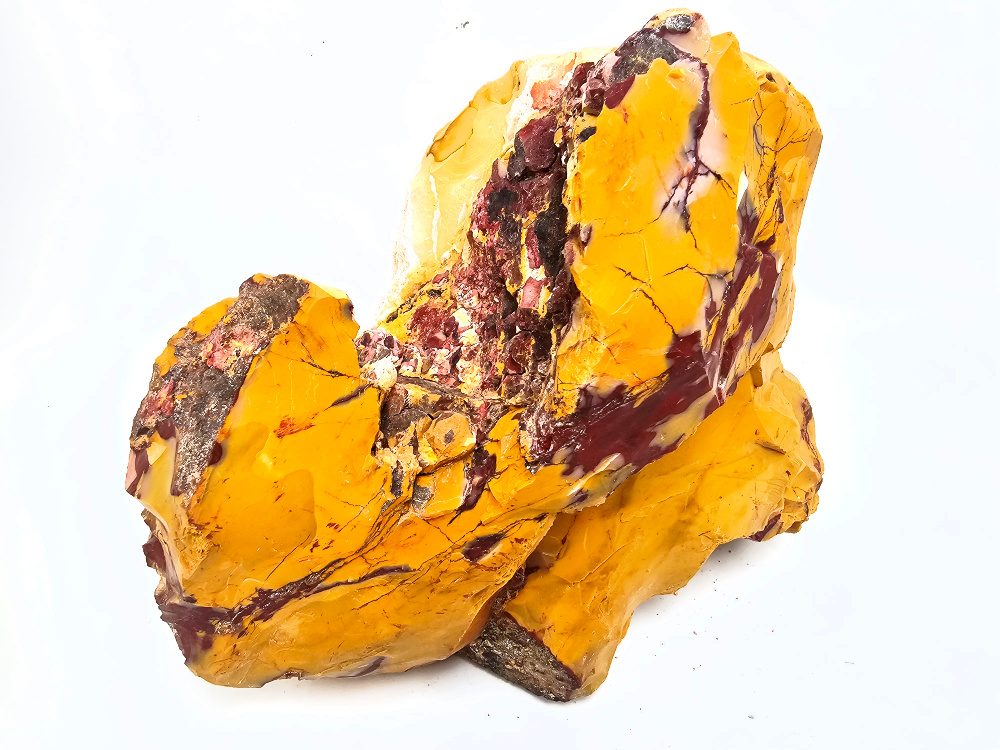
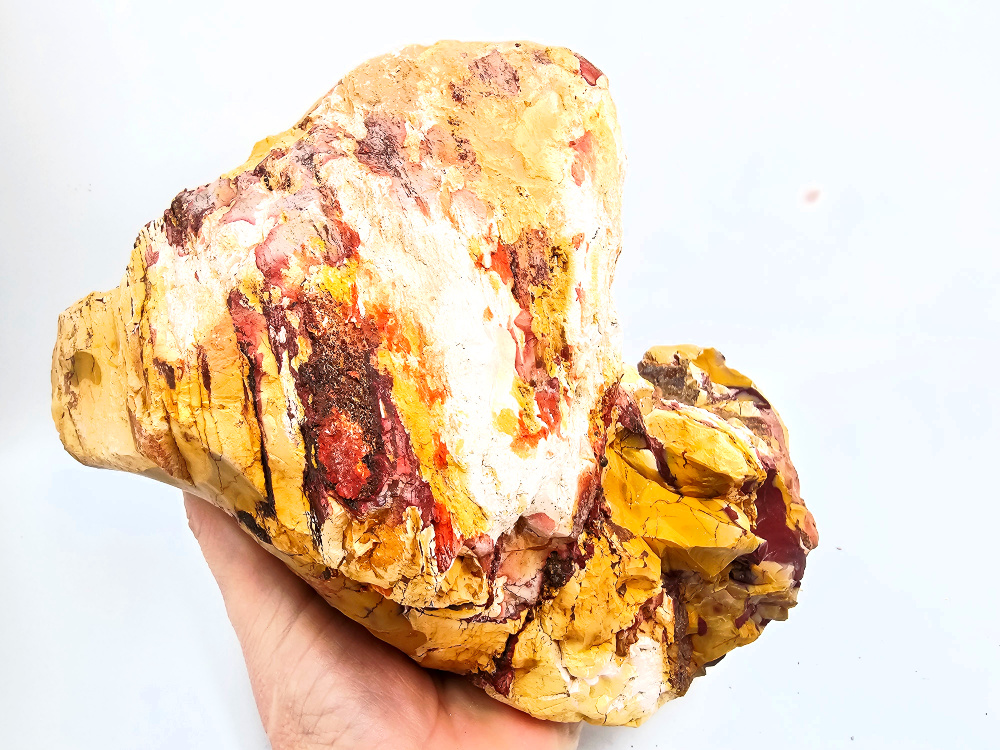




Mookaite Rough Large Chunk B (3.04kg) – Statement Natural Mookaite Specimen
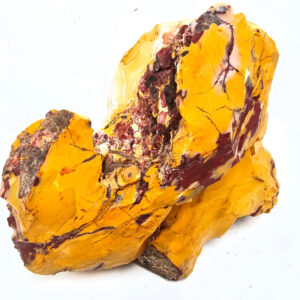
Weighing approximately 3.04kg and measuring around 21 × 17cm, this large rough Mookaite is a serious display specimen. Its substantial weight and completely natural form make it ideal for collectors who enjoy seeing stone before polishing and shaping turn it into spheres, palm stones or carvings.
Mookaite is famous for its earthy palette and distinctly Australian geological story. In a large rough piece like this, the appeal lies in the rock itself: irregular surfaces, natural variation and the feeling that you’re looking at a chunk of geological history rather than a manufactured decorative object.
Explore more natural stones in our Mookaite collection.
Product Details
- Stone: Mookaite
- Weight: Approx. 3.04kg
- Size: Approx. 21 × 17cm
- Form: Large rough natural chunk
- Unpolished specimen
- Includes a crystal meaning card
Mookaite Is More Than Just a Colourful Jasper
Mookaite is commonly grouped with Jasper in the gem trade, but its geological identity is particularly interesting. It is associated with the Windalia Radiolarite of Western Australia, where silica-rich sediment developed from material that included the microscopic remains of ancient marine organisms called radiolarians.
Its familiar colours can include cream, mustard yellow, red, burgundy, brown and purple-toned areas. The precise balance and distribution vary naturally, which is part of the attraction of collecting individual Mookaite specimens.
From Microscopic Marine Life to a 3kg Rock
One of the strangest contrasts in Mookaite is scale. Radiolarians are microscopic marine organisms with intricate silica skeletons, yet material associated with their accumulated remains ultimately became part of rock substantial enough to produce specimens weighing several kilograms.
This piece therefore represents geological processes operating at completely different scales: microscopic organisms, vast sedimentary deposits and, eventually, one hefty piece of stone sitting on your shelf.
Did You Know? Radiolarians Look Like Tiny Natural Sculptures
Under magnification, radiolarian skeletons can be astonishingly elaborate. Many develop geometric, lattice-like or spiny silica structures that look far more like miniature sculptures than something produced by a single-celled organism.
Their fossil remains are useful to geologists because radiolarians have existed through enormous stretches of Earth’s history and particular forms can help scientists study and correlate marine sedimentary rocks.
So Mookaite isn’t merely colourful material: its broader geological story reaches into palaeontology, ancient oceans and microscopic life.
Mookaite Meaning & Traditional Associations
Within modern crystal traditions, Mookaite is commonly associated with grounding, courage, confidence, adaptability and embracing change. It is often chosen for intentions involving decision-making and moving forward while remaining steady and connected.
Large rough pieces are particularly suited to people who prefer keeping crystals in a natural display form rather than carrying or wearing them.
Why Collect Large Rough Crystals?
Polished crystals showcase colour and pattern beautifully, but rough specimens preserve something different: texture, irregularity and a clearer sense of the material as naturally occurring rock.
At approximately 3.04kg, this piece has enough physical presence to anchor a crystal display. It can work as a standalone specimen or provide rugged contrast among polished spheres, towers and carvings.
See more substantial natural pieces in our Large Rough Crystals collection.
Displaying & Caring for a 3.04kg Specimen
Choose a stable shelf, table or display surface capable of comfortably supporting the weight. Large rough stones can have uneven contact points, so make sure the specimen sits securely before leaving it in position.
For dusting, use a soft dry brush to reach irregular surfaces and crevices. Lift the piece securely when moving it rather than dragging it across furniture, and keep rough edges away from delicate polished stones, glass and easily scratched surfaces.
Frequently Asked Questions
How large is this Mookaite specimen?
It weighs approximately 3.04kg and measures around 21 × 17cm, making it a substantial large rough specimen.
Is this piece polished?
No. It is a rough, unpolished chunk, preserving the stone’s natural form and surface texture.
Where does Mookaite come from?
Mookaite is associated with Western Australia and the Windalia Radiolarite, giving the material a distinctive Australian geological identity.
What are radiolarians?
Radiolarians are microscopic marine organisms that produce silica skeletons. Their accumulated remains form part of the fascinating geological story behind Mookaite-bearing material.
What is Mookaite traditionally associated with?
Within modern crystal traditions, Mookaite is commonly associated with grounding, courage, confidence, adaptability and embracing change.
Does this large Mookaite come with a meaning card?
Yes. It includes a crystal meaning card covering Mookaite’s traditional associations.
Pairs Well With
- Polished Mookaite pieces for a rough-versus-polished comparison
- Red Jasper for deep earthy tones
- Carnelian for warm colour contrast
- Black Tourmaline for darker natural texture
- Large mineral and crystal displays
Perfect For
- Mookaite collectors
- Large rough crystal collections
- Natural geology displays
- Statement shelves and crystal tables
- Collectors interested in fossils and ancient environments
- Anyone for whom 3.04kg officially qualifies as “just one more crystal”
Substantial, unpolished and rooted in an extraordinary ancient marine story, this large Mookaite specimen brings natural texture and more than three kilograms of geological character to a crystal collection.
Simon Malherbe –
Excellent products and service, as always. Highly recommended.