
Pink Amethyst
Soft blush, dusty rose and pale pink crystal formations give Pink Amethyst its distinctive beauty. This trade name is used for pink crystalline Quartz, often coloured by iron-rich inclusions or coatings. Within modern crystal traditions, Pink Amethyst is associated with love, emotional balance, calm and gentle intuition.
Showing all 2 resultsSorted by latest
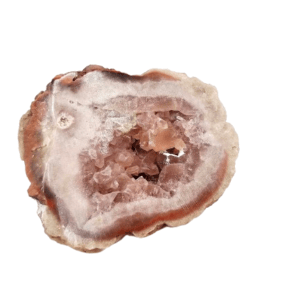
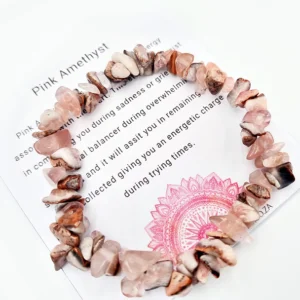
Pink Amethyst: Blush-Pink Crystalline Quartz
With tiny Quartz crystals in shades of blush, dusty rose, lavender-pink and soft peach, Pink Amethyst has become a favourite for anyone drawn to gentler crystal colours.
The name, however, needs a little explanation.
Pink Amethyst is a trade name used for naturally pink crystalline Quartz material rather than the name of a separate mineral species.
That doesn't make the material artificial.
The crystals themselves are natural Quartz — the interesting question is what gives them their unusual pink appearance.
Is Pink Amethyst Really Amethyst?
Mineralogically, the answer is more complicated than the name suggests.
Amethyst is the familiar purple variety of Quartz, while material sold as Pink Amethyst can be better described as pink crystalline Quartz, with iron-rich material such as Hematite associated with its colouring.
So rather than presenting Pink Amethyst as simply “purple Amethyst that happens to be pink”, it is more accurate to understand Pink Amethyst as a commercial name for this distinctive naturally pink Quartz material.
The name is now widely established within the crystal trade, which is why we retain it while explaining what the material actually is.
Explore traditional purple pieces in our Amethyst collection.
What Makes Pink Amethyst Pink?
Iron plays an important role in the appearance of many Quartz varieties, and Pink Amethyst material can contain iron oxides such as Hematite associated with its pink, reddish or peach-toned colour.
The exact appearance can vary considerably.
Some pieces are very pale, while others have stronger rose, salmon, mauve or reddish areas. Natural crystal formations may also contain colourless Quartz, darker mineral inclusions, contrasting host rock or additional mineral growth.
This variation is especially beautiful in geodes, where hundreds of individual crystal points can create different colours across one natural cavity.
Pink Amethyst Geodes
One of the most striking ways to enjoy Pink Amethyst is in its natural geode form.
A geode begins as a cavity within rock.
Mineral-rich fluids enter the space, and over time crystals can grow along the internal walls. When the geode is opened, those previously hidden crystals are revealed.
Instead of being one solid pink stone, a Pink Amethyst geode can therefore contain a miniature landscape of individual Quartz crystals, colour zones, inclusions and contrasting mineral growth.
That's part of what makes specimen pieces so individual.
Browse more natural and unpolished specimens in our Selected Rough Crystals.
Where Does Pink Amethyst Come From?
Some of the material that helped popularise the Pink Amethyst trade name comes from Argentina, including pink Quartz geodes from Neuquén Province.
Pink crystalline Quartz material sold under the Pink Amethyst name is also found on the international market from Brazil.
Locality matters because material sold under one trade name can have differences in formation, colour and mineral inclusions.
Unless the origin of an individual Hello Indigo Halo piece has been confirmed by the supplier, we wouldn't assign it to Argentina, Brazil or a particular mine simply from its appearance.
Pink Amethyst vs Rose Quartz
Both are pink and both are Quartz, but Pink Amethyst and Rose Quartz aren't simply two names for the same material.
Rose Quartz is generally encountered as massive pink Quartz rather than as the sparkling coatings of clearly formed crystals typical of Pink Amethyst geodes.
Their pink colours also have different mineralogical explanations.
Visually, an easy distinction is often their growth habit:
Rose Quartz commonly appears as solid, cloudy pink material.
Pink Amethyst commonly shows visible crystalline Quartz points and geode-like formations.
Browse the softer massive pink variety in our Rose Quartz collection.
Did You Know? Quartz & Amethyst Have the Same Basic Formula
Purple Amethyst, colourless Rock Crystal, Smoky Quartz and the Quartz crystals marketed as Pink Amethyst all share the same fundamental chemical formula:
SiO₂ — silicon dioxide.
What makes Quartz particularly fascinating is how changes involving trace elements, structural defects, inclusions, irradiation and other geological processes can produce dramatically different appearances within the same broad mineral family.
That's why two pieces of Quartz can look so different that they seem unrelated.
Pink Amethyst Meaning
Within modern crystal traditions, Pink Amethyst is associated with love, emotional balance, compassion, calm and gentle intuition.
Its symbolism often combines themes already familiar from pink stones with the spiritual associations traditionally given to Amethyst.
Rather than focusing only on romantic love, Pink Amethyst is often chosen around intentions involving kindness, emotional openness, peaceful communication and maintaining a softer perspective during change.
These are contemporary metaphysical associations rather than scientifically established effects.
Pink Amethyst & the Chakras
Pink Amethyst is commonly associated with the Heart Chakra because of its colouring and modern symbolism around love and compassion.
Its connection by name and crystal tradition with Amethyst also leads some people to associate it with the Third Eye and Crown Chakras, traditionally linked with intuition and spiritual awareness.
There isn't one ancient chakra tradition specifically attached to the modern trade name Pink Amethyst, so these associations are best understood as part of contemporary crystal practice.
Explore more stones and spiritual tools through our Chakra Balance collection.
Choosing Pink Amethyst
Pink Amethyst can vary considerably in colour and formation.
When choosing a geode or specimen, look at the crystal formation, colour variation, inclusions, natural cavities and overall character rather than expecting perfectly uniform pink.
Jewellery made with Pink Amethyst can look quite different again, particularly when smaller chips or polished pieces are used.
Natural variation is part of the attraction.
A pale blush specimen isn't necessarily less interesting than a strongly coloured one — sometimes its crystal formations or contrasting minerals are what make it special.
Caring for Pink Amethyst
Pink Amethyst is Quartz, with a Mohs hardness of approximately 7, but crystal clusters and geodes still need thoughtful handling.
Individual crystal points can chip if knocked against hard surfaces.
For specimens, use a soft dry brush to remove ordinary dust from between crystals. Avoid aggressive scrubbing or harsh chemicals, particularly where additional minerals or natural matrix are present.
Jewellery should also be cared for according to its settings, stringing and other materials.
Frequently Asked Questions About Pink Amethyst
Is Pink Amethyst natural?
The crystalline Quartz material sold as Pink Amethyst is natural. “Pink Amethyst” itself is a commercial trade name rather than the name of a separate mineral species.
Is Pink Amethyst just pale purple Amethyst?
Not necessarily. Well-known Pink Amethyst material is better described mineralogically as pink crystalline Quartz, with iron-rich material such as Hematite associated with its colour.
Is Pink Amethyst the same as Rose Quartz?
No. Both belong to the Quartz family, but Rose Quartz is usually massive pink Quartz, while Pink Amethyst commonly occurs as visibly crystallised Quartz in geodes and clusters.
Why can Pink Amethyst contain different colours?
Natural differences in iron-rich material, inclusions, crystal growth and surrounding minerals can produce variations from pale blush and peach through stronger pink, mauve and reddish tones.
Does Pink Amethyst have the same meaning as Amethyst?
Modern crystal traditions overlap somewhat, but Pink Amethyst tends to place greater emphasis on love, compassion and emotional balance, while traditional purple Amethyst is more strongly associated with calm, intuition and spiritual awareness.