
Pyrite
Pyrite is hard to mistake: metallic, brassy-gold and sometimes naturally formed into remarkably geometric cubes. Better known as Fool’s Gold, this fascinating mineral appears in our collection as rough clusters, mini cubes, tumble stones, bracelets, necklaces and more. Within crystal traditions, Pyrite is especially associated with abundance, confidence, motivation and protection.
Showing all 12 resultsSorted by latest

Nature Apparently Likes Geometry
Pyrite can look almost suspiciously perfect.
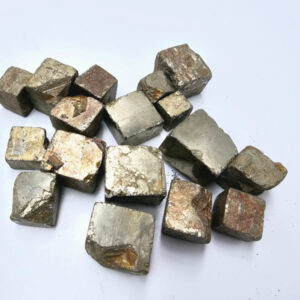
Among its most distinctive natural forms are sharp-edged cubes, sometimes emerging from the surrounding rock as though someone has carefully cut and positioned them there. But those geometric shapes are not carved into the mineral — Pyrite belongs to the cubic crystal system and can naturally develop remarkably regular crystal faces.
That makes it an especially satisfying mineral for anyone who likes crystals for their geology as much as their symbolism.
Its metallic surface and brassy yellow colour explain its famous nickname too: Fool’s Gold.
Pyrite is not gold, but generations of prospectors have had reason to look twice.
Rough Cubes, Nuggets, Clusters or Tumble Stones?
Pyrite changes character depending on its natural formation and how much it has been worked.
Rough Pyrite cubes let the mineral's geometry do most of the talking. Look for visible faces, edges and the naturally metallic surface that makes small specimens surprisingly eye-catching.
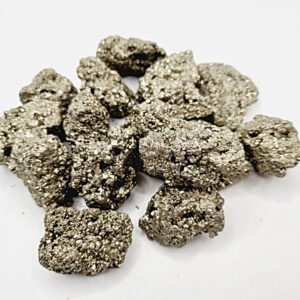
Rough nuggets and clusters are less orderly. Instead of one obvious geometric form, you may see multiple crystal surfaces, uneven formations and sparkling metallic areas catching the light from different directions.
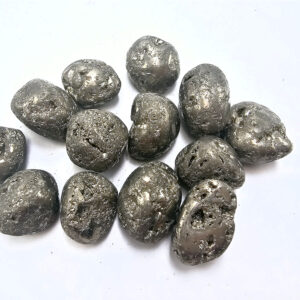
Pyrite tumble stones have been smoothed and polished, giving you a more rounded piece while retaining that unmistakable metallic appearance.
If you enjoy crystals in their less polished state, browse our Rough Crystals collection to compare Pyrite with other minerals in natural and minimally worked forms.
For something smoother and easier to carry or add to a crystal bowl, browse our wider Tumbled Stones collection.
Pyrite Isn't Gold — So What Is It?
Pyrite is an iron sulphide mineral with the chemical formula FeS₂.
Its combination of metallic lustre and pale brassy-gold colour can make it resemble gold at first glance, which is where “Fool’s Gold” comes from. But the two are completely different materials.
Pyrite is harder and more brittle than gold, and its tendency to form angular crystals can provide another clue to its identity. Gold is a native element and is much softer and more malleable.
The comparison may have given Pyrite an unfortunate nickname, but it also helped make the mineral famous in its own right.
Once you start noticing its crystal structure, Pyrite becomes interesting for reasons that have very little to do with pretending to be gold.
Wearing a Little Fool's Gold
Pyrite's metallic colour gives it a very different appearance from translucent and brightly coloured gemstones.
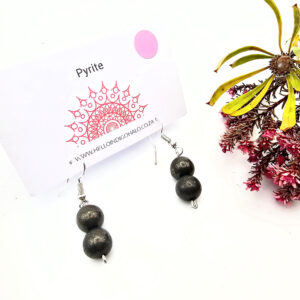
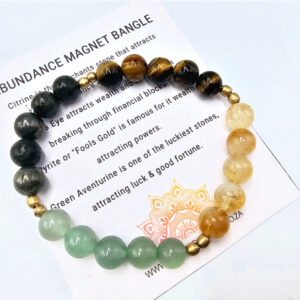
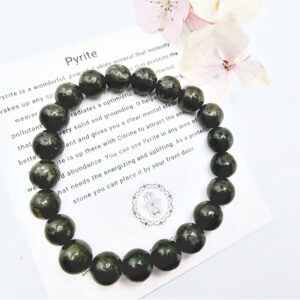
In a bracelet, small Pyrite beads create a darker metallic-gold shimmer rather than the glassy colour of stones such as Amethyst or Rose Quartz. The current collection includes African Pyrite bangles in different bead sizes, giving you the option of a finer or more substantial look.
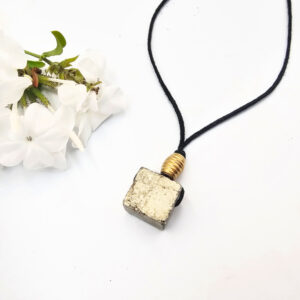
You can also wear Pyrite in necklace form. A small cube is particularly appropriate for this mineral because the geometry is part of Pyrite's natural identity.
Browse our Gem & Crystal Necklaces if you would like to compare Pyrite with other wearable stones.
Abundance, Confidence and the Pyrite Tradition
Its resemblance to gold almost inevitably influenced the symbolism that developed around Pyrite.
Within modern crystal traditions, Pyrite is strongly associated with abundance, prosperity, confidence, motivation and protection. It is also commonly linked with the Solar Plexus Chakra and themes of personal will and action.
Pyrite also appears in modern Feng Shui practice, where it may be used symbolically in connection with prosperity and abundance.
These are spiritual and cultural associations rather than scientifically established effects, so there is no need to turn Pyrite into a promise of money or success.
Sometimes symbolism works more simply than that: a bright metallic mineral associated with confidence and prosperity can become a physical reminder of an intention, goal or mindset.
Pyrite Can Turn Up in Unexpected Places
Pyrite does not always arrive as a neat standalone cube.
It can occur alongside or within other natural materials. One particularly beautiful example is Lapis Lazuli, where tiny golden-looking Pyrite flecks can appear against rich blue Lazurite and pale Calcite. If you have ever wondered what those little metallic flashes inside some Lapis pieces are, Pyrite may be responsible.
You can compare those dramatically different appearances in our Lapis Lazuli collection.
Pyrite can even occur with fossils. Some fossil specimens develop Pyrite mineralisation, creating an extraordinary meeting point between palaeontology and mineral collecting.
It is a useful reminder that minerals do not exist in tidy shop categories underground. Nature mixes things together far more enthusiastically.
Choosing Your Pyrite
Choose a natural cube if Pyrite's geometry is what fascinates you.
Choose a rough cluster or nugget if you prefer irregular mineral texture and lots of little reflective surfaces.
Choose a tumble stone if you want a smoother, compact piece for a collection, pocket or crystal display.
Choose Pyrite jewellery if you want to wear the mineral and enjoy its metallic colouring alongside other stones and metals.
And if you are buying a natural specimen, allow room for variation. Crystal size, formation, surface texture, colour and metallic lustre can differ from piece to piece. Those differences are part of collecting a naturally formed mineral rather than a manufactured object.
Caring for Pyrite
Pyrite deserves slightly more thoughtful care than a crystal you routinely rinse under the tap.
Keep it dry rather than soaking it or storing it in persistently damp conditions. For ordinary dust, use a soft dry brush or cloth and avoid harsh household cleaners.
Individual crystals and clusters can also have edges or delicate projecting formations, so store specimens where they are unlikely to be knocked against harder objects.
For more named minerals and gemstones arranged alphabetically, continue browsing our Crystal Names collection.
Frequently Asked Questions
Is Pyrite real gold?
No. Pyrite is an iron sulphide mineral, while gold is a completely different native element. Pyrite's metallic lustre and brassy yellow colour are responsible for its famous nickname, Fool’s Gold.
Are Pyrite cubes naturally formed?
They can be. Pyrite belongs to the cubic crystal system and is well known for naturally developing geometric crystals, including cubes. A remarkably straight-looking Pyrite cube therefore does not automatically mean that somebody carved it into that shape.
What is Pyrite traditionally associated with?
Within modern crystal traditions, Pyrite is commonly associated with abundance, prosperity, confidence, motivation and protection. These are traditional and spiritual associations rather than scientifically established effects.
Why does my Pyrite look different from another piece?
Pyrite is a natural mineral. Individual specimens can vary in crystal formation, size, surface texture, colour, matrix and metallic lustre. Clusters, cubes, nuggets and polished pieces can therefore look dramatically different while still being Pyrite.
Can Pyrite get wet?
It is better not to routinely soak Pyrite or leave it in damp conditions. Keeping specimens dry and cleaning them gently with a soft dry cloth or brush is the safer approach for everyday care.