
Sodalite
Rich blue crossed with white, grey and inky markings gives Sodalite its instantly recognisable character. Browse rough pieces, tumble stones, palm stones, spheres, jewellery and pendulums in this striking blue mineral. Within crystal traditions, Sodalite is especially associated with clear communication, truth, intuition, calm thinking and the Throat Chakra.
Showing all 12 resultsSorted by latest
-
-
-

-
-
-
-
-
-
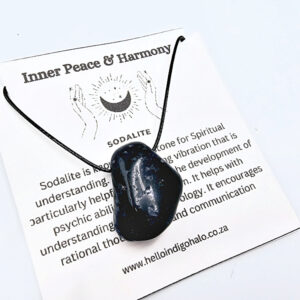
Sodalite Tumbled Stone Necklace (Peace)
Original price was: R99.00.R69.00Current price is: R69.00. Add to basketQuick View -
-
Blue, White and Never Quite the Same Twice
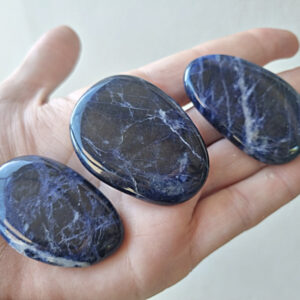
One of Sodalite's most appealing features is the way deep blue colour is broken by irregular white, grey and darker markings.
Sodalite is a sodium-rich silicate mineral, and the familiar white areas seen through many polished pieces are commonly associated with calcite occurring alongside it. Some stones are predominantly blue, while others have broad pale areas, fine veins or a much more mottled appearance.
That natural patterning becomes especially noticeable when the stone is polished into a sphere, palm stone or jewellery bead.
Browse our Crystal Names collection if you enjoy comparing stones by colour, mineral family and natural markings.
Sodalite and Lapis Lazuli Aren't the Same Stone
It's easy to see why these two get confused.
Both can be richly blue and both may contain white calcite, but Sodalite is a mineral, while Lapis Lazuli is a rock made from several minerals, with its famous blue largely associated with lazurite.
Lapis Lazuli also commonly shows metallic golden pyrite flecks, while Sodalite usually has a more blue-and-white or blue-grey appearance without that characteristic gold sparkle.
They're beautiful for different reasons rather than one being a substitute for the other.
Compare the two directly in our Lapis Lazuli collection.
Sodalite Meaning: Thought Meets Intuition
Sodalite has an interesting metaphysical personality because it is traditionally associated with both rational thought and intuition.
Within crystal traditions, it is connected with truth, communication, mental clarity, self-expression, emotional balance and seeing situations more clearly.
It is particularly associated with the Throat Chakra, where its symbolism centres on honest communication and expressing what you actually mean. It is also commonly linked with the Third Eye Chakra and intuitive awareness.
That combination helps explain why Sodalite is often chosen for study areas, meditation spaces, journalling, communication work or simply as a symbolic reminder to slow down and think before speaking.
From a Pocket Stone to a Statement Specimen
Sodalite changes considerably depending on how it is presented.
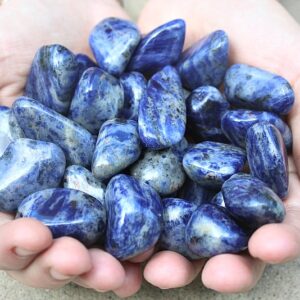
A tumble stone concentrates the blue-and-white pattern into a small polished surface and is easy to carry or add to a crystal collection.
A palm stone gives you a broader area of polished mineral to hold and examine.
A sphere lets the pattern travel continuously around the stone, making patches, veins and colour changes more visible from different angles.
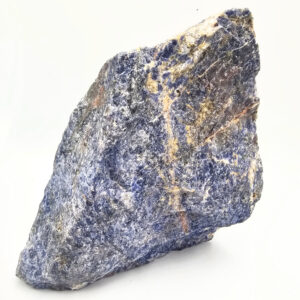
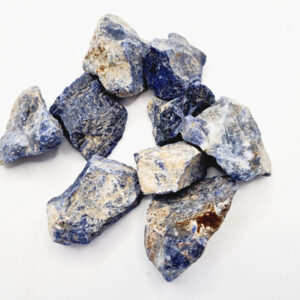
Rough material shows another side of Sodalite completely. Its unpolished surfaces can make the contrast between blue mineral and pale surrounding material much more obvious.
The current HIH collection even includes a substantial standing rough specimen, which turns Sodalite into a display mineral rather than simply a small crystal.
For smaller polished stones across many different minerals, browse our Tumbled Stones collection.
Wearing Sodalite
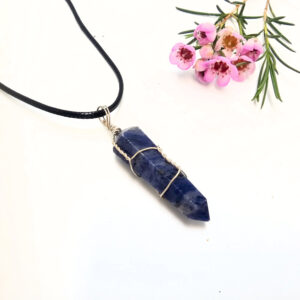
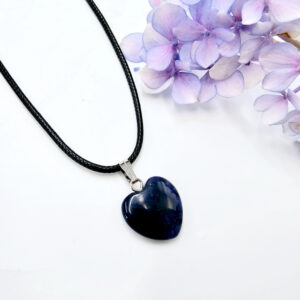
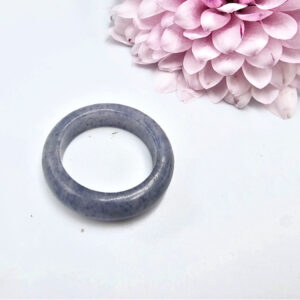
Sodalite works particularly well in jewellery because its strong blue colour doesn't need an elaborate setting to stand out.
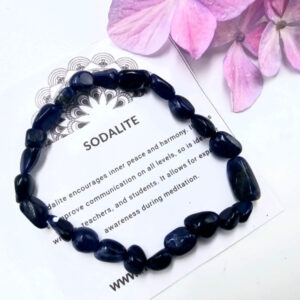
The current collection includes bangles and necklaces alongside more traditional loose crystal forms.
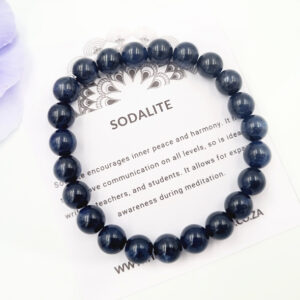
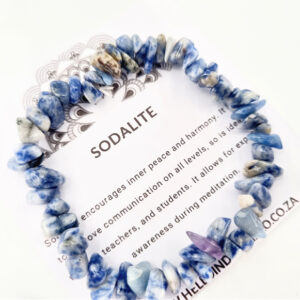
Smooth beads give the stone a neat, rhythmic look around the wrist, while irregular chips or nuggets show more variation from stone to stone.
The white and blue pattern can also make each polished bead look slightly different from the one beside it, which suits jewellery where natural variation is part of the design.
Explore our Bangles & Bracelets collection if you'd like to compare Sodalite with other gemstone bracelets.
A Blue Stone for Pendulum Work
Sodalite also appears in HIH's pendulum range.
Within metaphysical practice, the stone's associations with truth, intuition and clear communication make it a natural symbolic fit for people who enjoy using pendulums as part of personal spiritual practice or intuitive work.
A Sodalite pendulum still has all the visual character of the mineral itself — blue colouring, pale markings and natural variation — rather than needing to be treated purely as a spiritual tool.
Choosing Your Sodalite
If colour is what attracted you first, look at how much blue you want.
Some people prefer rich blocks of deeper blue with only fine pale markings. Others are drawn to heavily mottled pieces where white calcite creates almost map-like patterns through the stone.
For something tactile and easy to carry, choose a tumble or palm stone.
For display, a sphere or larger rough specimen gives the mineral more space to show its pattern.
And if you want to wear it, let the actual markings of the stone guide you rather than expecting every piece to look identical.
Frequently Asked Questions
Why does Sodalite have white markings?
The pale areas commonly seen in Sodalite material are often associated with calcite occurring alongside the blue mineral. Their shape and amount vary naturally, creating the veined and mottled appearance many people recognise.
Is Sodalite always dark blue?
No. Sodalite can range through brighter royal blue, deeper blue and blue-grey tones, with differing amounts of white, grey or darker material. Natural pieces can therefore look surprisingly different from one another.
Which chakra is Sodalite associated with?
Sodalite is most strongly associated with the Throat Chakra in modern crystal traditions because of its connection with truth and communication. It is also often linked with the Third Eye Chakra and intuition.
What form of Sodalite should I choose as a first piece?
A tumble stone is an easy introduction if you want something small and affordable. A palm stone gives you more surface area to appreciate the colour and markings, while jewellery is a good option if you would rather wear the stone.