
Egyptian Statues
Step into the mythology and symbolism of ancient Egypt with our Egyptian Statues. Discover Anubis, Bastet, Isis, Horus, Ra, Thoth, pharaohs, the Great Sphinx and other iconic figures, each with their own fascinating story. From small figurines to striking display pieces, they’re made for shelves, altars and spaces that deserve something extraordinary.
Showing all 18 resultsSorted by latest
-
-
-
-
-
-
-
-
-
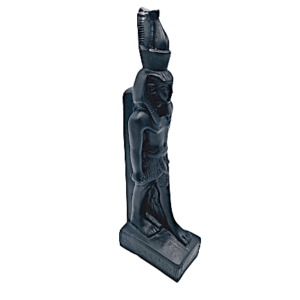
Egyptian Pharaoh Statue (25cm)
Original price was: R319.00.R209.00Current price is: R209.00. Add to basketQuick View -

-
-
-
-
-
-
-
-
Egyptian Statues, Gods, Goddesses & Ancient Symbols
Ancient Egypt gave us some of the most recognisable gods, goddesses and symbols in history.
A jackal-headed guardian. A cat goddess. A falcon god. The solar deity Ra. The mysterious Sphinx. The Ankh held in the hands of gods and pharaohs.
Our Egyptian Statues collection brings these extraordinary figures and symbols into decorative pieces ranging from small figurines to larger statement statues.
But knowing who you're looking at makes choosing one much more interesting. Explore our wider Statues collection for more spiritual, mythological and decorative figures.
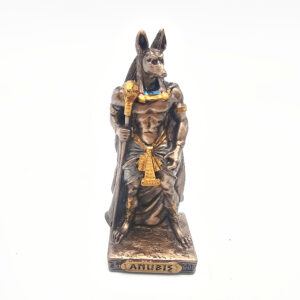
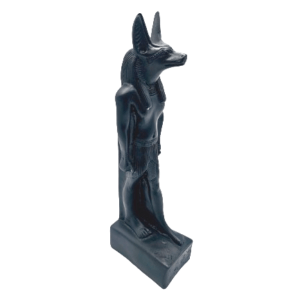
Anubis: Guardian of the Dead
Few ancient Egyptian figures are as instantly recognisable as Anubis.
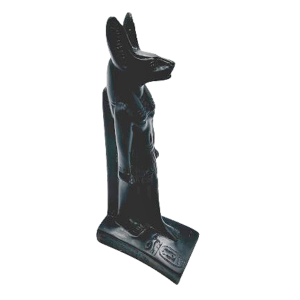
Usually depicted as a man with the head of a jackal or as a jackal itself, Anubis was closely connected with mummification, funerary practices and the protection of the dead.
He was also associated with guiding the deceased through the afterlife.
His imagery makes more sense when you consider the jackal itself. Wild canids were sometimes seen around desert burial grounds, and the animal became transformed in Egyptian religion from a potential threat to the dead into their divine protector.
Anubis statues therefore carry much deeper symbolism than simply looking dark or mysterious.
They represent one of ancient Egypt's great guardians of the passage between life and death.
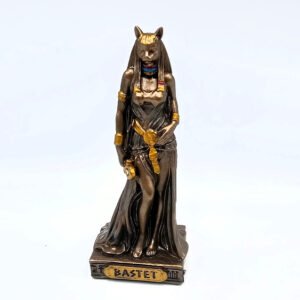
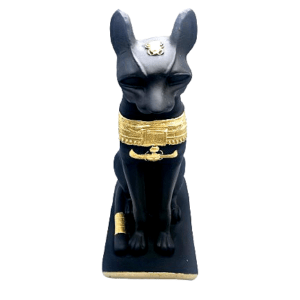
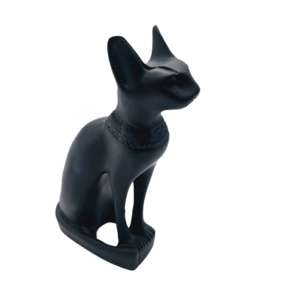
Bastet: The Famous Cat Goddess
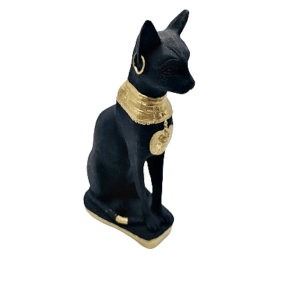
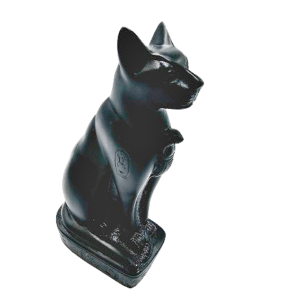
If you're drawn to the Egyptian black cat statues in this collection, you're meeting Bastet.
Her story changed considerably over Egypt's long history.
Bastet was originally associated with a more fierce lioness form, but over time she became increasingly represented as a domestic cat or cat-headed woman.
She became associated with protection, the home, women, fertility, music and celebration.
Cats themselves were highly valued in ancient Egyptian society, and Bastet's cult became enormously important, particularly around the city of Bubastis.
This combination of elegance and protection helps explain why Bastet statues remain among the most recognisable pieces of Egyptian-inspired décor today.
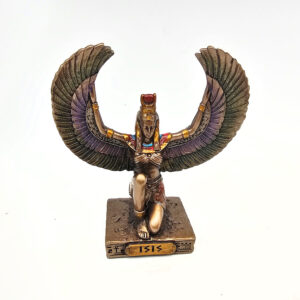
Isis: Magic, Motherhood and Protection
Isis was one of the most important goddesses of ancient Egypt.
Her mythology is deeply connected with Osiris and their son Horus.
In one of Egypt's great mythological cycles, Osiris is killed and his body is scattered. Isis searches for and reunites him, using her magical abilities in the story surrounding his restoration and the conception of Horus.
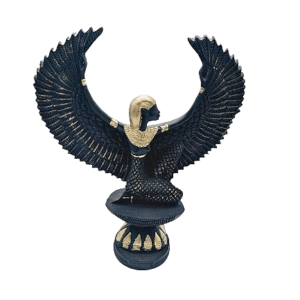
Because of these myths, Isis became strongly associated with magic, motherhood, protection, healing and devotion.
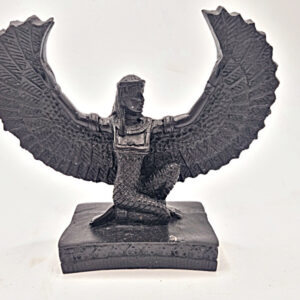
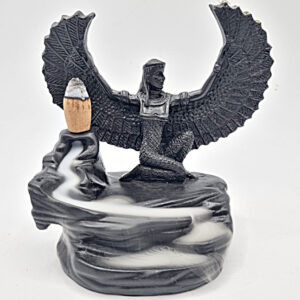
She is sometimes shown with magnificent wings spread from her arms, imagery carrying strong protective associations.
If this symbolism catches your eye, you'll also find Isis represented beyond statues in pieces such as our Egyptian-inspired Wings of Isis Necklace.
Horus: The Falcon God and the Sky
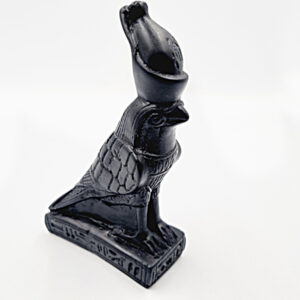
Horus is most recognisable as the falcon-headed god.
He became closely connected with kingship and the sky, and the living pharaoh could be identified with Horus.
His mythology is also intertwined with Isis and Osiris. As their son, Horus battles Seth in a struggle for the throne following the death of Osiris.
One of the world's most familiar Egyptian symbols emerges from this mythology: the Eye of Horus.
The damaged and restored eye became associated with wholeness, protection and restoration, and Eye of Horus amulets were widely used in ancient Egypt.
So if you choose a Horus statue, you're choosing a figure sitting right at the intersection of divine kingship, protection and one of Egypt's most enduring mythological stories.
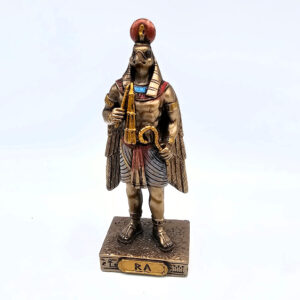
Ra: God of the Sun
Ra was one of ancient Egypt's great solar deities.
He was commonly associated with the sun's daily journey across the sky and could be depicted with a falcon head crowned by a solar disk.
The rising and setting of the sun naturally became connected with ideas of creation, death and renewal.
Egyptian religion evolved over thousands of years, and deities could merge or share characteristics. Ra was famously combined with Amun to form Amun-Ra, who became especially important during the New Kingdom.
A Ra statue therefore represents far more than the sun as a decorative motif. It connects with one of the central forces around which ancient Egyptian ideas about life and cosmic order developed.
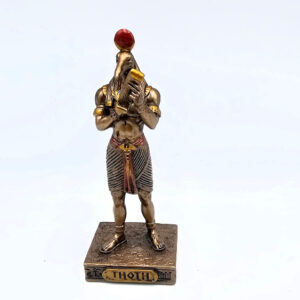
Thoth: Writing, Knowledge and the Moon
Often depicted with the head of an ibis, Thoth was associated with writing, wisdom, knowledge, calculation and the moon.
He was regarded as a divine scribe and appears in important funerary imagery.
During the famous weighing of the heart, the heart of the deceased was weighed against the feather of Ma'at, representing truth and order.
Thoth could be shown recording the result.
That makes him a particularly interesting choice for anyone drawn to knowledge, writing, learning and ancient Egyptian symbolism rather than choosing purely by appearance.
Pharaohs, the Sphinx and the Ankh
Not everything in an Egyptian collection represents a god.
Pharaoh statues evoke Egypt's rulers, whose role combined political authority with enormous religious significance.
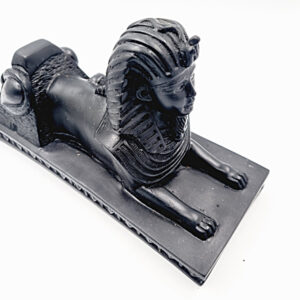
The Great Sphinx of Giza, with its human head and lion's body, is one of the most famous monuments on Earth. It is generally associated with royal power and guardianship and has watched over the Giza landscape for thousands of years.
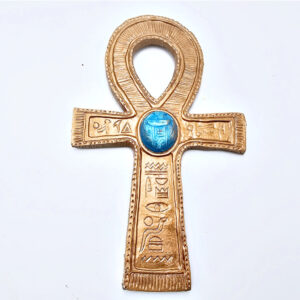
Then there's the Ankh. Its distinctive looped-cross shape appears repeatedly in ancient Egyptian art, often held by gods and pharaohs.
It represented life and became one of the civilisation's most enduring symbols.
These pieces are ideal if you're fascinated by ancient Egypt but don't necessarily want a statue representing a particular deity.
From Tutankhamun to Libyan Desert Glass
One of the wonderful things about ancient Egypt is how its story crosses into other parts of the HIH collection.
When Howard Carter's team discovered the tomb of Tutankhamun, the extraordinary objects buried with the young pharaoh included a pectoral featuring a yellow scarab.
That scarab was carved from Libyan Desert Glass — natural impact glass formed in the Sahara millions of years before ancient Egyptian craftspeople discovered and worked it.
So a material created during an extraordinary extraterrestrial impact eventually became part of the burial treasure of an Egyptian king.
Explore Libyan Desert Glass to discover that remarkable connection between geology and ancient Egyptian history.
Choosing an Egyptian Statue
Start with the figure whose story or symbolism interests you.
Choose Anubis if you're drawn to guardianship, the afterlife and one of Egypt's most distinctive deities.
Choose Bastet for her connection with cats, protection and the home.
Choose Isis for magic, motherhood and protective symbolism.
Choose Horus for the falcon, kingship and the Eye of Horus.
Choose Ra for solar symbolism and renewal, or Thoth for knowledge, writing and wisdom.
Or forget symbolism completely and choose the statue you simply can't stop looking at.
Ancient Egyptian imagery is powerful enough to work as history, mythology, symbolism and spectacular décor all at once.
For more unusual pieces for your space, browse our Decor & Home collection.
Frequently Asked Questions
Who is the Egyptian god with a jackal head?
That's Anubis, the ancient Egyptian deity closely associated with mummification, funerary practices, protection of the dead and the journey into the afterlife.
Who is the Egyptian cat goddess?
Bastet is the famous Egyptian goddess strongly associated with cats. Over time she became linked with the home, protection, women, fertility, music and celebration.
What does the Ankh symbol mean?
The Ankh represented life in ancient Egypt and frequently appears in Egyptian art in the hands of gods and pharaohs.
What is the difference between Horus and Ra?
Both can be represented with falcon characteristics, but they are different deities. Horus is particularly associated with the sky and kingship, while Ra is fundamentally a solar deity associated with the sun.
Can Egyptian statues be used simply as home décor?
Absolutely. You can choose an Egyptian statue because its mythology or symbolism interests you, or simply because you love ancient Egyptian art and want an unusual statement piece for a shelf, desk, altar or display.