
Chrysocolla
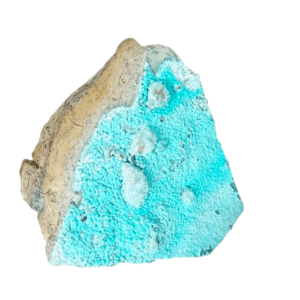
Turquoise blue, teal and green make Chrysocolla instantly eye-catching, but look closer and the patterns become even more interesting. This copper-rich mineral can form rounded botryoidal surfaces, colourful crusts and striking mixtures with other minerals. Within crystal traditions, Chrysocolla is especially associated with communication, calm, wisdom and authentic self-expression.
Showing all 8 resultsSorted by latest
-
-
-
Botryoidal Chrysocolla Specimen C (164g)
Original price was: R369.00.R199.00Current price is: R199.00. Add to basketQuick View -
-
Drusy Chrysocolla Specimen K (246g) Dendritic
Original price was: R259.00.R149.00Current price is: R149.00. Add to basketQuick View -
Botryoidal Chrysocolla Specimen G (140g)
Original price was: R319.00.R149.00Current price is: R149.00. Add to basketQuick View -
-



Chrysocolla: The Blue-Green Mineral Shaped by Copper
Few mineral colours announce the presence of copper quite like Chrysocolla.
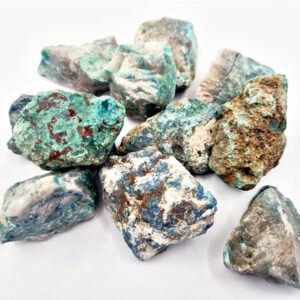
Its appearance can range from bright turquoise blue and blue-green to teal, deep green and darker earthy shades. Some pieces form smooth, rounded surfaces; others appear as crusts, veins or intricate mixtures with neighbouring minerals.
That variety is part of the attraction.
Chrysocolla isn't a stone where every specimen is supposed to look alike. Its colour, texture and associated minerals can create dramatically different pieces, from rough specimens to polished hearts and striking botryoidal formations.
Browse our Crystal Names A–Z to discover more minerals and stones by name.
Why Is Chrysocolla Blue and Green?
Copper is central to Chrysocolla's identity.
Chrysocolla is a hydrated copper silicate mineral that typically forms as a secondary mineral in the oxidised areas of copper deposits.
In simple terms, it can develop where existing copper-bearing minerals have been altered by water, oxygen and other geological processes closer to Earth's surface.
That's why Chrysocolla is frequently found alongside other colourful copper minerals.
Malachite, Azurite and Chrysocolla can occur within the same broader mineral environments, sometimes even appearing together in a single specimen.
The result can be spectacular combinations of turquoise blue, vivid green and deeper blue.
Those Strange Bubbly Chrysocolla Specimens Have a Name
Some Chrysocolla looks almost as though tiny bubbles were frozen across its surface.
The geological term is botryoidal.
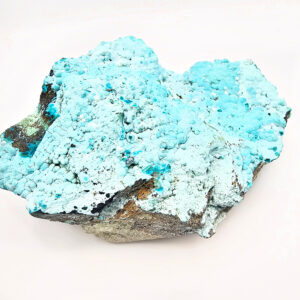
It describes rounded mineral surfaces made up of closely packed, grape-like forms. Chrysocolla commonly occurs as botryoidal or rounded masses, bubbly-looking crusts and vein fillings.
That means the unusual texture isn't something carved into the specimen.
It's part of how the mineral formed.
Botryoidal Chrysocolla can be especially interesting under good light because every rounded surface changes how colour, texture and lustre appear.
For collectors who enjoy crystals for their natural formations rather than perfect polished shapes, these pieces can be some of the most fascinating Chrysocolla to examine.
An Ancient Name With a Surprising Meaning
The name Chrysocolla is much older than modern crystal collecting.
The Greek philosopher and naturalist Theophrastus used the name as far back as 315 BCE.
It comes from the Greek chrysos, meaning gold, and kolla, meaning glue.
So Chrysocolla essentially means “gold glue.”
The ancient name referred to material associated with soldering or joining gold rather than to our modern mineralogical understanding of Chrysocolla.
The mineral name was later revived in the early 19th century.
It's a brilliant little piece of history hidden inside the word — especially because a blue-green copper mineral doesn't immediately make you think of gold.
Chrysocolla Meaning: Communication With Substance
Within modern crystal traditions, Chrysocolla is strongly associated with communication, wisdom, calm and honest self-expression.
But its communication symbolism is often more nuanced than simply “speak more”.
Chrysocolla is frequently chosen symbolically for knowing when to speak, finding the right words and expressing yourself without losing the ability to listen.
That has also given it associations with teaching, thoughtful conversation and communicating difficult feelings more calmly.
Some practitioners keep Chrysocolla nearby during journalling, meditation or periods when they need to express something important.
These are metaphysical traditions rather than scientifically established effects, but they're a significant part of Chrysocolla's modern identity.
Chrysocolla and the Throat Chakra
Its blue and blue-green colouring makes Chrysocolla a natural fit within Throat Chakra traditions.
The Throat Chakra is symbolically associated with communication, truth and self-expression.
Chrysocolla's traditional themes of thoughtful speech and finding your own voice fit particularly well here.
Greener specimens are also sometimes connected with the Heart Chakra, creating a symbolic bridge between what you feel and how you express it.
For crystals and spiritual tools chosen around chakra traditions, browse our Chakra Balance collection.
Chrysocolla, Malachite and Azurite
These three minerals aren't simply grouped together because their colours look good beside one another.
They are all associated with copper deposits.
Malachite is famous for intense greens and banding, while Azurite is known for rich blue. Chrysocolla can move between blue and green and often has a softer, more irregular appearance.
Nature can also put them together.
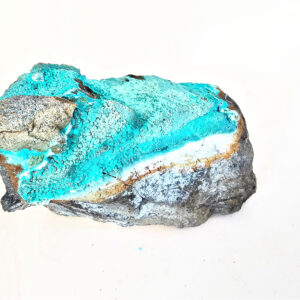
Mixed copper-mineral specimens may contain more than one of these minerals, creating colours and patterns that don't fit neatly into a single visual category.
That's why identification based only on colour can be unreliable.
A turquoise-blue mineral isn't automatically Turquoise, and a green copper mineral isn't automatically Malachite.
What Is Gem Silica?
There's another Chrysocolla-related name worth knowing.
Gem silica, sometimes called Chrysocolla Chalcedony, is not simply a particularly shiny lump of ordinary Chrysocolla.
It is Chalcedony whose beautiful blue to blue-green colour comes from microscopic inclusions of Chrysocolla.
Because Chalcedony is considerably harder than Chrysocolla itself, high-quality gem silica can take a beautiful polish and is particularly prized as lapidary material.
It's an excellent example of why mineral names matter: two pieces can share Chrysocolla's extraordinary colour while having quite different physical properties.
Rough, Botryoidal or Polished?
Different forms show different sides of Chrysocolla.
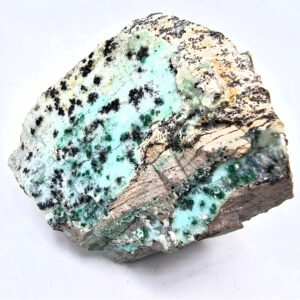
Rough Chrysocolla keeps more of the original mineral texture and associated matrix visible.
Botryoidal specimens are all about formation, with rounded surfaces and naturally sculptural textures.
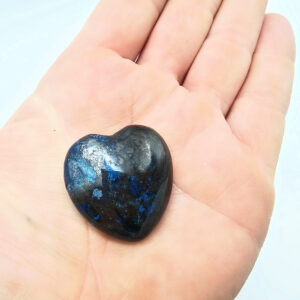
Polished pieces bring colour and pattern forward, smoothing the surface so contrasting blues, greens and darker areas become easier to see.
Shapes such as hearts can turn particularly colourful material into small display pieces while preserving much of the individual pattern.
If natural formation is what fascinates you most, browse more pieces in our Crystal Shapes collection.
Choosing Chrysocolla
Don't look for perfect uniformity.
Look at the colour, formation and mineral relationships.
A vivid turquoise-blue piece may immediately catch your attention, while another specimen might be far more interesting because of its green areas, dark matrix, rounded formations or contrasting minerals.
With botryoidal material, look at the shape of the surface as well as colour.
With polished pieces, examine the pattern from several angles.
And if you're choosing Chrysocolla according to crystal traditions, communication, wisdom and thoughtful self-expression are among its strongest associations.
Caring for Chrysocolla
Chrysocolla itself is relatively soft, so it deserves gentler handling than harder minerals such as Quartz.
Avoid abrasive cleaning, harsh chemicals and hard knocks.
For ordinary display pieces, a soft dry cloth or very gentle cleaning is preferable to aggressive scrubbing or prolonged soaking.
Also remember that material sold as Chrysocolla can contain other minerals, which may change how durable an individual piece is.
Frequently Asked Questions
Is Chrysocolla the same as Turquoise?
No. Both can have beautiful blue-green colour and both contain copper, but Chrysocolla and Turquoise are different minerals. Colour alone isn't enough to identify them.
Is Chrysocolla always blue?
No. Chrysocolla can be blue, turquoise, blue-green or green, and may occur with darker, brown or black areas depending on the specimen and associated minerals.
What does botryoidal Chrysocolla mean?
Botryoidal describes a naturally rounded, grape-like mineral surface. Chrysocolla commonly forms in rounded masses and bubbly-looking crusts, creating particularly sculptural specimens.
Can Chrysocolla occur with Malachite?
Yes. Chrysocolla and Malachite are both secondary copper minerals and can occur together, along with other copper minerals such as Azurite.
What is Chrysocolla traditionally associated with?
Within modern crystal traditions, Chrysocolla is associated with communication, wisdom, calm, listening and honest self-expression. Its blue-green colouring also gives it strong associations with Throat Chakra traditions.