




Black Tourmaline Rough C – Natural Rough Crystal 170g
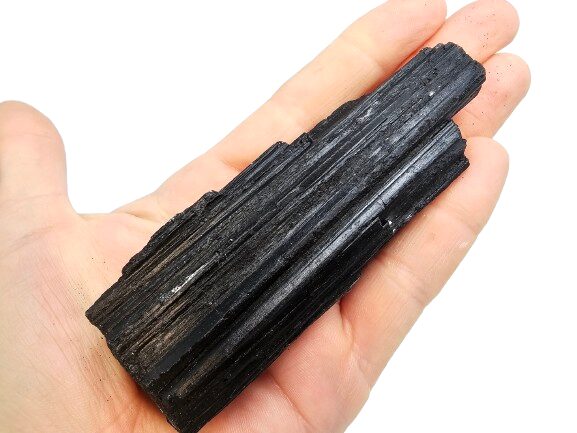
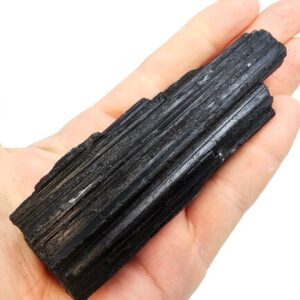
This rough Black Tourmaline is a naturally striking piece weighing approximately 170g and measuring around 11 x 4cm. Its longer, narrower proportions give it a different presence from chunkier rough specimens, while leaving the stone unpolished allows its natural mineral character to remain the focus.
Black Tourmaline is the name most commonly used for Schorl, the black, iron-rich member of the Tourmaline mineral group. It’s a fascinating stone from both a mineralogical and crystal-collecting perspective, and its traditional associations with protection, grounding and stability have made it one of the most recognisable black crystals.
Discover more natural pieces in our Black Tourmaline collection.
Product Details
- Crystal: Natural Black Tourmaline
- Mineral: Schorl
- Form: Rough
- Size: Approx. 11 x 4cm
- Weight: Approx. 170g
- Finish: Rough / natural
- Individual natural crystal piece
- Natural variations and irregularities are part of the specimen
- Includes a crystal meaning card
What Makes Rough Black Tourmaline Interesting?
Black Tourmaline has a naturally dramatic appearance that doesn’t need much help from cutting or polishing.
Tourmaline crystals commonly develop elongated forms with parallel grooves or striations running along their length. These are related to the way the crystal grows rather than marks added afterwards. Exactly how strongly those features appear varies from one natural specimen to another.
Leaving Tourmaline rough means you get to appreciate more of this mineral character. Instead of transforming the material into a perfectly smooth tumble or polished shape, the natural surfaces and irregularities remain part of the piece.
At approximately 11cm long, this specimen also has enough size to be noticeable in a display without taking up the space required by a very large mineral chunk.
For more sizeable unpolished specimens, browse our Large Rough Crystals collection.
What Is Black Tourmaline?
Tourmaline is actually the name of a group of closely related minerals, rather than one single mineral species.
The black Tourmaline most commonly encountered in crystal collections is Schorl, an iron-rich member of this mineral group.
Tourmaline is particularly interesting because the family occurs in an extraordinary variety of colours. Depending on its composition, Tourmaline can be black, green, pink, blue, red or even display multiple colours within the same crystal.
Black Schorl may be the darker member of the family, but it’s certainly part of a colourful crowd.
Did You Know?
Tourmaline has pyroelectric and piezoelectric properties. In simple terms, changes in temperature or mechanical pressure can produce an electrical charge within the crystal.
This unusual behaviour has been known for centuries. Heated Tourmaline crystals can attract tiny particles such as dust or ash — an intriguing physical property that sits completely apart from the stone’s modern metaphysical associations.
It’s one of the reasons Tourmaline is interesting even if you’re collecting purely for the geology.
Black Tourmaline Meaning & Traditional Associations
Within contemporary crystal traditions, Black Tourmaline is particularly associated with protection and grounding.
Common symbolic associations include:
- Protection
- Grounding
- Stability
- Strength
- Security
- Boundaries
- Focus
- Centring
- Clearing unwanted energy
- Feeling connected to the physical world
Because of these associations, Black Tourmaline is often selected for entrances, desks, meditation areas and crystal arrangements centred around grounding or protection.
Its deep black appearance also makes it particularly easy to combine with contrasting crystals.
Black Tourmaline & the Root Chakra
Black Tourmaline is most commonly associated with the root chakra in contemporary crystal practices.
The root chakra is traditionally linked with grounding, stability, security and connection with the physical world, which closely mirrors the symbolism commonly attached to Black Tourmaline.
A rough specimen can simply be placed within a meditation or intention-setting area rather than carried or worn.
You can also browse our wider Crystals collection to explore different stones, shapes and natural specimens.
Display Tip: Let the Natural Shape Decide
One of the easiest mistakes with rough crystals is deciding immediately which side is the “front”.
Try turning the specimen through several angles before settling on how to display it. Natural crystals can look completely different depending on orientation, particularly when light catches textured surfaces, ridges and irregular edges.
With this piece’s approximately 11 x 4cm proportions, you may find that its elongated shape works particularly well alongside smaller, rounder polished stones for contrast.
Black Tourmaline also creates a striking visual combination with pale crystals such as Clear Quartz or Selenite.
Caring for Rough Black Tourmaline
Rough Tourmaline deserves a little more careful handling than a completely polished stone because natural edges, grooves and thinner areas can be more vulnerable to knocks.
Use a soft, dry brush or cloth for routine dusting, particularly where dust settles into natural surface grooves.
Avoid harsh chemicals, abrasive cleaning methods and knocking the specimen against harder minerals or surfaces.
Tip: When moving a rough crystal, support the main body of the specimen rather than lifting it by a narrow edge or projection. It’s a simple habit that can help protect natural pieces over time.
Frequently Asked Questions
How large is this rough Black Tourmaline?
It measures approximately 11 x 4cm and weighs around 170g, giving it a noticeably elongated shape compared with more compact rough chunks.
Is Black Tourmaline the same as Schorl?
The material commonly sold as natural Black Tourmaline is generally Schorl, the typically black, iron-rich member of the Tourmaline mineral group.
Are the grooves on rough Black Tourmaline natural?
Tourmaline crystals commonly develop lengthwise striations or grooves during crystal growth. Their prominence varies naturally between individual specimens.
What is Black Tourmaline traditionally associated with?
Within contemporary crystal traditions, Black Tourmaline is strongly associated with protection, grounding, stability, strength and energetic boundaries.
Which chakra is connected with Black Tourmaline?
Black Tourmaline is most commonly associated with the root chakra, reflecting its traditional themes of grounding, stability and security.
Where can I keep a rough Black Tourmaline crystal?
It can be displayed wherever you enjoy your crystals. Popular choices include a desk, entrance area, meditation space, crystal shelf or mineral cabinet.
Pairs Well With
- Clear Quartz
- Selenite
- Smoky Quartz
- Hematite
- Amethyst
- Other natural rough specimens
Perfect For
- Black Tourmaline collectors
- Rough crystal collections
- Mineral enthusiasts
- Root chakra practices
- Protection and grounding intentions
- Crystal shelves and cabinets
- Meditation spaces
- Natural mineral displays
- Collectors who prefer unpolished specimens
- Anyone interested in the fascinating Tourmaline mineral family
With its 170g weight and elongated 11cm form, this rough Black Tourmaline offers plenty of natural mineral character without needing to be polished or carved into something else. It’s a piece for appreciating Tourmaline exactly as a rough specimen should be — individual, irregular and interesting.
A dark little piece of mineralogy with a surprisingly colourful family tree.
Reviews
There are no reviews yet.