
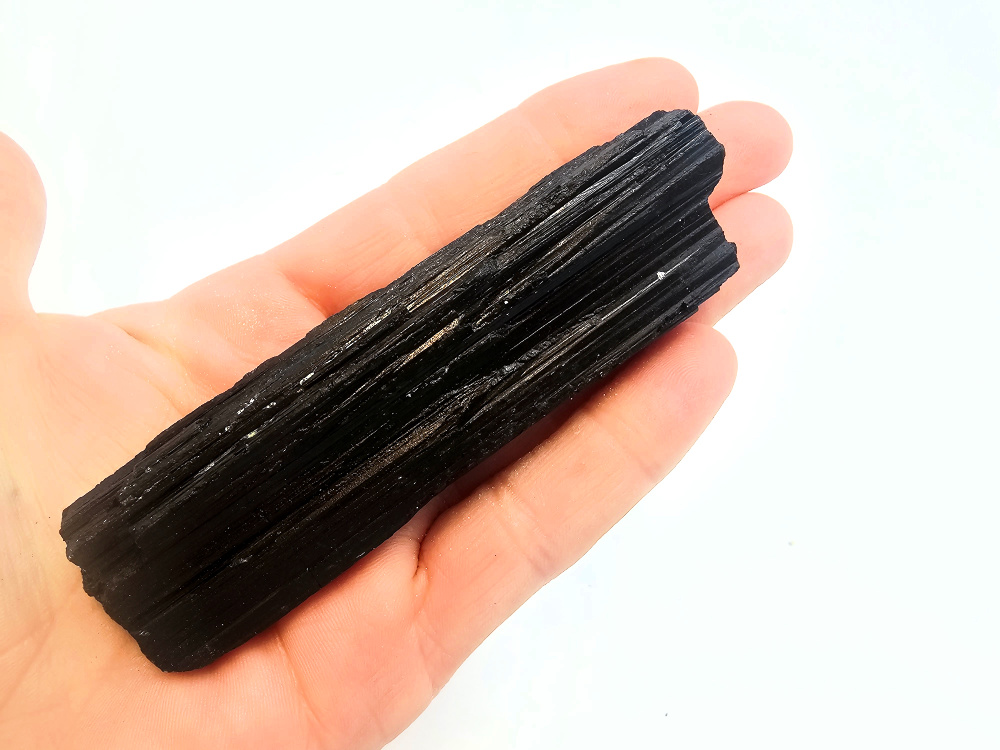




Black Tourmaline Rough H – Natural Rough Crystal 136g
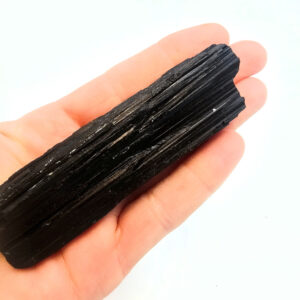
This rough Black Tourmaline crystal weighs approximately 136g and measures around 10.5 x 3cm, giving it a long, relatively slender natural form. Left unpolished, the stone keeps the irregular surfaces and raw mineral character that make Black Tourmaline particularly appealing as a natural specimen.
Black Tourmaline is commonly Schorl, the black, iron-rich member of the Tourmaline mineral group. It’s one of the most recognisable stones in crystal collections, known for its striking dark appearance and its traditional associations with protection, grounding, stability and strength.
Explore more pieces in our Black Tourmaline collection.
Product Details
- Crystal: Natural Black Tourmaline
- Mineral: Schorl
- Form: Rough
- Size: Approx. 10.5 x 3cm
- Weight: Approx. 136g
- Finish: Rough / natural
- Individual natural crystal piece
- Natural variations and irregularities are part of the specimen
- Includes a crystal meaning card
Rough Black Tourmaline – Naturally Better Unpolished?
Black Tourmaline is one of those minerals that makes a very convincing argument for leaving some crystals rough.
Tourmaline crystals commonly grow with longitudinal striations — grooves or lines running along the length of the crystal. Rough specimens can preserve these growth characteristics along with irregular surfaces, edges and other natural features that would be reduced or removed during polishing.
The result isn’t supposed to be perfectly smooth or symmetrical. Its natural structure is part of what you’re collecting.
With its approximately 10.5cm length and narrower 3cm width, this piece can also bring a different shape into a collection dominated by spheres, tumbles and chunky rough stones.
Browse more substantial unpolished specimens in our Large Rough Crystals collection.
What Is Black Tourmaline?
Tourmaline is not one individual mineral but a group of closely related minerals with complex chemical compositions.
The black Tourmaline commonly found in crystal and mineral collections is generally Schorl. Although its appearance can seem simple at first — it’s black, after all — the wider Tourmaline family is remarkably colourful.
Other Tourmalines can occur in pink, green, blue and red, with some crystals even displaying more than one colour.
Did You Know?
Tourmaline has a fascinating relationship with electricity.
It exhibits both pyroelectric and piezoelectric behaviour, meaning an electrical charge can develop when the crystal experiences a temperature change or mechanical pressure.
Historically, heated Tourmaline was observed attracting lightweight particles such as dust and ash.
So even if crystal meanings aren’t your thing, Tourmaline still has some rather interesting tricks up its sleeve.
Black Tourmaline Meaning & Traditional Associations
Within contemporary crystal traditions, Black Tourmaline is particularly associated with grounding and protection.
Common associations include:
- Protection
- Grounding
- Stability
- Strength
- Security
- Centring
- Focus
- Personal boundaries
- Clearing unwanted energy
- Connection with the physical world
Its symbolism has made Black Tourmaline a popular stone for entrances, workspaces and meditation areas, as well as crystal arrangements created around grounding or protection intentions.
It’s also frequently paired with stones such as Clear Quartz, Selenite and Amethyst, creating strong visual contrast as well as combining different traditional crystal associations.
Black Tourmaline & the Root Chakra
Black Tourmaline is most commonly associated with the root chakra.
Within contemporary chakra practices, the root chakra is linked with stability, security, grounding and connection with the physical world — themes that closely overlap with Black Tourmaline’s traditional symbolism.
A rough piece can be incorporated into a meditation or intention-setting space without needing to be worn or carried. It can simply become part of the environment around you.
For more stones across different mineral varieties and forms, browse our wider Crystals collection.
Display Tip: Use the Shape to Your Advantage
When arranging a crystal collection, don’t concentrate only on colour. Different shapes and textures can make a display far more interesting.
The longer 10.5 x 3cm proportions of this Black Tourmaline can contrast nicely with round spheres, polished palm stones and broader rough chunks.
Try placing it beside a pale mineral such as Clear Quartz or Selenite to emphasise the dark Tourmaline, or combine it with Smoky Quartz and Hematite for a moodier mineral display.
Another tip: don’t decide which side is the “front” too quickly. Turn a rough specimen under different lighting and look at it from several angles. Natural textures can change considerably depending on where the light falls.
Caring for Rough Black Tourmaline
Rough Tourmaline should be handled thoughtfully, particularly where the specimen has natural edges or narrower areas.
For ordinary dusting, use a soft, dry brush or cloth. A small soft brush is particularly handy for reaching into natural grooves without aggressive scrubbing.
Avoid abrasive cleaners, harsh chemicals and knocking the piece against hard surfaces or other mineral specimens.
Tip: Support the main body of a rough crystal when moving it rather than lifting it by a narrow end or projection. It’s an easy way to reduce unnecessary stress on natural formations.
Frequently Asked Questions
How large is this rough Black Tourmaline?
It measures approximately 10.5 x 3cm and weighs around 136g, giving it an elongated profile that is easy to incorporate into a crystal display.
Is Black Tourmaline actually Schorl?
The material most commonly sold and collected as natural Black Tourmaline is generally Schorl, an iron-rich member of the Tourmaline mineral group.
Why does Black Tourmaline sometimes have lines running along it?
Tourmaline commonly develops lengthwise striations during natural crystal growth. Their visibility and depth differ between individual specimens.
What is Black Tourmaline traditionally associated with?
In contemporary crystal traditions, Black Tourmaline is particularly associated with protection, grounding, stability, strength and personal boundaries.
Which chakra is associated with Black Tourmaline?
It is most commonly connected with the root chakra, which is traditionally associated with grounding, stability and security.
Is rough or polished Black Tourmaline better?
Neither is inherently better — they offer different ways to enjoy the mineral. Polished pieces emphasise smoothness and finish, while rough Black Tourmaline retains more of its natural texture and mineral character. For collectors who enjoy natural specimens, that’s often exactly the appeal.
Pairs Well With
- Clear Quartz
- Selenite
- Smoky Quartz
- Hematite
- Amethyst
- Other natural rough crystals
Perfect For
- Black Tourmaline collectors
- Rough crystal collections
- Natural mineral enthusiasts
- Root chakra practices
- Grounding and protection intentions
- Meditation spaces
- Desk displays
- Crystal shelves and cabinets
- Collectors who prefer unpolished stones
- Anyone interested in Tourmaline as a mineral
At 136g and approximately 10.5cm long, this rough Black Tourmaline has enough size to show off the natural character of the mineral while remaining easy to display. No elaborate carving or perfect polish required — sometimes the geology has already done the interesting part.
Naturally dark, wonderfully rough and unmistakably Tourmaline.
Reviews
There are no reviews yet.