
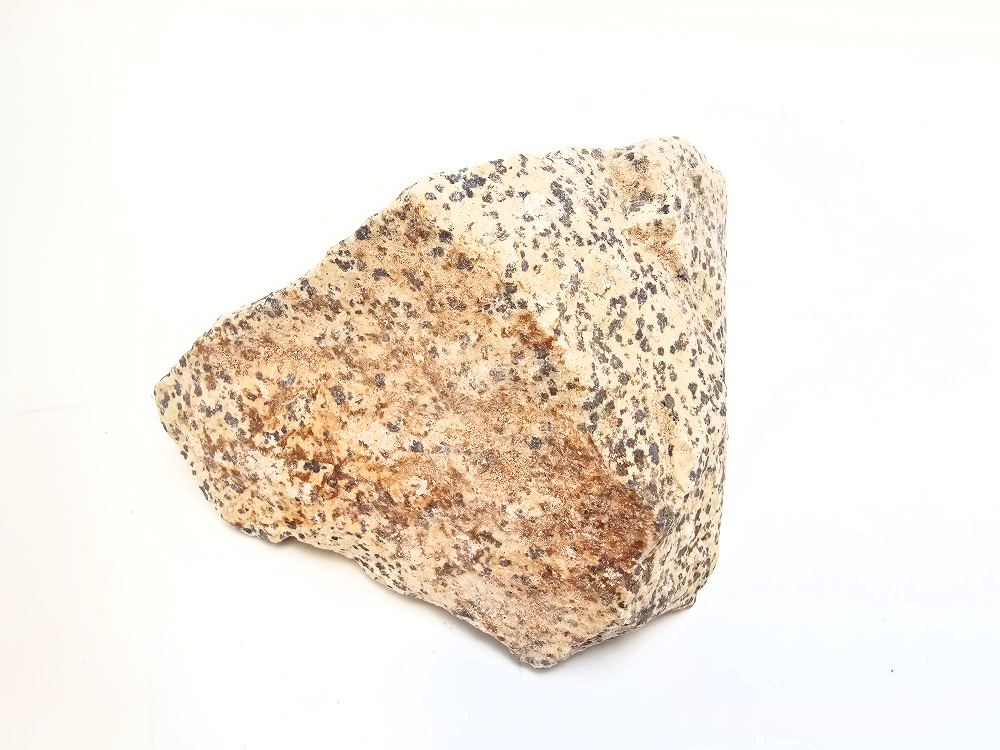
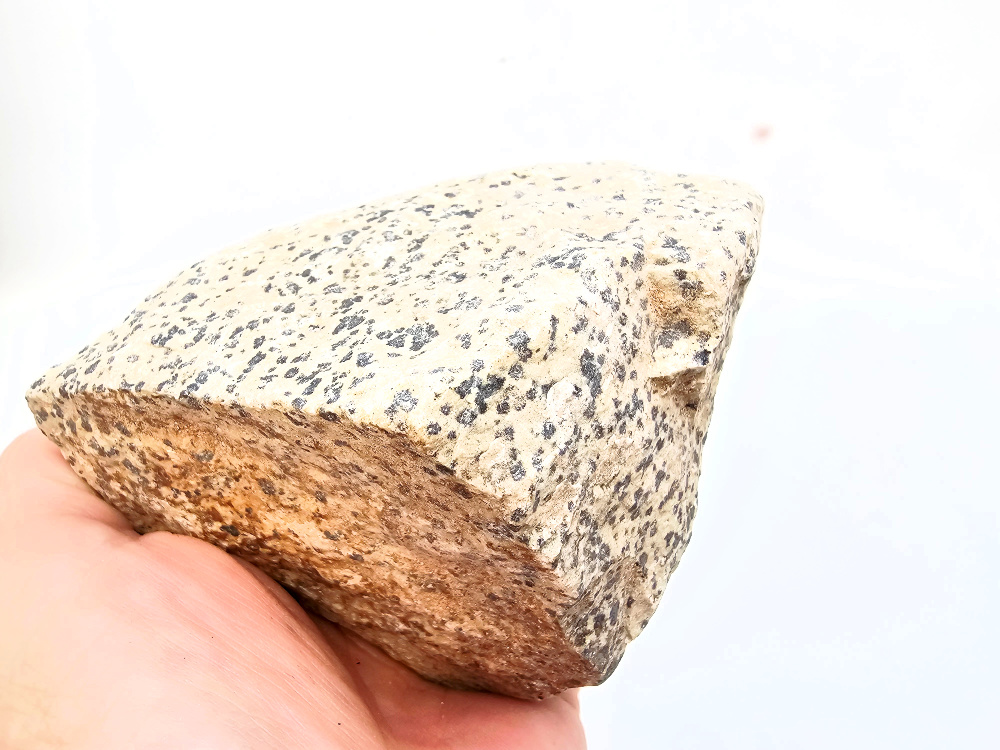




Dalmatian Jasper Rough B (754g) – Large Unpolished Dalmatian Stone
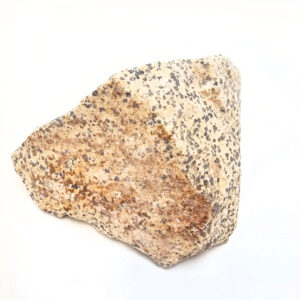
Chunky, naturally patterned and completely unpolished, this rough Dalmatian Jasper specimen weighs approximately 754g and measures around 12 × 9cm. Its substantial size gives it plenty of presence for a crystal shelf or mineral display, while the rough finish keeps the stone’s natural contours and textures intact.
Dalmatian Jasper is one of those stones almost everyone remembers once they have seen it. Its distinctive spotted appearance inspired its dog-related trade name, but the geology behind the material is considerably more complicated than the word “Jasper” suggests.
Product Details
- Stone: Dalmatian Jasper / Dalmatian Stone
- Form: Large rough chunk
- Weight: Approx. 754g
- Size: Approx. 12 × 9cm
- Finish: Rough / unpolished
- Natural patterning, surfaces and textures form part of the specimen
- Includes a crystal meaning card
Dalmatian Stone in Its Rough Form
Many people first encounter Dalmatian Jasper as polished tumbles, beads or carvings. A rough specimen offers a different view of the material, with natural edges and uneven surfaces replacing the smooth finish created by cutting and polishing.
At approximately 754g, this piece sits comfortably in the larger specimen category. It can hold its own among sizeable rough crystals without taking up the space required by a multi-kilogram chunk.
Browse more substantial natural pieces in our Large Rough Crystals collection.
The Surprising Geology Behind Dalmatian Jasper
Despite its established commercial name, Dalmatian Jasper is not a true jasper in the strict geological sense. Rather than being an opaque microcrystalline quartz material, it is an igneous rock composed of several different minerals.
This is why the alternative name Dalmatian Stone can be useful. Both names refer to the familiar spotted material, but Dalmatian Stone avoids suggesting that it belongs mineralogically with true Jasper.
Trade names often survive because they are memorable and widely recognised, even after mineralogical investigation reveals a more complicated identity.
Did You Know? Dalmatian Stone Has a Volcanic Story
The word “Jasper” may make it sound like a typical silica-rich Jasper variety, but Dalmatian Stone is associated with igneous processes — geology involving molten rock.
That makes its familiar spotted appearance even more interesting. The pattern is not simply decorative colouring painted through a uniform stone; it reflects different mineral components within the rock.
So the next time someone calls it a spotted Jasper, there is a much better story hiding underneath: this is a multi-mineral rock with an igneous history wearing one of the crystal world’s most memorable trade names.
What Are the Dark Spots?
The dark markings are sometimes casually described in crystal retail as Black Tourmaline, but mineralogical studies have shown that this explanation is too simple. Dark mineral phases in Dalmatian Stone can include arfvedsonite, a sodium-rich amphibole mineral.
The exact mineral makeup within natural rock can vary, so it is better to appreciate the spots as part of Dalmatian Stone’s multi-mineral geology rather than automatically labelling every dark marking as Tourmaline.
Dalmatian Jasper Meaning & Traditional Associations
Within modern crystal traditions, Dalmatian Jasper is commonly associated with grounding, protection, loyalty, playfulness and emotional balance. Its spotted, cheerful appearance has helped reinforce its reputation as a stone connected with light-heartedness and rediscovering a sense of fun.
For people who enjoy symbolic crystal displays, it offers an interesting combination: earthy grounding associations without the darker appearance usually associated with many traditional grounding stones.
Displaying & Caring for Rough Dalmatian Stone
At approximately 12 × 9cm, this rough piece is a useful size for a shelf, desk, altar or mineral cabinet. Because natural chunks can have irregular bases, make sure it sits securely before choosing its permanent display position.
Handle rough edges carefully and avoid dropping the specimen onto hard surfaces. For everyday cleaning, use a soft dry brush or cloth to remove dust from textured areas.
Explore our wider Crystals collection for more rough and polished mineral pieces.
Frequently Asked Questions
How large is this rough Dalmatian Jasper?
It weighs approximately 754g and measures around 12 × 9cm.
Is this Dalmatian Stone polished?
No. This is a rough, unpolished specimen, retaining its natural contours and surface texture.
Is Dalmatian Jasper really a Jasper?
Despite its familiar trade name, it is not considered a true Jasper in the strict geological sense. Dalmatian Stone is an igneous rock composed of several minerals.
Are the black spots Black Tourmaline?
They should not automatically be identified as Black Tourmaline. Mineralogical investigation has identified dark mineral phases including arfvedsonite in Dalmatian Stone.
What is Dalmatian Jasper traditionally associated with?
Within modern crystal traditions, it is commonly associated with grounding, protection, loyalty, playfulness and emotional balance.
Does this rough specimen include a meaning card?
Yes. It includes a crystal meaning card covering Dalmatian Jasper’s traditional associations.
Pairs Well With
- Black Obsidian for a dramatic spotted-and-black display
- Clear Quartz for contrasting natural crystal structure
- Red Jasper for comparing a true Jasper-style material with Dalmatian Stone
- Pyrite for a strong contrast in colour, lustre and crystal form
- Other large rough mineral specimens
Perfect For
- Dalmatian Jasper collectors
- Large rough crystal displays
- Natural and unpolished stone collections
- Mineral and geology enthusiasts
- Statement shelves and crystal cabinets
- Anyone fascinated by stones whose trade names hide a stranger geological identity
Familiar spots, an unexpected igneous identity and plenty of rugged natural texture make this substantial Dalmatian Stone far more interesting than its playful name first suggests.
Reviews
There are no reviews yet.