
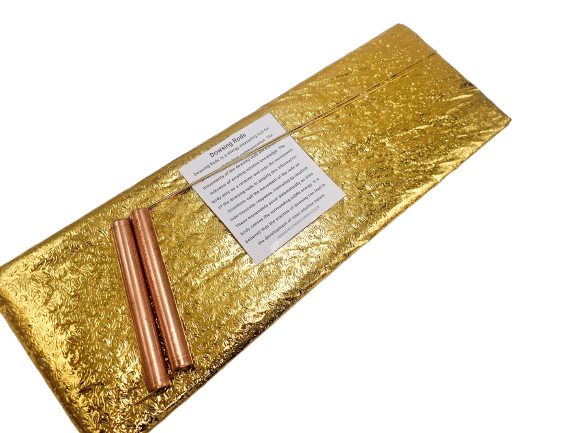




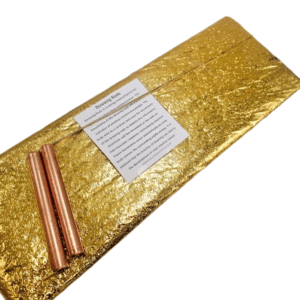
Dowsing Rods with Copper Handles – Approx. 35cm
A classic tool for dowsing and divination practices, these dowsing rods with copper handles feature copper rods measuring approximately 35cm long. The L-shaped design is intended to be held lightly by the handles so the rods can move freely during use.
Dowsing rods have a long and rather curious history. They have been used in traditional practices to search for water, minerals and hidden objects, and today are also popular within spiritual and energy-work traditions for asking directional or yes/no questions.
Product Details
- Type: Dowsing rods
- Rod material: Copper
- Handles: Copper
- Length: Approx. 35cm
- Traditional divination and dowsing tool
How Are Dowsing Rods Used?
The rods are generally held one in each hand with a light, relaxed grip, allowing the long sections to point forward and move independently. A dowser may then walk across an area or ask a question while observing whether the rods remain apart, cross or move in another predetermined way.
In contemporary spiritual practice, some people establish their own responses before beginning – for example, deciding what movement will represent “yes”, “no” or “neutral”. Keeping the grip relaxed is important because the rods need room to move rather than being held rigidly in position.
Why Copper?
Copper has been used by humans for thousands of years and was one of the earliest metals worked on a significant scale. It is malleable, recognisable by its warm metallic colour and capable of developing a natural patina over time.
Within modern metaphysical traditions, copper is also frequently associated with energy, conductivity and amplification, which has helped make it a popular material for spiritual tools and jewellery.
Did You Know? Dowsing Was Once Called “Water Witching”
Dowsing has accumulated some wonderfully strange names over the centuries. Searching for underground water with rods has commonly been called water witching, while practitioners have also used forked branches, pendulums and metal rods.
Historical dowsing was not limited to water. In parts of Europe, rods were used in attempts to locate ores and mineral deposits, and illustrations from the early modern period show dowsers working around mining operations.
There is an interesting catch, however: controlled scientific testing has not established dowsing as a reliable method for locating hidden water or objects. One well-known explanation for rod movement is the ideomotor effect, where tiny unconscious muscle movements can move a handheld object without the person deliberately doing so.
That does not stop dowsing from having a long cultural history or from being used today as a personal divination practice – it simply separates the tradition from claims of scientifically proven detection.
A Simple Way to Begin
Stand comfortably and hold one rod in each hand with the long sections pointing forward. Keep your hands level and your grip loose enough for the rods to move.
If you are using them for personal divination, establish your chosen responses first. Ask a simple question to define or test the movements you will interpret as yes, no and neutral, then work consistently with the same system.
Small involuntary movements can influence the rods, so they are best approached as a traditional or intuitive practice rather than a precision measuring instrument.
Caring for Copper Dowsing Rods
Copper naturally changes colour as it reacts with air, moisture and handling, developing a patina over time. This is a normal characteristic of the metal rather than a defect.
Keep the rods dry when stored and wipe them with a soft cloth after handling if needed. Avoid harsh household chemicals and excessive bending, which may affect their shape and movement.
Frequently Asked Questions
How long are the dowsing rods?
They are approximately 35cm long.
What are the rods made from?
The rods are copper and have copper handles.
What are dowsing rods traditionally used for?
Dowsing rods have traditionally been used in attempts to locate water, minerals and hidden objects. They are also used today in some divination and energy-work practices.
How should I hold dowsing rods?
Hold one in each hand with a relaxed grip, keeping the long sections pointing forward and allowing them enough freedom to move.
Will copper change colour over time?
Yes. Natural copper can gradually develop a patina through exposure to air, moisture and handling.
Can dowsing rods scientifically detect underground water?
Dowsing has a long traditional history, but controlled scientific testing has not established it as a reliable method for detecting hidden water or objects.
Perfect For
- Dowsing and divination practices
- Beginners exploring traditional spiritual tools
- Experienced dowsers
- Personal yes/no practices
- Metaphysical and esoteric collections
- Anyone fascinated by unusual historical divination tools
Simple in design but surrounded by centuries of unusual history, these copper dowsing rods are an intriguing tool for anyone exploring traditional dowsing, divination and intuitive practices.

Reviews
There are no reviews yet.