
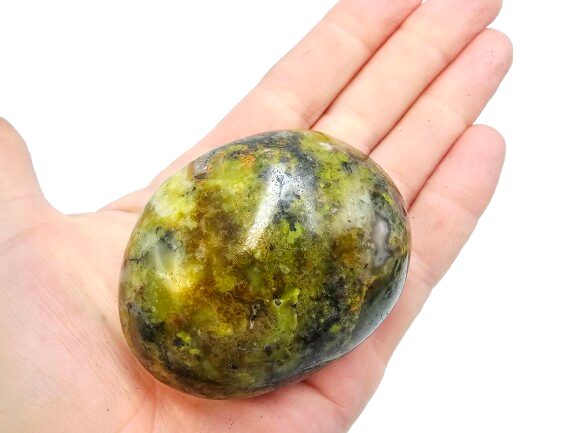




Green Opal Palm Stone D – Rare Large Madagascar Green Opal 158g
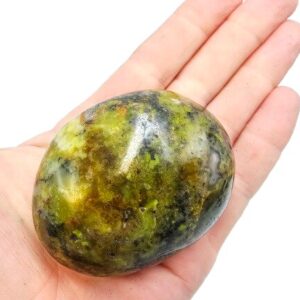
This Green Opal palm stone is an unusually substantial piece from Madagascar, measuring approximately 7 x 6cm and weighing 158g. With its larger size and rare Green Opal material, it makes a beautiful choice for someone looking for something beyond the more familiar crystal varieties.
Polishing Green Opal into a palm stone gives the piece a smooth, tactile finish while allowing the natural colour and character of the stone to remain the focus. At 158g, this is not a tiny pocket stone — it has a satisfying weight and presence in the hand and works equally well as a display piece.
Green Opal is traditionally associated with renewal, emotional balance, compassion and the heart chakra, making it popular with people drawn to gentler, heart-centred crystal symbolism.
Discover more pieces in our Green Opal collection.
Product Details
- Stone: Natural Green Opal
- Shape: Palm stone
- Size: Approx. 7 x 6cm
- Weight: Approx. 158g
- Origin: Madagascar
- Finish: Polished
- A rare Green Opal piece
- Natural variations in colour, pattern and markings are part of the stone
- Includes a crystal meaning card
What Makes Green Opal Special?
Opal is best known for precious varieties that display flashes of spectral colour, but the opal family is considerably more diverse.
Green Opal is generally valued for the beauty of the material itself rather than the dramatic play-of-colour associated with precious Opal. Its appeal lies in its natural green colouring, markings and individual character.
That makes it an interesting choice for collectors who already have familiar stones such as Amethyst, Rose Quartz or Clear Quartz and want to branch out into something less commonly encountered.
The Green Opal material found in Madagascar can make particularly attractive polished pieces, with every stone retaining its own natural variation.
A Large Green Opal Palm Stone
At approximately 7 x 6cm and 158g, this is a generously sized palm stone.
That extra size gives it a very different feel from smaller pocket stones. It fills more of the hand and has enough weight to feel substantial without losing the smooth, rounded character people enjoy about palm stones.
The larger polished surface also provides more space to appreciate the natural appearance of the Green Opal.
It can be held during meditation or intention-setting, displayed amongst other Madagascan minerals, placed on a desk or bedside table, or simply kept somewhere it can be picked up and enjoyed.
For collectors who prefer larger individual stones, its size is an important part of its appeal.
Green Opal Meaning & Traditional Associations
Within contemporary crystal traditions, Green Opal is commonly associated with renewal, emotional balance, compassion and gentle heart-centred energy.
Traditional and contemporary associations include:
- Renewal
- Compassion
- Emotional balance
- Personal growth
- Calm
- Hope
- Heart-centred intentions
- Connection with nature
- New beginnings
- Self-reflection
Green stones are frequently associated with themes of growth and renewal, drawing an easy symbolic connection with leaves, forests and new plant growth.
Green Opal is often chosen by people who prefer this softer symbolism rather than crystals traditionally associated with intense or highly energising qualities.
These associations also make it an appealing stone for periods of change, fresh starts or simply as a personal reminder to make room for growth.
Green Opal & the Heart Chakra
Green Opal is commonly connected with the heart chakra in contemporary crystal practices.
The heart chakra is traditionally associated with compassion, connection, love and emotional openness, while Green Opal’s modern crystal meanings frequently centre around renewal, balance and growth.
For intention-setting, a palm stone is particularly convenient because the polished shape is designed to be comfortably held.
Its usefulness doesn’t have to be limited to crystal practices, though. A large polished Green Opal is also simply an attractive natural object to keep in a collection.
Madagascar Green Opal
Madagascar is renowned amongst mineral collectors for the remarkable variety of gemstones and mineral specimens found there.
This piece comes from Madagascar, adding another point of interest for collectors who enjoy building a collection around stones from a particular mineral-rich region.
Natural Green Opal can vary from piece to piece, so variations in colouring, markings and pattern shouldn’t be expected to look identical across different specimens.
That individuality is particularly important with one-off palm stones: the piece you choose is the piece you receive rather than a generic example of the material.
Browse our wider Crystals collection for more polished stones, unusual minerals and individually selected natural pieces.
Why Choose a Green Opal Palm Stone?
There are several reasons someone might specifically be drawn to Green Opal rather than another polished crystal.
Its rarity makes it interesting for collectors who enjoy less common stones, while its green colouring gives it a naturally earthy appeal. Its traditional associations are also gentler than those attached to some more intensely symbolic crystals.
The palm-stone shape adds another dimension.
Rather than being purely decorative, it invites you to pick the stone up. Smooth edges and a polished surface make palm stones satisfying tactile objects, whether you’re using one during meditation, keeping it beside you while working or simply turning it over while thinking.
At 158g, this particular piece has enough weight to make that tactile quality especially noticeable.
Caring for Green Opal
Opal deserves gentler handling than some harder everyday gemstones.
Keep the palm stone away from harsh chemicals, abrasive cleaners and extreme temperature changes. For routine care, gently wipe the surface with a soft cloth.
Avoid dropping it onto hard surfaces and store it somewhere it won’t repeatedly knock against harder mineral specimens.
Simple, gentle handling is the best approach.
Frequently Asked Questions
How large is this Green Opal palm stone?
It measures approximately 7 x 6cm and weighs around 158g, making it a notably substantial palm stone.
Where does this Green Opal come from?
This natural Green Opal comes from Madagascar.
Is Green Opal rare?
Green Opal is a less commonly encountered Opal variety in everyday crystal collections, particularly compared with familiar stones such as Amethyst, Rose Quartz or Clear Quartz. This piece has been identified as rare Green Opal.
Does Green Opal have rainbow flashes?
Green Opal is generally appreciated for its body colour, natural markings and character rather than the play-of-colour associated with precious Opal. No play-of-colour has been claimed for this individual piece.
What is Green Opal traditionally associated with?
Within contemporary crystal traditions, Green Opal is commonly associated with renewal, compassion, emotional balance, growth and heart-centred intentions.
Is this a good stone for meditation?
If you enjoy incorporating crystals into meditation, the smooth palm-stone shape is comfortable to hold and Green Opal’s traditional associations make it a popular choice for quieter, heart-centred intentions.
Pairs Well With
- Rose Quartz
- Green Aventurine
- Moonstone
- Clear Quartz
- Moss Agate
- Other unusual Madagascan crystals
Perfect For
- Green Opal collectors
- Rare crystal collections
- Larger palm stone collections
- Madagascar mineral collections
- Heart chakra practices
- Meditation and intention-setting
- Nature-inspired crystal collections
- Collectors looking beyond familiar crystal varieties
- Lovers of substantial, tactile polished stones
- A distinctive crystal gift
This Green Opal palm stone brings together an impressive 158g size, rare Madagascan material and the wonderfully tactile feel of a large polished stone. Whether you’re drawn to Green Opal for its traditional associations or simply because it’s something a little different, this is a piece with real presence.
Rare, substantial and made to be picked up.
Reviews
There are no reviews yet.