




Kali Statue (17cm) White – Hindu Goddess of Power & Transformation
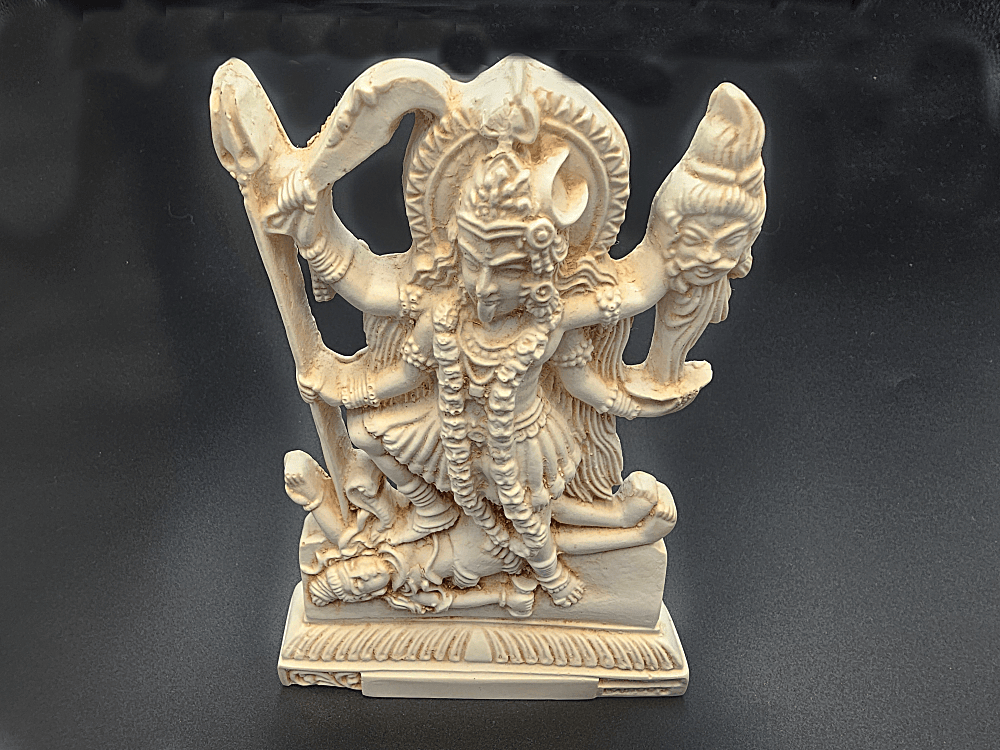
Fierce, fascinating and filled with symbolism, this Kali Statue (17cm) White depicts one of Hinduism’s most powerful goddess forms in an elaborate multi-armed design.
Kali is shown standing over the reclining figure of Shiva, with her tongue extended, a blade raised in one hand and a severed head held in another. A long garland hangs down the front of the figure, while the detailed headdress, jewellery, flowing garments and multiple arms give this compact statue remarkable visual presence.
Kali’s dramatic imagery is not simply intended to be frightening. Within Hindu traditions she is associated with power, time, transformation, protection and the destruction of forces that stand in the way of liberation.
Discover more sacred figures in our Hindu Statues collection.
Product Details
- Deity: Kali
- Height: Approx. 17cm
- Colour: White
- Multi-armed standing figure
- Depicted standing over Shiva
- Extended tongue
- Flat back statue
- Blade and severed-head imagery
- Long garland
- Detailed headdress, jewellery and clothing
- Freestanding statue
Who Is Kali?
Kali is a major Hindu goddess particularly associated with Shakti — divine feminine power or energy. Her name is closely connected with kāla, a Sanskrit word associated with time, and she is often understood through themes of time, death, transformation and the destruction that makes renewal possible.
Her fierce appearance can be startling if you encounter Kali imagery without knowing its context. Swords, severed heads, an extended tongue and her position over Shiva create an image that looks almost apocalyptic.
Yet Kali is not simply a goddess of destruction. Within devotional traditions she can also be understood as a powerful protector and mother figure. Her ferocity is directed towards demons, ignorance, ego and forces that threaten cosmic or spiritual order.
Explore more religious and cultural figures in our wider Statues collection.
The Symbolism in This Kali Statue
This particular statue includes several of the visual elements that make Kali immediately recognisable.
Kali Standing Over Shiva
At Kali’s feet is the reclining figure of Shiva, her consort.
One well-known tradition tells of Kali becoming so consumed by the force of battle that her destructive dance threatened to continue unchecked. Shiva lay down in her path, and when Kali stepped upon him and recognised him, her frenzy stopped.
The image creates a powerful contrast: Kali is movement, energy and tremendous force, while Shiva beneath her is stillness. Their relationship has inspired layers of philosophical and devotional interpretation within Hindu traditions.
The Blade
Kali is shown with a raised blade, another familiar feature of her fierce iconography.
Beyond its literal appearance as a weapon, Kali’s blade is often interpreted symbolically as the power to cut through ignorance, illusion and ego. Her destructive imagery can therefore be understood not only as physical destruction, but as the removal of what prevents transformation or liberation.
The Severed Head
One of the most dramatic details is the severed head held in one of Kali’s hands.
Historic and devotional representations of Kali frequently include severed-head imagery. In symbolic interpretations, the severed head can represent the destruction of ego and attachment — another reminder that Kali’s frightening imagery can carry meanings far beyond violence itself.
The Extended Tongue
Kali’s protruding tongue is one of her most recognisable features.
Different traditions and artworks give this feature different layers of meaning. In the famous story of Kali stepping upon Shiva, her extended tongue is popularly connected with the moment she realises she has stepped on her consort and stops her destructive dance.
Whatever interpretation is followed, the tongue has become such a distinctive part of Kali’s visual identity that even a small depiction can be immediately recognisable.
A Statue Packed with Detail
At approximately 17cm tall, this is still a relatively compact statue, but the design contains an impressive amount of sculptural detail.
The multiple arms create movement around the central figure, while the blade, severed head, garland, extended tongue and reclining Shiva give you something new to notice each time you look closely.
The white finish allows shadows to settle naturally into the carved details, emphasising the jewellery, clothing, faces and symbolic objects without relying on additional colour.
For more meaningful pieces for altars, shelves and spiritual spaces, browse our Decor & Home collection.
Where to Display Your Kali Statue
This 17cm Kali statue can work beautifully as part of a home altar, spiritual shelf or collection of Hindu deity statues.
Its symbolism may particularly appeal to people drawn to themes of transformation, courage, feminine power and overcoming obstacles or old patterns.
- Home altars
- Meditation or reflection spaces
- Spiritual shelves
- Collections of Hindu deity statues
- Yoga spaces
- Meaningful décor displays
Caring for Your Kali Statue
Use a soft, dry cloth or small soft brush to remove dust, particularly around the multiple arms, headdress, garland and smaller sculpted details.
Avoid harsh chemicals and abrasive cleaners.
When moving the statue, support it securely around the main body and base rather than lifting it by projecting arms or other smaller details.
Frequently Asked Questions
How tall is this Kali statue?
The statue measures approximately 17cm tall.
Why is Kali standing on Shiva?
One famous tradition tells that Shiva lay in Kali’s path to halt her destructive dance. When she stepped upon him and recognised her consort beneath her, her frenzy stopped. The image has become one of the most recognisable elements of Kali iconography.
Why does Kali hold a severed head?
Severed-head imagery appears frequently in traditional depictions of Kali. Among its symbolic interpretations is the destruction of ego and attachment — ideas closely connected with Kali’s transformative power.
What does Kali symbolise?
Kali is associated with themes including time, transformation, power, protection and destruction. Her fierce imagery can also represent the destruction of ignorance, illusion and ego.
Why does Kali have her tongue sticking out?
The extended tongue is one of Kali’s most distinctive visual features. A popular interpretation connects it with the moment Kali realises she has stepped upon Shiva and halts her destructive dance, although Kali’s iconography has developed through multiple traditions and interpretations.
Where could I display a Kali statue?
Its 17cm size makes it suitable for a home altar, meditation space, spiritual shelf or collection of Hindu deity statues.
Pairs Well With
- Other Hindu deity statues
- Incense and incense holders
- Candles
- Meditation accessories
- Prayer or altar pieces
- Spiritual décor
Perfect For
- Kali devotees
- Home altars
- Hindu statue collections
- Meditation and reflection spaces
- Yoga spaces
- Symbolic décor
- Those drawn to themes of transformation and divine feminine power
- Anyone fascinated by the deeper stories hidden inside ancient sacred imagery
Fierce at first glance and far more complex the closer you look, this 17cm Kali statue brings together some of her most recognisable imagery in one striking white figure — power, transformation, protection and the force that clears the way for change.




Reviews
There are no reviews yet.