
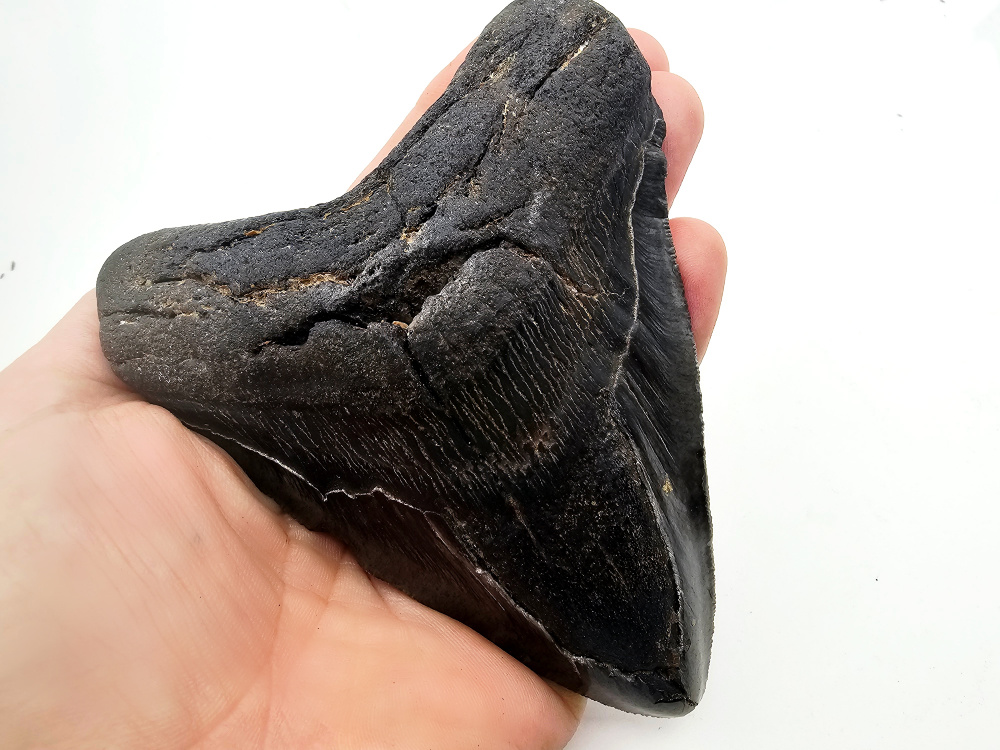
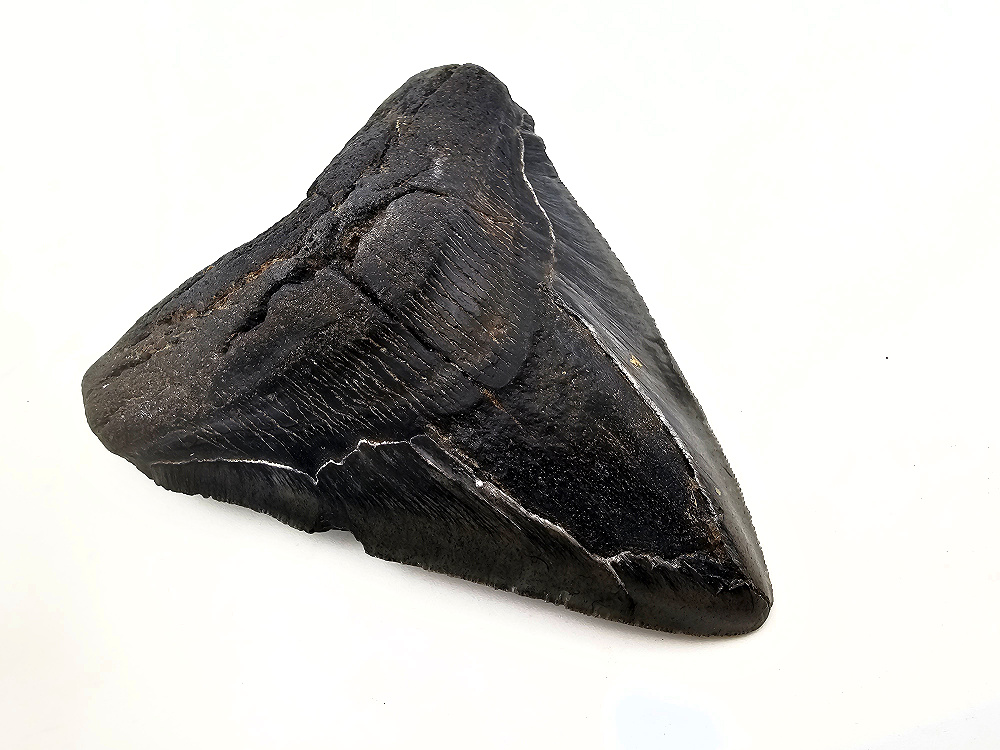




Black Megalodon Tooth A – 232g Fossil Shark Tooth
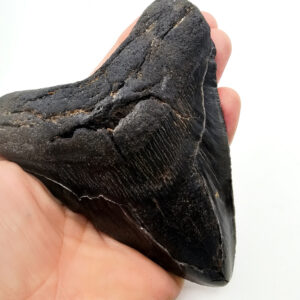
The Black Megalodon Tooth A is the kind of fossil that makes you stop and look twice. Weighing approximately 232g and measuring around 13 × 10cm, this substantial black fossil tooth is a striking reminder of one of the largest predatory sharks ever to swim the oceans.
Megalodon lived roughly 23 to 3.6 million years ago. Because shark skeletons are made largely from cartilage, teeth are among the most important fossils used to study these enormous extinct sharks.
Product Details
- Fossil: Megalodon shark tooth
- Variant: A
- Colour: Black
- Weight: Approx. 232g
- Approx. size: 13 × 10cm
- Type: Natural fossil specimen
- Use: Fossil collection, educational display or statement décor
- Natural fossil wear, mineralisation, edge condition and surface markings are part of the individual specimen
Megalodon Tooth Fossil – A Piece of Prehistoric Ocean History
Megalodon was a gigantic extinct shark that lived in oceans around the world during the Neogene Period. Estimates based largely on fossil teeth suggest that the largest individuals may have reached around 18 metres in length.
Its teeth are especially important to palaeontologists because cartilage usually does not fossilise as readily as bone. The result is that much of what we know about Megalodon comes from fossilised teeth and the occasional preserved vertebra.
Explore other prehistoric specimens in our Orthoceras Fossil collection.
Why Were Megalodon Teeth So Large?
Megalodon was an apex predator capable of feeding on large marine animals, including whales. Its broad, robust teeth were built for cutting through substantial prey.
Some Megalodon teeth exceed 17cm in height, placing them among the largest known shark teeth in the fossil record.
Did You Know? Sharks Constantly Replace Their Teeth
Like living sharks, Megalodon continually shed and replaced teeth throughout its life.
That constant replacement is one reason fossil teeth are found more often than complete shark skeletons. Over a lifetime, an individual shark could lose thousands of teeth into the surrounding marine environment.
What Gives a Fossil Megalodon Tooth Its Dark Colour?
The colour of a fossil tooth is influenced by the sediments and minerals surrounding it during fossilisation. Dark grey and black specimens can develop when minerals from the burial environment gradually replace or stain the original tooth material.
That means fossil colour is not a reliable guide to the animal’s original tooth colour; it tells us more about the conditions in which the fossil was preserved.
A Fossil with Real Display Presence
At approximately 13 × 10cm, this specimen has enough size to stand out in a fossil cabinet, study or natural-history display.
Its deep black colouring gives it a dramatic look, while the recognisable triangular Megalodon tooth shape makes it immediately identifiable even to people who are only beginning to explore fossils.
For more unusual natural pieces for shelves and displays, browse our Decor & Home collection.
Caring for a Megalodon Fossil Tooth
Handle the tooth with clean, dry hands and support it securely when moving it. Fossilised material can still chip or fracture if dropped, particularly around the edges and root.
Dust gently with a soft dry brush or cloth. Avoid soaking the specimen, using harsh chemicals or scrubbing fragile areas.
Frequently Asked Questions
How old is a Megalodon tooth?
Megalodon lived roughly 23 to 3.6 million years ago, so genuine Megalodon teeth come from that broad geological time range.
How big is this Megalodon Tooth A?
This specimen measures approximately 13 × 10cm.
How much does it weigh?
It weighs approximately 232g.
Why is the tooth black?
Dark fossil colours generally result from minerals and sediments interacting with the tooth during fossilisation and burial.
Is Megalodon related directly to the Great White Shark?
Despite their similar appearance, modern research does not consider Megalodon a direct ancestor of the Great White. Megalodon belongs to the extinct otodontid shark lineage.
Will another Megalodon tooth look exactly the same?
No. Fossil teeth vary naturally in colour, preservation, edge condition, root shape, mineralisation and surface markings.
Perfect For
- Fossil collectors
- Shark enthusiasts
- Natural-history displays
- Prehistoric ocean lovers
- Educational collections
- Statement shelf pieces
- Unusual gifts
Millions of years old and impossible to ignore. The Black Megalodon Tooth A is a substantial fossil specimen that brings one of prehistoric Earth’s most famous ocean predators straight into a modern collection.
Reviews
There are no reviews yet.