
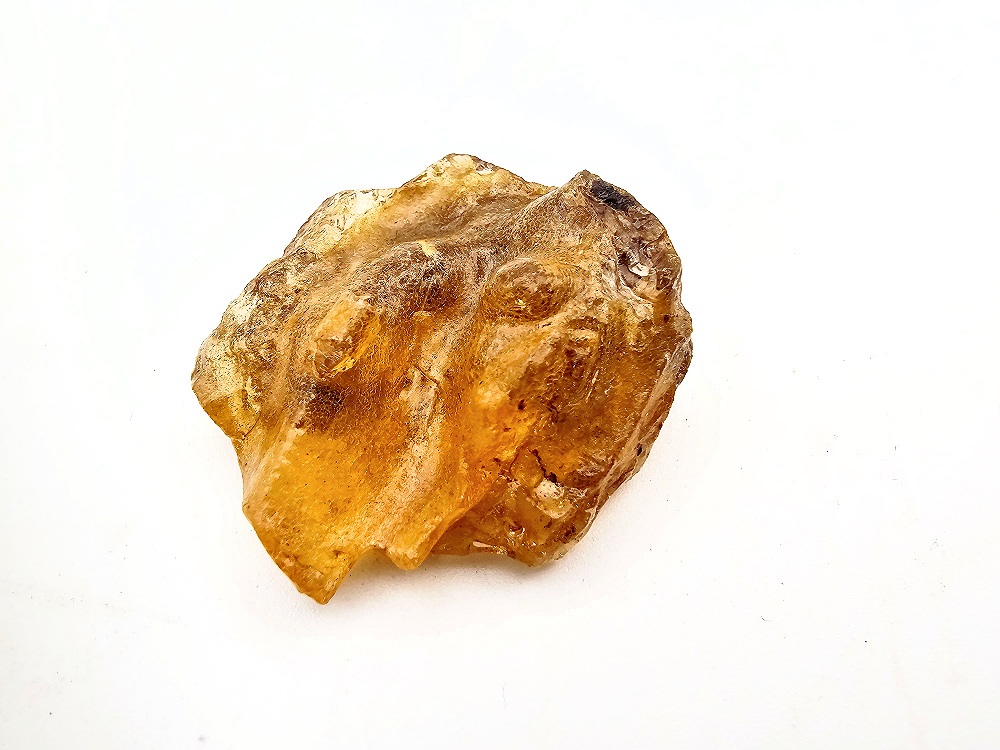




Natural Honey Amber Specimen F – Small Madagascar Amber 8g
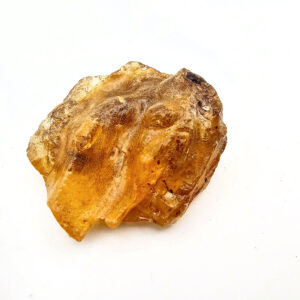
Small, golden and carrying a story that began with an ancient tree, this Natural Honey Amber specimen from Madagascar weighs approximately 8g and measures around 3.5 x 3.5cm.
Amber is one of the more unusual pieces you’ll encounter amongst crystals because, scientifically, it isn’t a mineral at all. Natural Amber is fossilised tree resin — an organic material that began with living trees before being preserved and transformed over geological time.
At just 8g, this is a petite specimen, but Amber’s naturally low density means its light weight is part of what makes the material so interesting.
See more pieces in our Amber collection.
Product Details
- Material: Natural Amber
- Colour: Honey
- Form: Polished specimen
- Size: Approx. 3.5 x 3.5cm
- Weight: Approx. 8g
- Origin: Madagascar
- Individual natural specimen
- Includes a crystal meaning card
From Sticky Tree Resin to Natural Amber
Amber’s journey begins with resin produced by trees.
Resin can flow when a tree is damaged, helping protect the affected area. In ancient environments, some of that resin found its way into sediment where, under the right conditions, it was preserved rather than simply breaking down.
Over immense periods of time, burial and chemical changes transformed the resin into Amber.
This makes Amber very different from crystalline minerals such as Quartz or Calcite. It has an organic origin, linking the botanical world of the past with the geological material we collect today.
That’s also why Amber sits so naturally alongside the ancient specimens in our Fossils collection.
Did You Know? Amber Can Preserve Tiny Snapshots of Ancient Life
One of Amber’s most extraordinary characteristics is its ability to preserve evidence of ancient ecosystems.
Fresh resin is sticky. Small insects, plant fragments, pollen and other tiny pieces of the surrounding environment could occasionally become trapped in it. If that resin eventually survived the long process of becoming Amber, some of those inclusions could be preserved with remarkable detail.
This has made certain Amber deposits incredibly useful to palaeontologists studying ancient organisms and environments.
And it isn’t only spectacular insects that matter. Tiny fragments of plants, hairs, feathers, fungal material and microscopic organisms preserved in Amber can all contribute information about ecosystems that disappeared millions of years ago.
It’s essentially a very small natural time capsule.
No fossil inclusion is being claimed for this individual specimen — none was supplied in its product information — but this preservation ability is one of the genuinely remarkable properties of Amber as a material.
Why Does Amber Feel So Light?
Pick up Amber after handling a similarly sized piece of Quartz and the difference can be surprising.
Amber has a relatively low density because of its organic resin origin. This means even a visually substantial piece can feel much lighter than many common minerals.
Its low density is also responsible for another unusual Amber fact: pieces can be buoyant in sufficiently salty water.
This little specimen weighs approximately 8g, so its lightness shouldn’t be mistaken for an indication that Amber isn’t natural. It’s simply a characteristic of the material.
What Does “Honey Amber” Mean?
Honey Amber describes the warm honey-like colouring of the material.
It doesn’t mean that the Amber contains honey or that honey played any role in its formation.
Natural Amber can occur in various shades and degrees of clarity. Golden and honey colours are amongst its most recognisable appearances, although Amber can look considerably different from one specimen to another.
This piece has been identified as natural Honey Amber from Madagascar.
Amber, Fossils and Natural History
Amber is often discussed alongside fossils because of its age, organic origin and extraordinary ability to preserve traces of prehistoric environments.
It is, however, quite different from something like a fossilised shell or bone.
In conventional fossilisation, original biological material may be replaced, altered or preserved through various geological processes. Amber itself is transformed ancient plant resin.
That makes a mixed fossil and mineral collection particularly interesting. A crystal, fossil shell and piece of Amber might all have spent enormous periods underground, but they arrived there through completely different stories.
You can explore more geological specimens throughout our broader Crystals collection.
Natural Honey Amber Meaning & Traditional Associations
Within contemporary crystal traditions, Amber is commonly associated with warmth, positivity, vitality and protection.
Other popular associations include:
- Confidence
- Optimism
- Motivation
- Creativity
- Joy
- Grounding
- Personal strength
- Warmth
- Clearing stagnant energy
Its rich golden and honey colouring has naturally contributed to symbolic associations with sunlight and warmth.
Amber is frequently connected with the solar plexus chakra, reflecting themes around confidence, motivation and personal energy. Some traditions also associate it with the sacral chakra.
Small Specimens Have Their Advantages
At approximately 3.5 x 3.5cm, this Amber doesn’t require much display space.
It can sit amongst larger crystals as a contrasting organic specimen, form part of an Amber collection or be displayed alongside fossils and other pieces of natural history.
One particularly interesting display idea is to put Amber beside a mineral of roughly the same physical size. The difference in weight immediately demonstrates just how different these two types of natural material can be.
It’s a simple comparison that makes Amber’s organic origin feel much more tangible.
Caring for Natural Amber
Amber is relatively soft, measuring around 2 to 2.5 on the Mohs hardness scale.
That means common minerals such as Quartz can easily scratch it.
Clean Amber gently with a soft cloth and avoid abrasive cleaners, harsh chemicals, solvents and perfumes. Excessive heat and prolonged strong sunlight are also best avoided.
When storing it, keep Amber separated from harder specimens rather than dropping it loose into a crystal box where pieces can rub against one another.
Frequently Asked Questions
How big is this Natural Honey Amber specimen?
It measures approximately 3.5 x 3.5cm and weighs around 8g, making it a petite polished specimen.
Where does this Amber come from?
This natural Honey Amber specimen comes from Madagascar.
Is Amber a fossil?
Amber is fossilised tree resin and is commonly included within fossil and natural-history collections. Its origin and formation are different from conventional fossils such as fossilised shells or bones.
Is Amber actually a crystal?
No. Amber is an organic geological material formed from ancient tree resin rather than a crystalline mineral.
What is Honey Amber traditionally associated with?
Within contemporary crystal traditions, Amber is commonly associated with warmth, positivity, vitality, protection, confidence and personal strength.
Pairs Well With
- Fossils
- Citrine
- Carnelian
- Tigers Eye
- Clear Quartz
- Other Amber specimens
Perfect For
- Amber collectors
- Fossil and natural-history enthusiasts
- Madagascar specimen collections
- Small crystal and fossil displays
- Golden and honey-coloured collections
- Organic gemstone collectors
- Solar plexus practices
- Anyone fascinated by ancient natural materials
Small enough to sit almost anywhere, this 8g piece has a story far bigger than its size. Natural Amber connects trees, geology and ancient environments in one extraordinary material — which is precisely why it deserves a place amongst both crystal and fossil collections.
A little golden piece of botanical history, millions of years in the making.
Reviews
There are no reviews yet.