



Rainbow Fluorite Rough Chunk B – Green & Purple Natural Crystal 402g
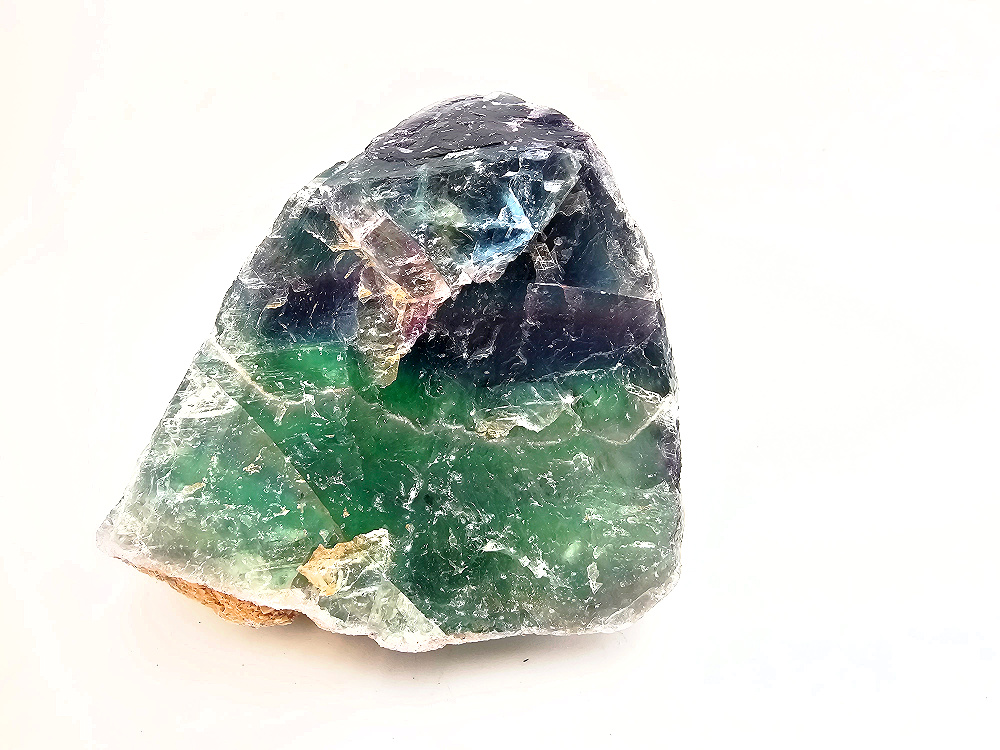
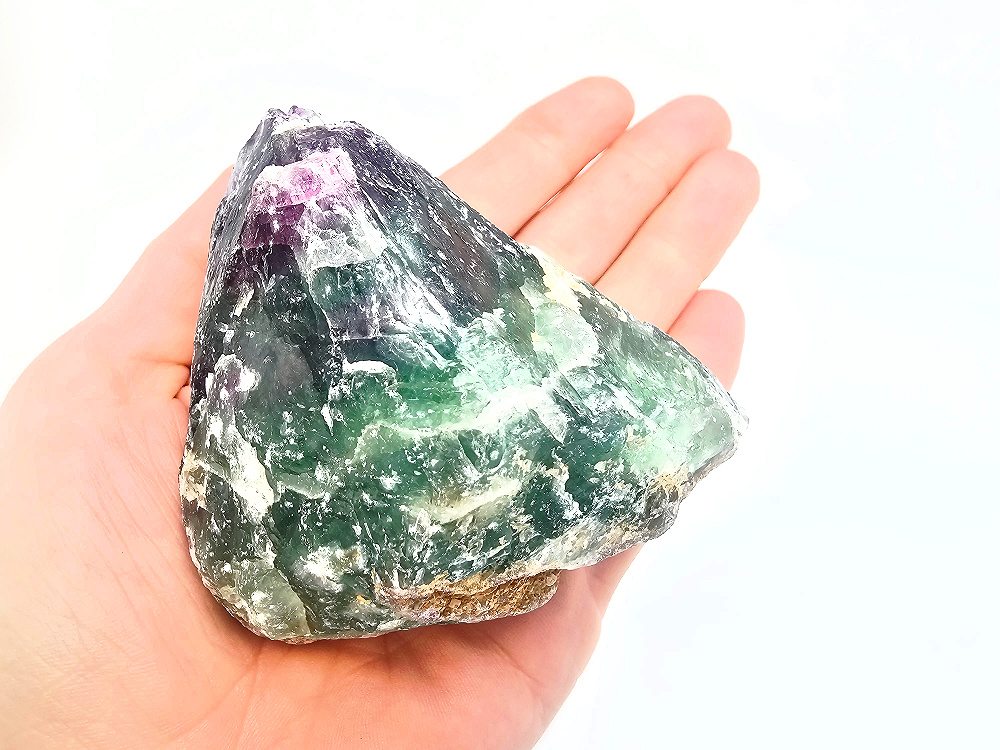
This Rainbow Fluorite rough chunk is a substantial natural specimen weighing approximately 402g and measuring around 9 x 6.5cm. This particular piece is dominated by green Fluorite, with purple concentrated towards the tip and a touch of light blue adding another layer of colour.
That combination is exactly what makes Rainbow Fluorite so much fun to collect. Rather than presenting one uniform colour, different zones can appear within the same piece, creating natural transitions and contrasts that make every specimen individual.
Left rough rather than polished into a sphere or freeform, this piece also keeps more of its original mineral character intact.
Explore more pieces in our Fluorite collection.
Product Details
- Crystal: Natural Rainbow Fluorite
- Mineral: Fluorite
- Form: Rough chunk
- Size: Approx. 9 x 6.5cm
- Weight: Approx. 402g
- Colour: Predominantly green, with purple at the tip and a small amount of light blue
- Finish: Rough / natural
- Individual natural crystal specimen
- Includes a crystal meaning card
What Is Rainbow Fluorite?
Fluorite is a mineral composed of calcium fluoride and is famous amongst collectors for its extraordinary range of colours.
It can occur in green, purple, blue, yellow, colourless and other shades. When more than one colour appears together or in distinct zones within a specimen, the material is often sold as Rainbow Fluorite.
This piece is particularly green rather than displaying equal amounts of every colour. The purple towards the tip and smaller area of light blue provide the contrast that gives it its Rainbow Fluorite character.
If you enjoy crystals in their natural, unpolished state, you’ll find more sizeable specimens in our Large Rough Crystals collection.
Did You Know? Fluorite Gave Fluorescence Its Name
Here’s one of the more interesting facts about Fluorite: the word fluorescence was derived from the mineral’s name.
Some Fluorite specimens glow under ultraviolet light because of impurities or structural features within the material. However, fluorescence varies enormously, so UV fluorescence shouldn’t be assumed for an individual piece unless it has actually been tested.
Fluorite has another interesting claim to fame. It sits at 4 on the Mohs hardness scale, and Fluorite itself is the reference mineral used to define that hardness.
So while it can look beautifully solid and substantial, it needs more careful handling than harder crystals such as Quartz.
How Does Fluorite Get So Many Colours?
Pure calcium fluoride would be colourless, but natural Fluorite can develop its remarkable colours through a combination of trace elements, impurities and defects within its crystal structure.
Colour zoning can occur as conditions change while the crystal is forming.
That’s why one specimen can contain contrasting areas of green, purple and blue rather than simply being one consistent shade throughout.
It’s also one of the reasons Rainbow Fluorite rewards close inspection. Turn a rough piece around and you’re not necessarily looking at exactly the same balance of colours from every direction.
Browse our wider Crystals collection to explore more natural mineral varieties and crystal forms.
Green, Purple & Blue Fluorite Meaning
Rainbow Fluorite is commonly associated with clarity, focus, organisation and balance within contemporary crystal traditions.
Different Fluorite colours have also developed their own associations.
Green Fluorite, which dominates this specimen, is often connected with balance, renewal, harmony and clearing mental clutter.
Purple Fluorite is frequently associated with intuition, reflection, spiritual awareness and concentration.
Blue Fluorite is traditionally linked with communication, clear thinking and expression.
With all three colours appearing within this individual piece, it offers an interesting combination for someone who enjoys the symbolic side of collecting Rainbow Fluorite.
Rainbow Fluorite & the Chakras
Because Rainbow Fluorite can contain several colours, its chakra associations tend to vary according to the colours present.
Green Fluorite is commonly linked with the heart chakra, purple Fluorite with the third eye and crown chakras, and blue Fluorite with the throat chakra.
For this predominantly green specimen, the heart association may be particularly relevant, while its purple and light-blue areas bring additional traditional connections into the same piece.
Of course, you don’t need to work with chakras to appreciate it. A multi-coloured chunk of natural Fluorite is already pretty interesting before any symbolism enters the picture.
Display Tip: Look at Fluorite in Different Light
Fluorite can be a surprisingly changeable-looking mineral depending on the lighting around it.
Try viewing the piece in bright indirect natural light and turning it slowly to see how the green, purple and light-blue areas appear from different angles.
A pale or neutral background can also help the colours stand out when displaying darker or more saturated Fluorite.
One thing to avoid is leaving it permanently in strong direct sunlight. Some Fluorite colours can fade with prolonged light exposure, so a bright display position without hours of intense sun is the safer choice.
Caring for Rough Fluorite
Fluorite needs more thoughtful handling than many common crystals.
With a Mohs hardness of approximately 4, it’s considerably softer than Quartz and can be scratched by harder minerals. Fluorite also has perfect cleavage, meaning its crystal structure contains planes along which the mineral can split relatively easily if struck.
For routine cleaning, a soft, dry cloth or gentle brush is the safest simple option.
Avoid abrasive cleaning, harsh chemicals, sudden temperature changes and unnecessary knocks.
Tip: Don’t toss Fluorite into a box with harder loose crystals. Keeping it separated or cushioned during storage can help protect natural edges and surfaces from scratches and chips.
Frequently Asked Questions
How large is this Rainbow Fluorite rough chunk?
It measures approximately 9 x 6.5cm and weighs around 402g, giving it a substantial presence for a rough Fluorite specimen.
What colours are visible in this piece?
It contains lots of green, with purple towards the tip and a smaller amount of light blue. These colours are natural features of this individual specimen.
Why is it called Rainbow Fluorite?
Rainbow Fluorite is a trade term commonly used for Fluorite displaying multiple colours or colour zones within the same material. It doesn’t mean that every colour of the rainbow needs to be present.
What is Rainbow Fluorite traditionally associated with?
Within contemporary crystal traditions, Rainbow Fluorite is commonly associated with clarity, focus, organisation, balance and concentration, with additional associations often attached to its individual colours.
Is Fluorite a hard crystal?
Not particularly. Fluorite defines 4 on the Mohs hardness scale, making it noticeably softer than Quartz. Its perfect cleavage also means rough specimens should be protected from hard knocks.
Will this Fluorite glow under UV light?
Some Fluorite fluoresces beautifully under ultraviolet light, but not every specimen does. Unless an individual piece has been tested, UV fluorescence shouldn’t be guaranteed.
Pairs Well With
- Amethyst
- Clear Quartz
- Green Aventurine
- Amazonite
- Labradorite
- Other colourful rough mineral specimens
Perfect For
- Rainbow Fluorite collectors
- Green Fluorite lovers
- Rough crystal collections
- Colour-zoned mineral enthusiasts
- Natural mineral displays
- Meditation and focus spaces
- Crystal shelves and cabinets
- Collectors interested in mineralogy
- Lovers of green, purple and blue crystals
- Anyone who enjoys specimens that reward a closer look
With green dominating the piece, purple at the tip and just a touch of light blue, this 402g Rainbow Fluorite has its own distinctive colour balance rather than looking like a generic multi-coloured specimen. Add the rough finish and fascinating mineral science behind Fluorite, and there’s plenty here to explore beyond the first glance.
One mineral, three colours, and absolutely no need for nature to colour inside the lines.


Reviews
There are no reviews yet.