




Rainbow Fluorite Rough Chunk C – Dark Green & Purple Natural Fluorite 784g
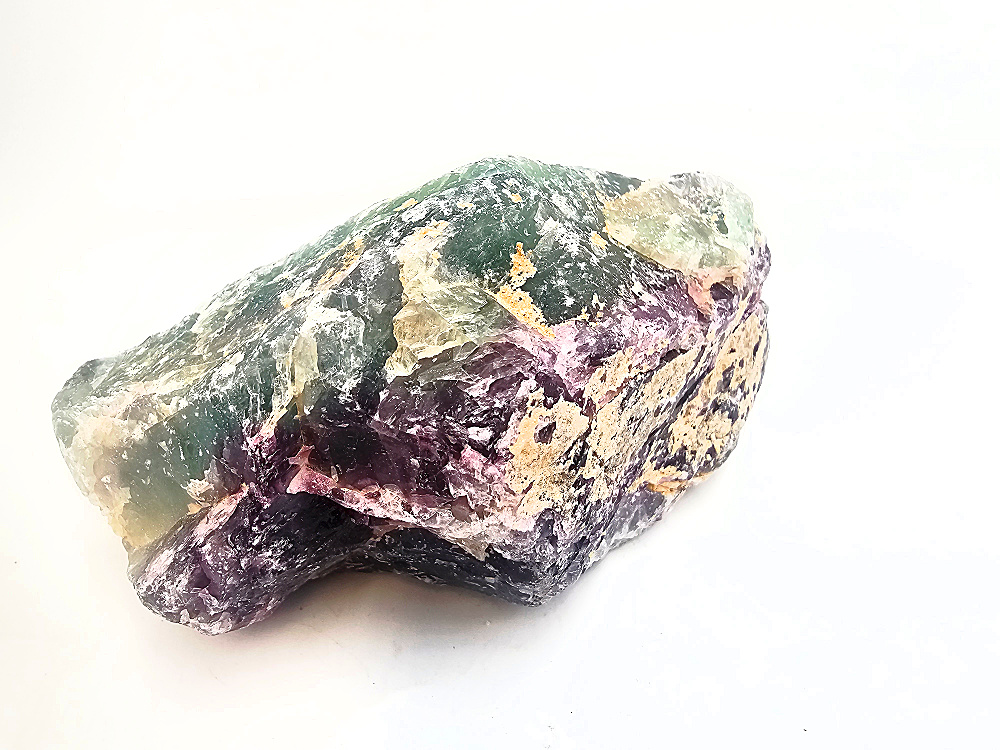
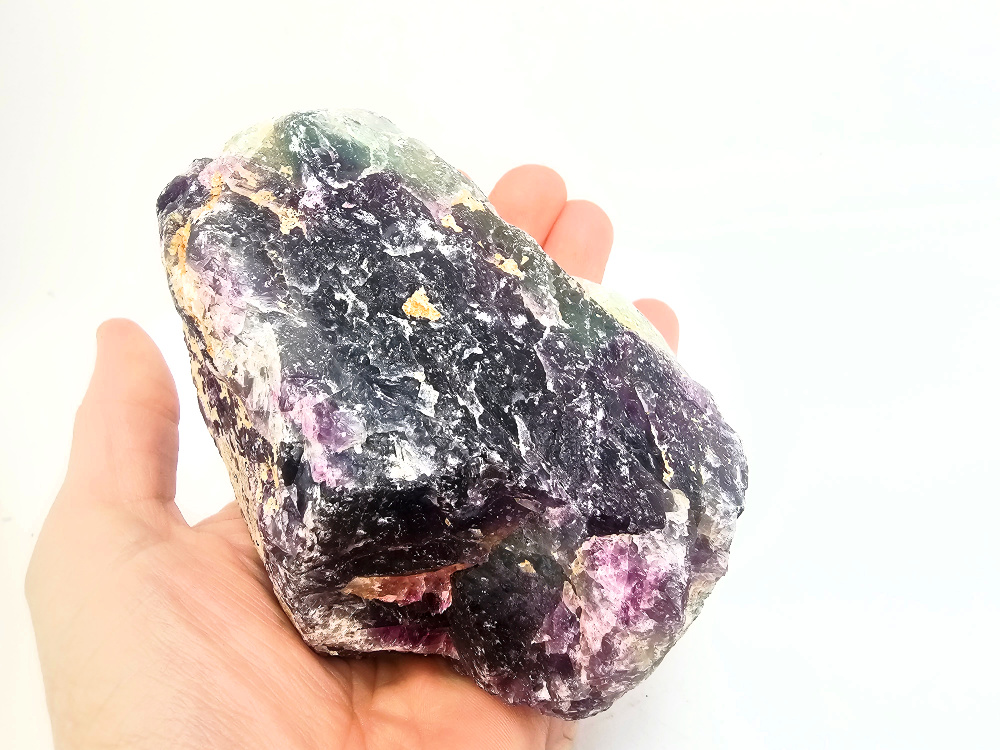
This Rainbow Fluorite rough chunk is a striking, substantial specimen weighing approximately 784g and measuring around 12 x 7.5cm. What makes this piece particularly interesting is the dramatic difference from one side to the other: one side is very dark purple, while the opposite side is very dark green, with patches of natural iron oxide adding another layer of texture and geological character.
It has been left in its rough form, allowing you to see Fluorite as a natural mineral rather than as a polished shape. With its deep colour, sizeable proportions and contrasting sides, it’s the kind of piece worth displaying somewhere it can occasionally be picked up and turned around.
See more natural colour variations in our Fluorite collection.
Product Details
- Crystal: Natural Rainbow Fluorite
- Mineral: Fluorite
- Form: Large rough chunk
- Size: Approx. 12 x 7.5cm
- Weight: Approx. 784g
- Colour: Very dark purple on one side and very dark green on the other
- Natural iron oxide patches
- Finish: Rough / natural
- Individual natural mineral specimen
- Includes a crystal meaning card
Two Very Different Sides
One of the best things about collecting rough Fluorite is how dramatically the appearance can change within a single specimen.
This piece is a great example. Rather than having green and purple evenly mixed throughout, it presents two distinctly different faces — a very dark purple side and a very dark green side.
That gives you options when displaying it. Position the purple side forward for a deeper violet appearance, turn it around when you’re in the mood for green, or find an angle that allows both colours to be seen together.
The iron oxide patches add further natural contrast. These aren’t decorative additions or surface colouring; they’re part of the specimen’s natural geological character.
You can find more sizeable unpolished specimens in our Large Rough Crystals collection.
What Makes Rainbow Fluorite So Colourful?
Fluorite is calcium fluoride, with the chemical formula CaF₂. In its pure form it would be colourless, but natural Fluorite is famous for occurring in an impressive variety of colours.
Purple and green are two of its most familiar shades, but Fluorite can also occur in blue, yellow and other colours.
Its colour can be influenced by trace elements and imperfections or defects within its crystal structure. Changing conditions during formation can also produce colour zoning, allowing noticeably different colours to occur within the same specimen.
“Rainbow Fluorite” therefore doesn’t mean that every piece must contain a complete rainbow. It’s commonly used for Fluorite in which multiple colours or colour zones occur together.
Did You Know?
Fluorite has an unusually neat tendency to break along specific internal planes — a mineral property known as cleavage.
It has four directions of perfect cleavage and can naturally break into octahedral forms. An octahedron resembles two four-sided pyramids joined base to base.
This is fascinating from a mineral-collecting perspective, but it also explains why a big chunk of Fluorite deserves careful handling. A heavy piece can still chip or split if it receives a hard knock in the wrong place.
Browse our wider Crystals collection for more natural and polished mineral varieties.
The Iron Oxide Patches
The iron oxide patches give this specimen another feature to examine alongside its Fluorite colouring.
Iron oxides occur widely in natural geological environments and can create earthy brown, reddish, rusty or ochre-toned areas in rocks and mineral specimens.
On a rough piece, associated material like this can be part of the appeal. It provides a reminder that the Fluorite didn’t form as an immaculate object ready for a display shelf — it developed as part of a natural geological environment.
For mineral collectors in particular, those less-perfect-looking areas can sometimes be amongst the most interesting parts of a specimen.
Rainbow Fluorite Meaning
In contemporary crystal traditions, Rainbow Fluorite is most often associated with clarity, concentration, organisation and balance.
Green Fluorite is commonly connected with harmony, renewal, growth and clearing mental clutter, while Purple Fluorite is traditionally associated with intuition, reflection, concentration and spiritual awareness.
Because this specimen has such a strong division between dark green and dark purple, it may particularly appeal to someone who enjoys working with the traditional associations of both colours.
Which Chakras Are Associated with Green and Purple Fluorite?
Green Fluorite is commonly linked with the heart chakra, while Purple Fluorite is associated with the third eye and crown chakras in contemporary crystal practices.
That gives this particular colour combination an interesting mix of traditional associations around balance, reflection, intuition and growth.
Of course, there’s another perfectly good reason to choose it: you simply love unusually dark Fluorite and want a chunky natural mineral specimen on your shelf.
Displaying Dark Fluorite
Very dark mineral specimens can behave quite differently depending on their surroundings.
Try viewing this piece against both a pale and a darker background. A lighter backdrop may make the deep green and purple easier to distinguish, particularly when combined with bright indirect natural light.
Turn it slowly rather than judging the colour from one fixed position. With one side predominantly purple and the other predominantly green, the display angle can completely change the character of the specimen.
Avoid leaving Fluorite for prolonged periods in strong direct sunlight, as some Fluorite colours can fade with extended light exposure.
Caring for a Large Rough Fluorite Specimen
Fluorite sits at approximately 4 on the Mohs hardness scale, so it’s considerably softer than Quartz.
It also has perfect cleavage, making protection from hard knocks particularly important. At 784g, this is a substantial piece, so support the main body when lifting or repositioning it rather than gripping a narrow or projecting section.
For ordinary dusting, use a soft, dry brush or cloth. Avoid abrasive cleaning, harsh chemicals and storing it where harder crystals can repeatedly knock against its surface.
Frequently Asked Questions
How large is this Rainbow Fluorite?
It measures approximately 12 x 7.5cm and weighs around 784g, making it a substantial rough specimen.
What colours does this piece have?
One side is very dark purple, while the other is very dark green. There are also natural iron oxide patches on the specimen.
Why are the two sides different colours?
Fluorite can develop colour zoning as it forms, allowing different colours to occur within the same specimen. This natural variation is one of the reasons Rainbow Fluorite is so collectable.
What are the patches on the Fluorite?
They are iron oxide patches occurring naturally on the specimen. They add another geological feature rather than being something artificially applied to the surface.
What is Rainbow Fluorite traditionally associated with?
Contemporary crystal traditions commonly associate Rainbow Fluorite with clarity, focus, concentration, organisation and balance. Green and Purple Fluorite also have their own traditional associations.
Does rough Fluorite need special care?
It benefits from careful handling. Fluorite has a Mohs hardness of around 4 and perfect cleavage, so protect it from drops, knocks and harder minerals that could scratch it.
Pairs Well With
- Amethyst
- Clear Quartz
- Green Aventurine
- Labradorite
- Amazonite
- Other rough mineral specimens
Perfect For
- Rainbow Fluorite collectors
- Green and Purple Fluorite lovers
- Large rough crystal displays
- Mineral collectors
- Collectors who appreciate natural matrix and associated material
- Crystal shelves and cabinets
- Meditation and focus spaces
- Anyone drawn to unusually deep crystal colours
At 784g, this is already an impressive chunk of natural Fluorite, but it’s the contrast that really gives it personality. Very dark purple from one direction, very dark green from the other, with iron oxide patches reminding you that this is a piece of natural geology rather than something designed to look perfectly uniform.
Turn it around and it almost feels like a different specimen.


Reviews
There are no reviews yet.