
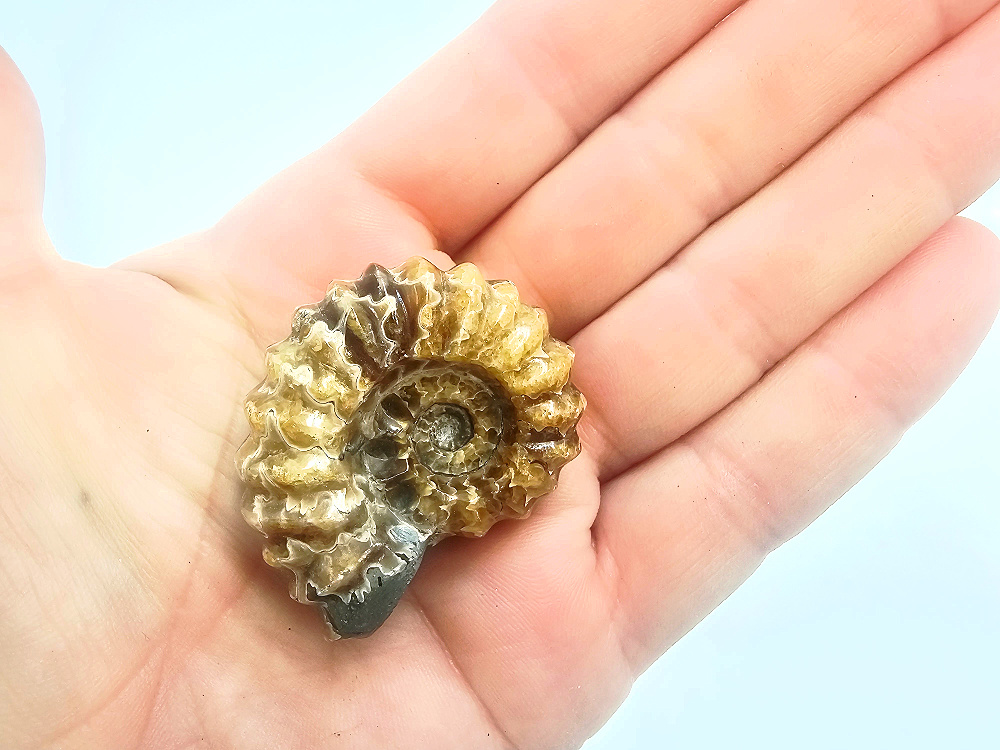




Tractor Ammonite Fossil C – Natural Madagascar Fossil 34g
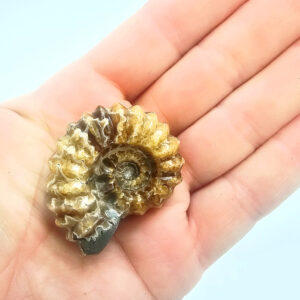
Small in size but carrying an extraordinary piece of prehistoric history, this Tractor Ammonite fossil comes from Madagascar and weighs approximately 34g. Measuring around 4cm, it is an easy-to-display fossil specimen with the distinctive coiled form that makes ammonites so instantly recognisable.
Ammonites were marine animals that lived in ancient seas millions of years ago. Their shells were divided internally into chambers, while the living animal occupied the outermost chamber. Today, their fossilised shells are collected not only for their beauty but also for the remarkable glimpse they provide into vanished marine ecosystems.
Discover more prehistoric specimens in our Fossils collection.
Product Details
- Fossil: Tractor Ammonite
- Weight: Approx. 34g
- Size: Approx. 4cm
- Origin: Madagascar
- Natural fossil specimen
- Natural variations, markings and fossil features form part of the specimen
What Is a Tractor Ammonite?
“Tractor Ammonite” is a trade name commonly used for ammonites with strongly ribbed shells. The pronounced ridges running across the coiled shell can create a rugged, almost mechanical appearance – rather like the tread of a tractor tyre – which helps explain the memorable name.
These ribs were part of the original shell structure rather than decoration added later. Fossilisation preserved the form of an animal that once lived in the sea, turning a functional biological structure into a collectible record of deep time.
Ammonites Were Relatives of Modern Cephalopods
Although their coiled shells can make them look superficially similar to nautiluses, ammonites belonged to an extinct group of marine cephalopods. They were related to the broader lineage that includes living octopuses, squid, cuttlefish and nautiluses.
Ammonites appeared hundreds of millions of years ago and diversified into an enormous variety of forms. Different species developed shells ranging from tightly coiled and relatively smooth to heavily ribbed, spined or unusually shaped.
Did You Know? Ammonites Help Geologists Date Rocks
Ammonites are more than beautiful fossils. They are extremely useful to palaeontologists and geologists because many ammonite species evolved relatively quickly, were widespread through ancient seas and can be associated with particular intervals of geological time.
This makes certain ammonites valuable index fossils. When researchers identify a characteristic ammonite species in a rock layer, it can help them compare the relative age of that layer with rocks found elsewhere.
In other words, an extinct sea creature can act like a marker inside the geological record. Fossils such as ammonites have helped scientists piece together the sequence of events in Earth’s deep past.
Madagascar & Its Remarkable Fossils
Madagascar is internationally known for a rich fossil record that includes ammonites and many other prehistoric organisms. Fossil-bearing sedimentary rocks preserve evidence of periods when marine environments covered areas that are dry land today.
A specimen like this may now fit comfortably in the palm of a hand, but its story began in an ancient ocean. That contrast is part of what makes fossil collecting so fascinating: something approximately 4cm across can represent an unimaginably large stretch of Earth’s history.
Why Collect Ammonite Fossils?
Ammonites sit at the intersection of natural history, geology and visual design. Their coiled shells have a striking geometry, while ribbing and other preserved details make individual specimens rewarding to examine closely.
At approximately 4cm, this piece is compact enough for a curiosity shelf, fossil collection, display cabinet or educational collection without needing a large display area.
Explore more natural specimens in our wider Crystals collection.
Caring for Your Ammonite Fossil
Fossils should be handled with care. Avoid dropping the specimen or knocking it against harder objects, as natural fossil material can chip along edges, ribs or existing fracture lines.
For routine cleaning, gently remove dust with a soft dry brush or cloth. Avoid harsh chemicals, abrasive cleaners and unnecessary soaking. Store or display the fossil somewhere stable where its raised surface details are protected from repeated knocks.
Frequently Asked Questions
How large is this Tractor Ammonite fossil?
It measures approximately 4cm.
How much does the fossil weigh?
This specimen weighs approximately 34g.
Where does this Ammonite come from?
This fossil specimen comes from Madagascar.
Why is it called a Tractor Ammonite?
Tractor Ammonite is a trade name commonly used for strongly ribbed ammonites. The pronounced ridges can resemble the rugged tread pattern associated with tractor tyres.
Were ammonites dinosaurs?
No. Ammonites were marine cephalopods, not dinosaurs. They belonged to an extinct group related to the broader cephalopod lineage that includes modern squid, octopuses, cuttlefish and nautiluses.
Why are ammonites important to palaeontologists?
Many ammonite species are useful as index fossils because they were widespread and changed through geological time. Their fossils can therefore help researchers compare and date rock layers relative to one another.
Perfect For
- Fossil collectors
- Natural-history enthusiasts
- Geology and palaeontology collections
- Curiosity cabinets and display shelves
- Educational collections
- Anyone fascinated by prehistoric marine life
This little Tractor Ammonite is far more than an interesting spiral. At approximately 34g and 4cm, it is a compact surviving record of an animal from an ancient sea – a piece of Madagascar’s prehistoric past small enough to hold in your hand.

Reviews
There are no reviews yet.