




Celestite Cluster D – Natural Blue Crystal Cluster 88g
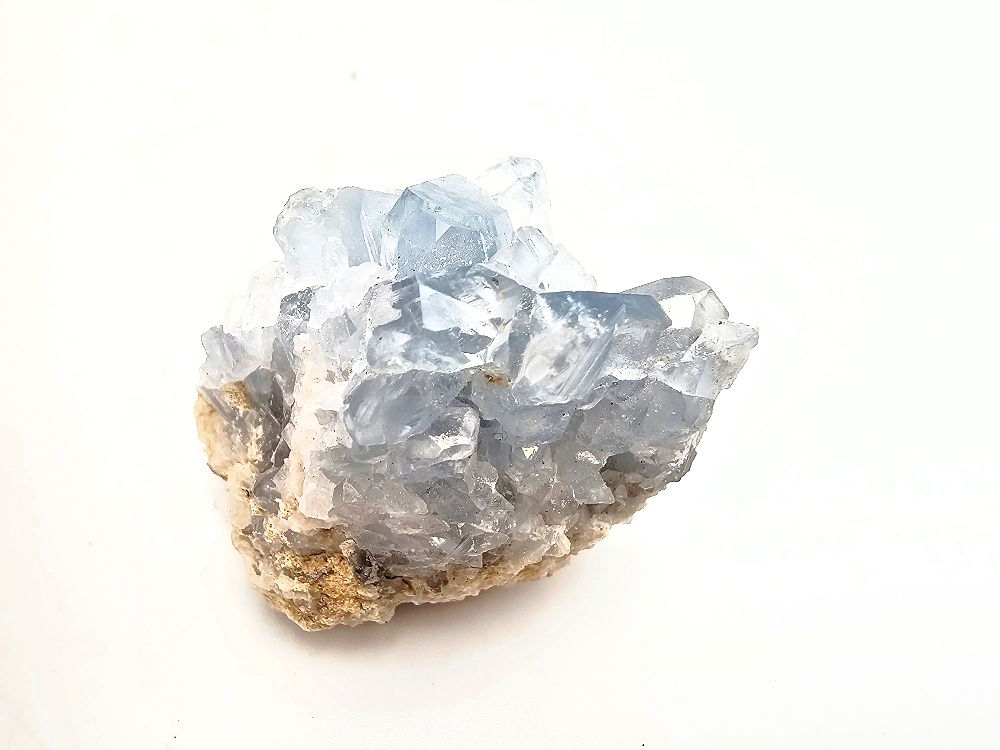
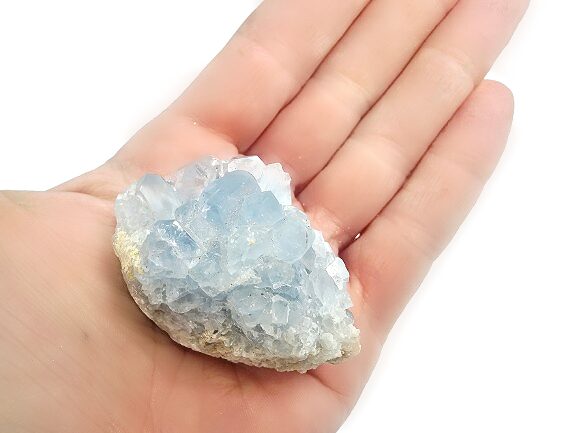
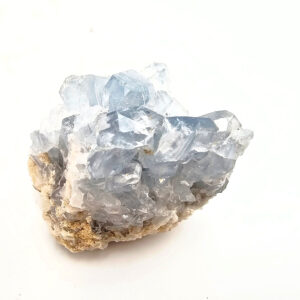
This Celestite cluster is a lovely compact natural specimen weighing approximately 88g and measuring around 4.5 x 4.5cm. Celestite is best known for its delicate blue colouring and naturally formed crystal faces, making even smaller clusters fascinating pieces to examine up close.
Unlike a polished crystal, a cluster preserves the mineral in a more natural formation, with individual crystal growth creating its shape and texture. At around 4.5cm across, this piece is easy to tuck into a crystal shelf, bedside display or collection without needing much space.
Celestite — also known mineralogically as celestine — is a strontium sulphate mineral. Its name comes from the Latin caelestis, meaning “celestial” or “heavenly”, a wonderfully appropriate reference to the pale sky-blue colour for which the mineral is famous.
Product Details
- Crystal: Natural Celestite / Celestine
- Form: Natural crystal cluster
- Size: Approx. 4.5 x 4.5cm
- Weight: Approx. 88g
- Individual natural mineral specimen
- Includes a crystal meaning card
What Is Celestite?
Celestite is the commonly used gemstone and collector name for the mineral celestine, which has the chemical formula SrSO₄.
It is an important natural source of strontium, an element with some surprisingly colourful uses. Strontium compounds are responsible for the brilliant red colours traditionally produced in fireworks and signal flares.
The mineral itself can occur in several colours, including colourless, white, grey and occasionally reddish or greenish material, but the soft blue variety is particularly sought after by crystal and mineral collectors.
Celestite can occur as clusters of distinct crystals, allowing you to appreciate the mineral’s natural crystal habit without polishing or carving.
Browse more natural specimens in our Selected Crystals – Rough collection.
Did You Know? Celestite Has a Fiery Secret
Celestite looks about as calm as a mineral possibly can, but one of its major elements has a much louder side.
The strontium in Celestite is associated with the intense red colour used in fireworks. Strontium salts emit a vivid red colour when heated, which is why strontium compounds have long been important in pyrotechnics.
So the mineral famous in crystal shops for its gentle sky-blue appearance contains an element capable of helping create blazing red fireworks.
It’s a rather good reminder that minerals are often far more interesting than their colour alone suggests.
Why Do Celestite Clusters Need Care?
Celestite may look sturdy, but it isn’t a particularly hard mineral.
It has a Mohs hardness of around 3 to 3.5, making it significantly softer than Quartz. Individual crystal points and edges can therefore be damaged by careless handling or contact with harder stones.
Clusters require a little extra consideration because there are often numerous exposed crystal surfaces rather than one smooth polished exterior.
Pick the specimen up by supporting its main body rather than grabbing an individual crystal point, and give it a stable position where it isn’t likely to be knocked from a shelf.
Browse our wider Crystals collection for more polished and natural mineral forms.
Celestite Meaning & Traditional Associations
Within contemporary crystal traditions, Celestite is commonly associated with peace, calm, serenity, communication and spiritual awareness.
Common associations include:
- Calm
- Peace
- Serenity
- Reflection
- Communication
- Intuition
- Meditation
- Spiritual awareness
- Tranquillity
Its gentle reputation and blue colouring have made Celestite especially popular for quiet spaces, meditation areas and bedside crystal displays.
Celestite is most commonly associated with the throat chakra and is also frequently connected with the third eye and crown chakras.
The throat association reflects themes of communication and expression, while its third-eye and crown associations relate more closely to intuition, reflection and spiritual awareness.
A Small Cluster Worth Looking at Closely
Large crystals naturally grab attention, but smaller mineral specimens have their own appeal.
At approximately 4.5 x 4.5cm, this cluster can be viewed closely without taking over a display. Try placing it somewhere slightly below eye level where you can look down into the crystal formation rather than only seeing it from the side.
Display tip: Celestite can look particularly beautiful in soft natural light, but avoid keeping it permanently in harsh direct sunlight. A bright shelf away from intense sun gives you a better balance between enjoying the crystal and protecting it.
A small stand or raised section of a mineral shelf can also help a compact cluster avoid disappearing amongst larger pieces.
Caring for Celestite
Celestite should be treated more gently than harder crystals such as Quartz.
For routine dusting, use a very soft, dry brush rather than vigorous rubbing. Avoid harsh chemicals, abrasive cleaners and unnecessary soaking.
Take particular care around exposed crystal points and edges. When moving the specimen, support it from underneath or around its solid base rather than lifting it by an individual crystal.
It is also worth keeping Celestite separated from harder loose specimens during storage. A Quartz point knocking against it can cause damage even though both pieces may look equally solid.
Frequently Asked Questions
Is Celestite the same as Celestine?
Yes. Celestine is the recognised mineral name, while Celestite is an alternative name widely used by collectors and within the crystal trade.
How large is this Celestite cluster?
It measures approximately 4.5 x 4.5cm and weighs around 88g, making it a compact natural cluster suitable for smaller displays and crystal collections.
What is Celestite made from?
Celestite is strontium sulphate, with the chemical formula SrSO₄. It is one of the principal naturally occurring sources of strontium.
What is Celestite traditionally associated with?
Within contemporary crystal traditions, Celestite is commonly associated with calm, peace, communication, meditation, intuition and spiritual awareness.
Which chakra is associated with Celestite?
Celestite is commonly associated with the throat chakra and is also frequently connected with the third eye and crown chakras.
Is Celestite fragile?
It requires more careful handling than many common crystals. With a Mohs hardness of around 3 to 3.5, its crystal surfaces and points can be scratched or damaged by harder minerals and accidental knocks.
Pairs Well With
- Amethyst
- Clear Quartz
- Selenite
- Moonstone
- Blue Calcite
- Other natural crystal clusters
Perfect For
- Celestite collectors
- Blue crystal collections
- Natural mineral displays
- Crystal cluster collectors
- Smaller crystal shelves
- Meditation spaces
- Throat, third eye and crown chakra practices
- Mineral collectors interested in unusual chemistry
- Anyone who appreciates delicate natural crystal formations
At only 88g, this Celestite doesn’t need to be enormous to be interesting. You get a naturally formed cluster, a mineral whose name literally references the heavens, and an element famous for producing brilliant red fireworks — all packed into approximately 4.5cm.
Soft blue on the outside, fiery red chemistry hidden within.
Reviews
There are no reviews yet.