
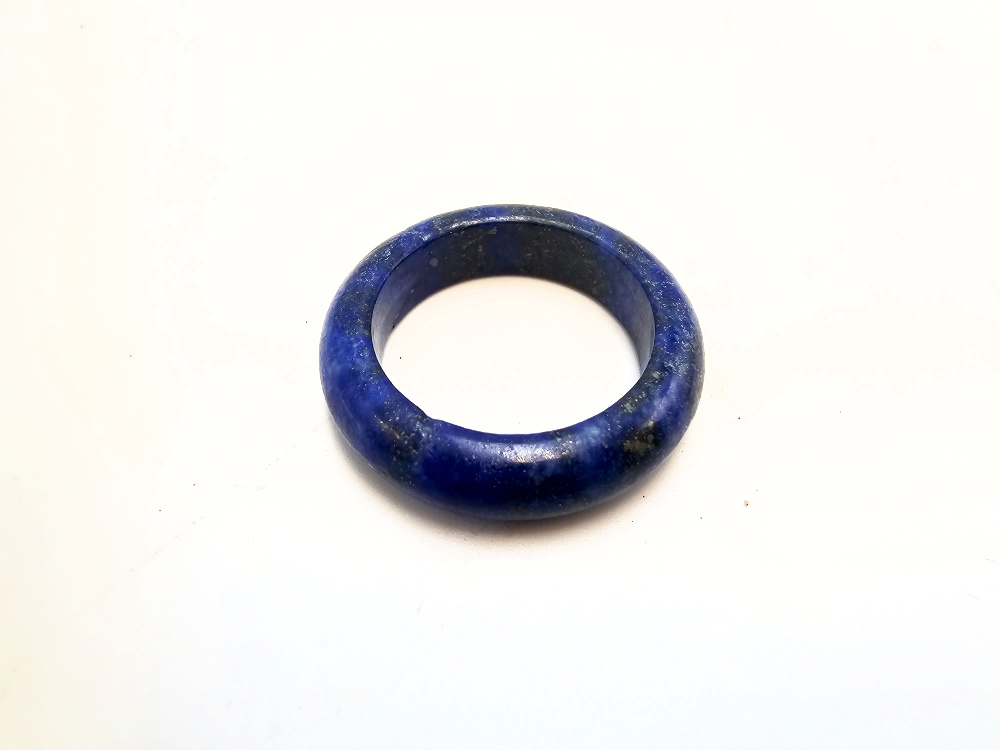




Lapis Lazuli Band Ring – Natural Blue Gemstone Jewellery
The Lapis Lazuli Band Ring puts one of the world’s most recognisable blue stones at the centre of the design – quite literally, because the band itself is made from the stone. Its rich blue colouring can be broken by pale mineral markings or tiny golden-looking flecks, giving each natural ring a pattern of its own.
Instead of a small Lapis Lazuli stone held in a metal setting, this style lets the colour continue around the finger. It is an eye-catching choice for anyone searching for a Lapis Lazuli ring, natural stone band ring or blue gemstone ring with plenty of natural character.
Explore more pieces featuring this remarkable blue stone in our Lapis Lazuli collection.
Product Details
- Stone: Natural Lapis Lazuli
- Style: Gemstone band ring
- Colour: Predominantly blue with naturally varying markings
- Natural colour, pattern and mineral inclusions may vary
- Includes a crystal meaning card
More Than Blue – What Are the Marks in Lapis Lazuli?
Lapis Lazuli is unusual because it is a rock made from several minerals rather than one individual mineral species. Lazurite is responsible for much of its celebrated blue colour, while calcite can contribute lighter areas and pyrite may appear as tiny metallic golden-looking flecks.
This means natural variation is part of the appeal. Some rings can appear intensely blue, while others may show more obvious pale patterning or scattered pyrite. A perfectly uniform appearance should not be expected from every natural Lapis Lazuli band.
Lapis Lazuli Meaning – Wisdom, Truth & Expression
Within contemporary crystal traditions, Lapis Lazuli is commonly associated with wisdom, truth, intuition, communication and self-expression. It is also frequently connected with the throat and third-eye chakras in modern metaphysical practice.
As a ring, Lapis Lazuli offers a particularly wearable way to enjoy those associations. The full stone band keeps the blue colour prominent while creating a piece that can be chosen for its symbolism, its geology or simply because the colour is extraordinary.
Did You Know? The Gold-Looking Flecks Aren’t Gold
Those tiny metallic-looking flecks sometimes seen in Lapis Lazuli can look remarkably like gold, but they are generally pyrite – an iron sulphide mineral famous for its metallic lustre.
Pyrite is sometimes nicknamed “fool’s gold”, but in Lapis Lazuli it is hardly an impostor. Against a deep blue background, even small scattered flecks can create a beautiful star-like effect and are one of the natural features many people enjoy in the stone.
A Stone Once Worth Crossing Continents For
Lapis Lazuli has been traded over enormous distances for thousands of years. Important ancient sources in what is now Afghanistan supplied material that travelled through long-distance trade networks into regions far from the original deposits.
Archaeologists have found Lapis Lazuli in ancient jewellery and decorative objects well beyond its source regions, making it an intriguing reminder that valuable materials and ideas were moving across great distances long before modern transport existed.
Why a Full Lapis Lazuli Band Is Different
A gemstone band shows far more of the natural material than a small cabochon or accent stone. As the ring turns on the hand, different patches of blue, calcite and possible pyrite can come into view.
That makes each piece feel individual. The design is simple, but the stone provides its own detail – exactly what makes natural gemstone bands so appealing.
Browse more stone and metal designs in our Rings collection.
Caring for Your Lapis Lazuli Band Ring
A full stone band needs more protection from impact than a conventional metal ring. Avoid dropping it or knocking it against tile, concrete, stone countertops and other hard surfaces, as a strong impact may chip or fracture the ring.
Lapis Lazuli should also be kept away from harsh chemicals, abrasive cleaners and aggressive polishing. Remove the ring for swimming, cleaning and strenuous work, and wipe it gently with a soft, dry cloth after wear.
Frequently Asked Questions
Is Lapis Lazuli one mineral?
No. Lapis Lazuli is a rock composed of several minerals. Lazurite contributes much of the blue colour, while calcite and pyrite may also be present.
Are the gold-looking flecks in Lapis Lazuli real gold?
No. Metallic golden-looking flecks in natural Lapis Lazuli are generally pyrite.
Why are some Lapis Lazuli rings bluer than others?
The proportion and distribution of the minerals vary naturally. Individual rings can therefore differ in blue intensity, pale calcite markings and visible pyrite.
What is Lapis Lazuli associated with?
Within contemporary crystal traditions, Lapis Lazuli is commonly associated with wisdom, truth, intuition, communication and self-expression.
Can a Lapis Lazuli band ring break?
Yes. A solid stone ring can chip or fracture if subjected to a hard impact, so avoid dropping it or knocking it against rigid surfaces.
Does the Lapis Lazuli Band Ring include a meaning card?
Yes. A crystal meaning card is included.
Perfect For
- Lapis Lazuli collectors
- Blue gemstone jewellery lovers
- Natural stone band ring collections
- People drawn to wisdom and self-expression symbolism
- Geology and mineral enthusiasts
- Distinctive crystal jewellery gifts
With its deep blue colour, naturally changing mineral pattern and full-stone band design, the Lapis Lazuli Band Ring proves that a simple shape does not have to mean a simple story.




Reviews
There are no reviews yet.