
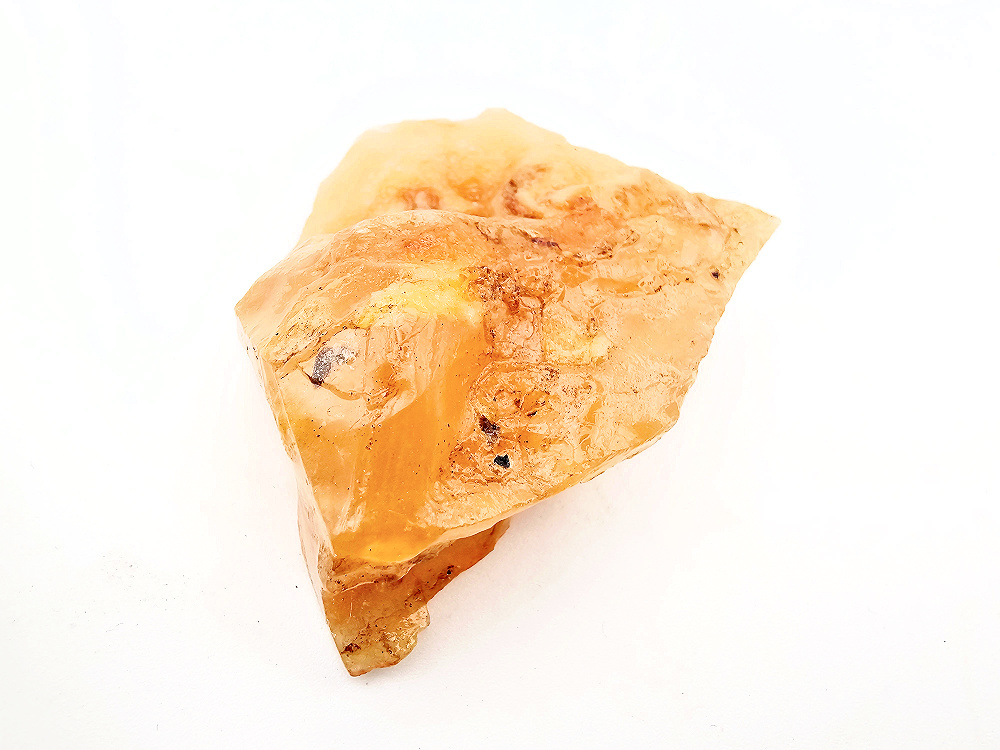




Natural Honey Amber Specimen B – Polished Madagascar Amber 12g
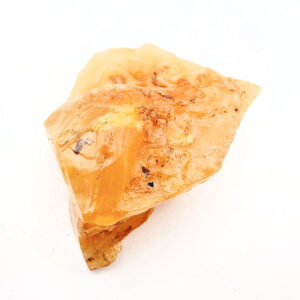
This Natural Honey Amber specimen from Madagascar weighs approximately 12g and measures around 5.5 x 4cm. Its polished surface and warm honey colouring make it a beautiful little collector’s piece, but Amber becomes even more fascinating once you know what you’re actually holding.
Unlike Quartz, Garnet or Calcite, Amber isn’t a mineral at all. It began as resin produced by ancient trees, which was buried and transformed over geological time into the material we know as Amber.
Explore more pieces in our Amber collection.
Product Details
- Material: Natural Amber
- Colour: Honey
- Form: Polished specimen
- Size: Approx. 5.5 x 4cm
- Weight: Approx. 12g
- Origin: Madagascar
- Individual natural specimen
- Includes a crystal meaning card
What Is Natural Amber?
Amber is fossilised tree resin, an organic geological material rather than a mineral.
Resin is produced by certain trees and can be released when a tree is damaged. Under the right conditions, ancient resin became buried and underwent chemical changes over immense periods of geological time, eventually forming Amber.
That organic beginning explains some of Amber’s unusual characteristics. It’s considerably lighter than many mineral specimens, relatively soft and capable of developing a static electrical charge when rubbed.
It also places Amber naturally alongside other glimpses into the ancient world, which is why you’ll also find it amongst our Fossils collection.
Did You Know? Amber Helped Give Us the Word “Electricity”
Amber has been fascinating humans for a very long time — and not only because it’s beautiful.
Rub a piece of Amber with a suitable material such as wool and it can develop a static electrical charge, allowing it to attract extremely lightweight objects.
This phenomenon was known in the ancient world. The Greek word for Amber was ēlektron, which ultimately contributed to the terminology from which we get the modern word electricity.
So there’s a rather wonderful connection between a piece of fossilised tree resin and a word we now associate with power stations, plugs and smartphones.
Amber was doing static electricity long before any of those existed.
What Does “Honey Amber” Mean?
Honey Amber describes the warm golden, yellow and honey-like colouring of the material.
It doesn’t mean the Amber contains honey.
Amber can occur in a surprisingly broad range of appearances, from pale yellows and rich golden tones to browns and much darker material. Transparency can also vary considerably.
This individual specimen has been identified as natural Honey Amber from Madagascar.
Amber and Copal Aren’t Quite the Same Thing
Amber and copal are both derived from plant resin, which can make them confusingly similar at first glance.
The important difference is the degree of geological maturation and chemical transformation.
Amber is fossilised resin that has undergone extensive changes over time, while copal is less mature resin that hasn’t undergone the same degree of transformation.
For collectors, it’s an important distinction — especially because both materials can be beautiful in their own right.
Why Amber Can Be So Fascinating to Collect
Amber occupies an unusual position in a collection.
Put it beside a piece of Quartz and you’re comparing materials with completely different beginnings. Quartz crystallised through geological processes; Amber began as something produced by a living tree.
Some Amber specimens elsewhere in the world famously preserve tiny fragments of ancient ecosystems, including plant matter and occasionally insects or other organisms that became trapped in sticky resin.
No inclusions are being claimed for this particular specimen, but their occurrence in Amber is one reason the material has become so closely associated with prehistoric life.
Browse our wider Crystals collection to discover more natural specimens with very different geological stories.
Natural Honey Amber Meaning & Traditional Associations
Within contemporary crystal traditions, Amber is commonly associated with warmth, vitality, positivity and protection.
Other popular associations include:
- Confidence
- Optimism
- Motivation
- Creativity
- Grounding
- Personal strength
- Joy
- Warmth
- Clearing stagnant energy
Its golden colouring has naturally contributed to symbolic connections with sunlight, warmth and vitality.
Amber is frequently associated with the solar plexus chakra, reflecting themes around confidence, motivation and personal energy. Some traditions also connect it with the sacral chakra.
Amber Has Been Treasured for Thousands of Years
Amber’s appeal is far from modern.
People have collected, traded and worked Amber since prehistoric times, and it later became an important material for jewellery, beads, amulets and decorative objects across numerous ancient cultures.
Its combination of warm colour, light weight and ability to take a polish made it particularly attractive long before anyone understood the chemistry behind fossilised resin.
That long relationship with humans makes an Amber specimen interesting from more than one direction: it sits at the intersection of natural history, geology, botany and human history.
Caring for Natural Amber
Amber is much softer than many common crystals, generally sitting around 2 to 2.5 on the Mohs hardness scale.
That means harder stones can scratch it surprisingly easily.
Clean it gently with a soft cloth and keep it away from abrasive cleaners, harsh chemicals, perfumes and solvents. Avoid excessive heat and prolonged strong sunlight.
When storing Amber amongst other specimens, don’t leave it loose against harder crystals such as Quartz where rubbing or knocks could damage its polished surface.
Frequently Asked Questions
How large is this Natural Honey Amber specimen?
It measures approximately 5.5 x 4cm and weighs around 12g.
Where does this Amber come from?
This natural Honey Amber specimen comes from Madagascar.
Is Amber actually a crystal?
No. Although Amber is commonly sold alongside crystals and gemstones, scientifically it is fossilised tree resin rather than a mineral crystal.
Why does Amber feel lighter than most crystals?
Amber has a relatively low density because of its organic resin origin. A piece can therefore feel surprisingly light compared with a similarly sized mineral specimen.
Does this Amber contain an insect?
No insect or other inclusion has been supplied as a feature of this particular specimen, so none is being claimed.
What is Amber traditionally associated with?
Within contemporary crystal traditions, Amber is commonly associated with warmth, vitality, positivity, confidence, protection and personal strength.
Pairs Well With
- Citrine
- Carnelian
- Tigers Eye
- Sunstone
- Clear Quartz
- Fossils and other natural-history specimens
Perfect For
- Amber collectors
- Fossil enthusiasts
- Madagascar specimen collections
- Natural-history displays
- Golden and honey-coloured collections
- Organic gemstone collectors
- Solar plexus practices
- Anyone fascinated by materials with an ancient botanical origin
At only 12g, this is a small specimen carrying a remarkably big story. It began with a living tree, became preserved through geological time and belongs to a natural material humans have treasured for thousands of years.
Not quite a crystal, not quite a fossil in the conventional sense — and far too interesting to worry about fitting neatly into either box.
Reviews
There are no reviews yet.